Protests01 December, 20253 min read
Georgian Police Used WWI-Era Chemical Weapon 'Camite' on Tbilisi Protesters, BBC Probe Finds
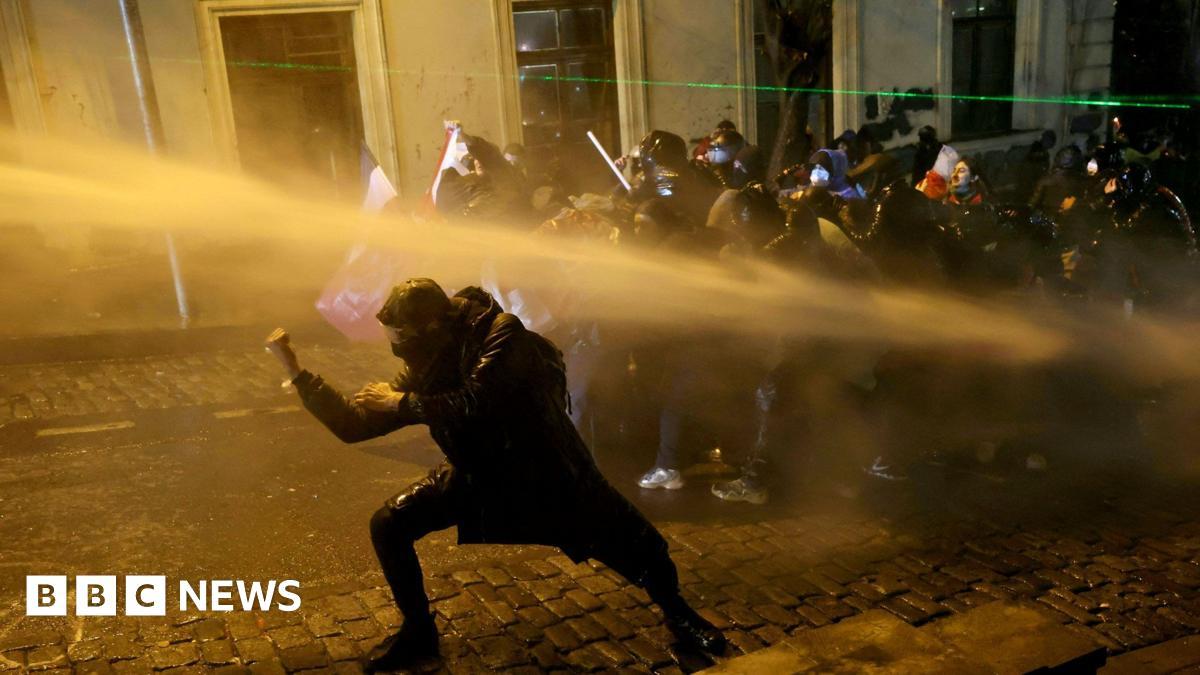
Georgian riot police sprayed 'camite' (bromobenzyl cyanide) via water cannon at Tbilisi protesters. Hundreds of protesters reported severe burning sensations and prolonged health symptoms after exposure.
10 outlets told this the same way.
Outlets did split on France Suspends Police Stun Grenades at High School Protests After 15-Year-Old Loses Hand →
Alleged chemical use in protests
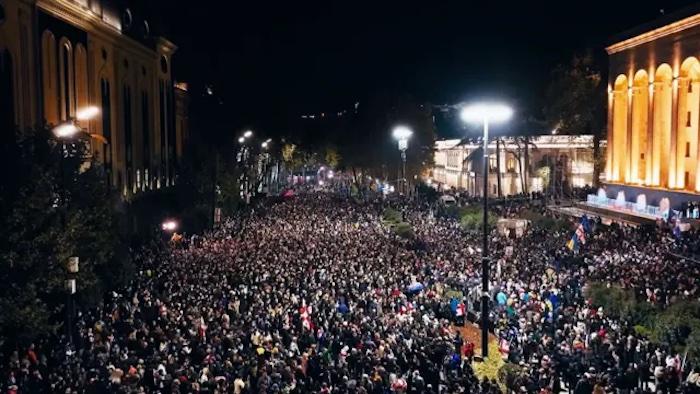
A BBC investigation alleges that during mass protests beginning on 28 November 2024 in Tbilisi—triggered by the government's suspension of the EU accession bid—Georgian riot police mixed a World War I–era chemical agent identified by experts and whistleblowers as 'camite' into water-cannon deployments, producing unusually severe and prolonged symptoms among those sprayed. The BBC says its reporting is based on interviews with former riot-police whistleblowers, internal inventory documents and expert commentary, and that the police response also included pepper spray and CS gas alongside the contested water-cannon mixtures. Several other outlets summarise the same central allegation and catalogue similar reported effects and protest context.
“BBC investigation alleges that Georgian police used a World War I–era chemical agent — identified by experts and whistleblowers as ‘camite’ — mixed into water cannon against anti-government protesters in Tbilisi in late 2024.”
Alleged chemical compound evidence
The BBC and several outlets point to corroborating evidence beyond victim testimony. Former police weapons officials and whistleblowers told the BBC a persistent compound had been tested in 2009 and remained loaded in vehicles into 2022.
The BBC published what it says is a 2019 inventory listing "Chemical liquid UN1710" and "Chemical powder UN3439", codes that experts linked to bromobenzyl cyanide (camite). Kyiv Post and OC Media relay these inventory and whistleblower details explicitly, while Lawyer Monthly summarises that available documentary and expert evidence indicates a compound under UN3439 likely matched camite.
Reported clinical effects overview
Medical and human-health reporting across sources highlights persistent and unusual clinical effects among those exposed. The BBC cites a survey by paediatrician-activist Dr Konstantine Chakhunashvili of nearly 350 respondents, with almost half reporting symptoms lasting more than 30 days, and medical exams of 69 showing higher rates of electrical abnormalities in the heart.
“A survey by paediatrician Dr Konstantine Chakhunashvili (nearly 350 respondents) found almost half had symptoms lasting more than 30 days; 69 examined showed a higher prevalence of electrical abnormalities in the heart. His study has been peer reviewed and accepted for publication.”
Kyiv Post, The Daily Ittefaq and OC Media repeat and emphasise these findings and report descriptions of burning, coughing, breathlessness and vomiting. Experts quoted by the BBC and Kyiv Post say the pattern resembles exposure to camite rather than routine tear gas.
Reactions and legal concerns
Official and international reactions diverge: Georgian authorities have rejected the BBC's findings as absurd, defending the police actions as legal and aimed at dispersing 'illegal actions of brutal criminals,' while UN and human-rights actors signalled alarm, with the UN Special Rapporteur on Torture calling the report deeply concerning and suggesting the practice could amount to the use of an experimental weapon. Lawyer Monthly frames the episode as raising urgent questions under domestic and international law, including the Chemical Weapons Convention and UN principles on the use of force, and outlines investigative and procedural steps that oversight bodies would typically pursue. OC Media and Uzalendo News emphasise victims' accounts and local consequences, including reported detentions of activists.
Media coverage comparison
Across the reporting there are clear differences in emphasis and framing. BBC (Western mainstream) leads with investigative detail and documentary evidence. Kyiv Post (local Western) reiterates those findings while highlighting international human rights concern.
“The BBC’s evidence draws on expert commentary, whistleblower testimony, medical surveys/exams and internal inventory records to argue that a non‑conventional, long‑lasting chemical was used in the water cannon.”
OC Media and Uzalendo News (Asian/Other) foreground victim testimony and local repercussions. Firstpost and The Daily Ittefaq (Asian/Other) summarise the allegation prominently but with less documentary detail in the snippets provided. Lawyer Monthly (Other) shifts the discussion toward legal, procedural and oversight questions.

Taken together, the sources converge on the central allegation and the reported clinical picture but differ on narrative focus, depth of sourcing presented in headlines and summaries, and the legal framing applied. Given those variations, some elements, for example the exact chemical chain of custody or conclusive toxicology linking samples to camite, remain contested or unconfirmed in the reporting provided here.