Protests05 October, 20252 min read
Georgian Protesters Storm Presidential Palace as Police Use Tear Gas and Water Cannons to Suppress Uprising
Tens of thousands protested in Tbilisi against the ruling Georgian Dream party during local elections. Protesters attempted to storm the presidential palace, breaching fences and clashing with police.

20 outlets told this the same way.
Outlets did split on France Suspends Police Stun Grenades at High School Protests After 15-Year-Old Loses Hand →
Political Unrest in Georgia
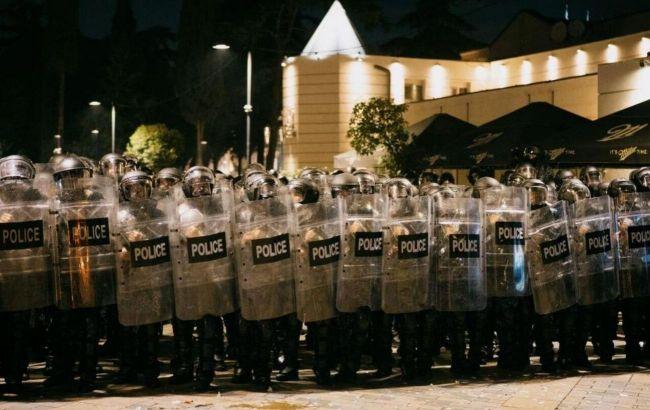
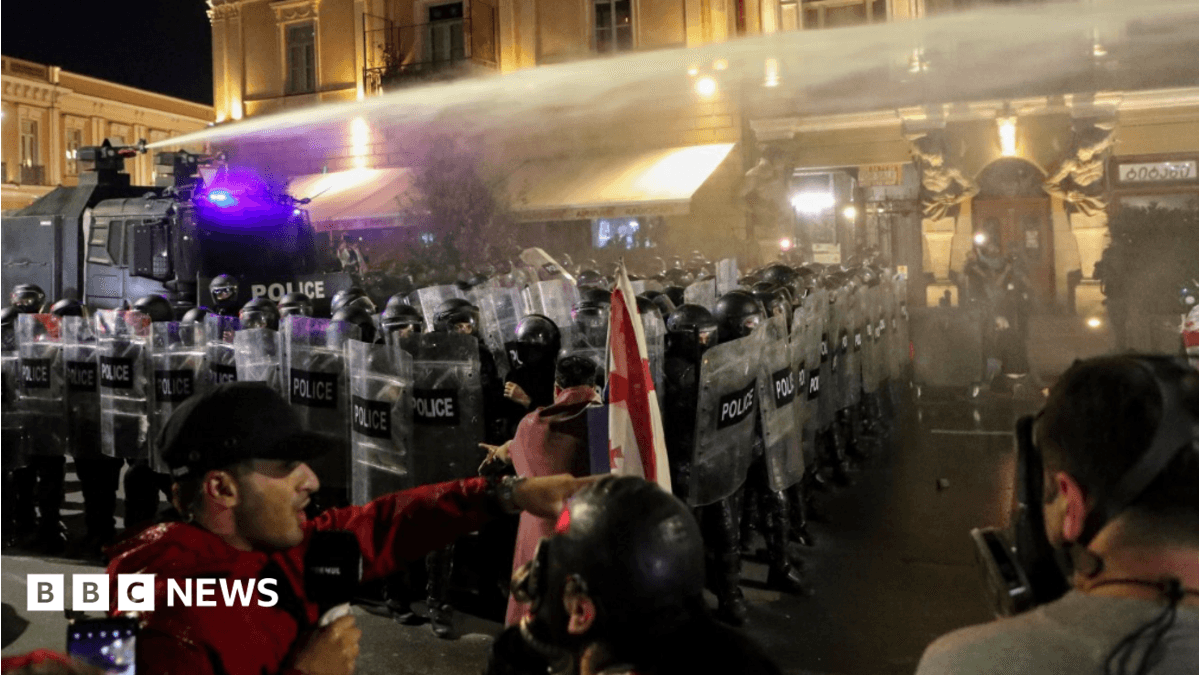
On October 4, 2025, Tbilisi, Georgia, witnessed a significant escalation in political unrest as tens of thousands of protesters clashed with riot police near the presidential palace. The protests were sparked by local elections, which were boycotted by major opposition parties, accusing the ruling Georgian Dream party of authoritarianism and pro-Russian policies. Demonstrators, waving Georgian, EU, and Ukrainian flags, attempted to storm the presidential palace, leading to a forceful response from the police.
“Protesters demanded EU membership, a goal halted by the government last year, which has led to ongoing demonstrations met with arrests and police violence.”
The police used water cannons, tear gas, and pepper spray to disperse the crowd. The opposition called for a "peaceful revolution" to challenge the government's legitimacy, citing concerns over democracy and halted EU membership talks.

Government Response to Protests
The government's response to the protests has been severe, with riot police deploying tear gas, water cannons, and pepper spray to control the crowds. The Internal Affairs Ministry increased police presence as demonstrators repeatedly attempted to breach the palace grounds.
Prime Minister Irakli Kobakhidze accused the protesters of attempting to overthrow the government and blamed the European Union for interfering in Georgian politics. The ruling party claimed a strong victory in the local elections, despite the opposition's boycott and allegations of election fraud.
Georgia's Political Crisis 2024
The protests are part of a broader political crisis in Georgia, which began after disputed parliamentary elections in October 2024. The opposition claims these elections were rigged in favor of the Georgian Dream party, leading to ongoing demonstrations and a crackdown on dissent.
“The protests, urged by jailed ex-President Mikheil Saakashvili as a ‘last chance’ to save the country, escalated when demonstrators tried to enter the presidential palace.”
Amnesty International condemned the local elections for occurring amid severe political repression, highlighting the suppression of freedoms of expression, association, and peaceful assembly. The situation remains tense, with the government enacting restrictive laws targeting activists, media, and NGOs, drawing comparisons to Russian-style repression.
International Reactions to Georgian Elections
The international response to the events in Georgia has been mixed, with some international observers abstaining from monitoring the elections due to the repressive political environment. Major international watchdogs and key Georgian NGOs criticized the elections as illegitimate, citing the absence of fair conditions for a democratic process.
The Central Election Commission, however, reported that the vote concluded peacefully, with results expected soon. Despite the government's claims of a peaceful election, the opposition and many international observers remain skeptical of the results.