Full Analysis Summary
United Downs geothermal and lithium
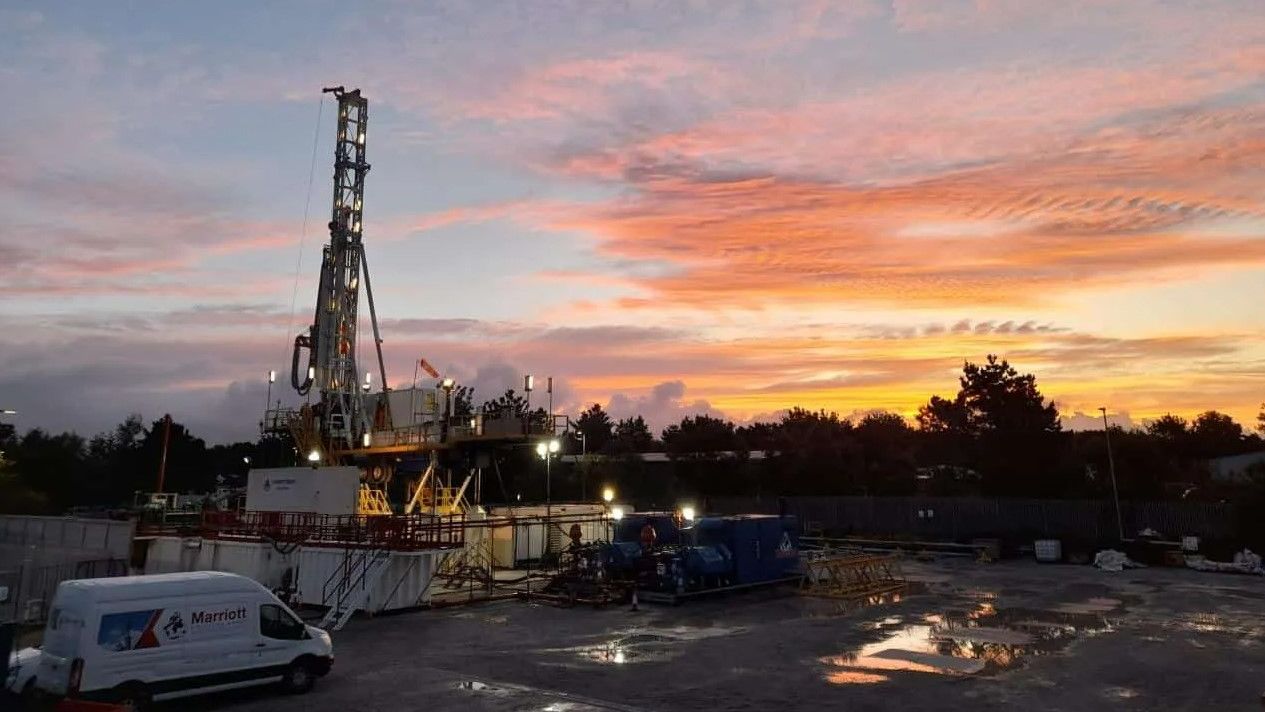
Geothermal Energy Ltd (GEL) is launching a combined geothermal power and lithium project at United Downs in Cornwall that aims to begin electricity and lithium production in early 2026.
Rayo reports the plant will deliver 3 MW of power under a deal with Octopus Energy, reportedly enough to supply about 10,000 homes.
Rayo says the plant will begin producing up to 100 tonnes a year of zero-carbon lithium carbonate from February 2026, drawing lithium-rich fluid from the deepest well drilled on UK soil.
The BBC also describes GEL's plan to extract 100 tonnes a year of lithium carbonate alongside heat and notes ambitions to scale production far higher.
The BBC adds that the UK government provided a £1.8m grant covering 50% of the initial extraction cost.
Coverage Differences
Emphasis
Rayo (Western Mainstream) emphasizes immediate electricity output and frames the single United Downs project as a milestone for UK energy and industry, quoting project leaders and commercial partners. BBC (Western Mainstream) places the project within broader national and global trends (geothermal heating reuse and rising investment) and highlights the government grant and scaling ambition; BBC reports both a 100‑tonne initial figure and ambitions to scale to 18,000 tonnes. The articles both report leaders’ statements but frame the story differently — Rayo foregrounds local and commercial leadership quotes, while BBC situates the project in wider policy and market context.
Geothermal project benefits
Project leaders and partners describe the scheme as a three-fold win: home-grown renewable electricity, a domestic source of a critical mineral, and improved regional energy resilience.
Rayo quotes Octopus founder Greg Jackson calling it 'deep geothermal power' for British homes.
Rayo cites Chancellor Rachel Reeves, GEL CEO Dr Ryan Law, and Energy Minister Dr Alan Whitehead praising the jobs, investment and potential domestic supply for electric vehicles.
The BBC complements this by describing other UK uses of geothermal heat, such as Gateshead council’s reuse of flooded coal-mine water to heat homes.
The BBC also notes International Energy Agency figures that deep geothermal electricity investment has been rising rapidly.
Coverage Differences
Tone
Rayo (Western Mainstream) uses upbeat, milestone language and quotes senior political and commercial figures to underline national benefit and investor validation. BBC (Western Mainstream) presents a more contextual, sector‑level tone — linking United Downs to existing local schemes (Gateshead) and international investment trends reported by the IEA, rather than centring ministerial praise.
GEL lithium project outlook
Rayo highlights the project’s potential to become one of Europe’s largest lithium producers.
Rayo says GEL plans further geothermal sites that could influence the UK’s renewable landscape.
The BBC stresses broader demand dynamics and scalability.
The BBC cites the British Geological Survey's forecast of a 12–45× rise in UK lithium demand in the 2020s and notes GEL's ambition to scale to 18,000 tonnes.
The BBC also points to global investment increases driven by big tech firms seeking data-centre power.
Coverage Differences
Narrative Framing
Rayo (Western Mainstream) frames United Downs as a milestone with direct local and national industrial implications; BBC (Western Mainstream) frames the project within larger demand and market dynamics, reporting BGS demand projections and IEA investment trends. Both sources report ambitions (Rayo: one of Europe’s largest producers; BBC: scaling to 18,000 tonnes) but place them in different narrative contexts.
Reporting gaps and uncertainties
Coverage lacks independent discussion of environmental or community risks, long-term economics beyond the initial grant, and operational details about continuous 24/7 grid dispatch.
Neither Rayo nor BBC quotes independent environmental assessments or local opposition; Rayo foregrounds investor validation and ministerial commentary while BBC focuses on reuse examples and market trends.
The available reporting therefore leaves open questions about lifecycle environmental impacts, exact grid integration arrangements for round-the-clock power, and how quickly scaling ambitions could be realised.
Coverage Differences
Missed Information
Both Rayo and BBC (both Western Mainstream) omit independent environmental assessments and detailed operational or grid‑integration specifics. Rayo concentrates on leadership quotes and investor validation; BBC links to broader sector examples and investment data but does not provide third‑party environmental analysis — this is an omission common to both sources rather than a direct contradiction.
United Downs project summary
Rayo and the BBC present United Downs as an early commercial demonstration of co-producing geothermal electricity and lithium in the UK.
Rayo emphasizes the project as a milestone backed by political and investor endorsement.
The BBC situates the project within sectoral growth, reuse examples and demand forecasts.
Both outlets note an initial 100-tonne output and the government's £1.8m support.
Because both sources are Western mainstream outlets and rely heavily on project and government statements, their coverage is positive but leaves operational and environmental questions unanswered.
Coverage Differences
Unique Coverage
Rayo (Western Mainstream) uniquely highlights ministerial and investor quotes and frames the plant as a national milestone; BBC (Western Mainstream) uniquely provides comparative examples (Gateshead) and cites international agency and BGS demand data. Both rely on quotes from proponents; neither includes independent environmental or community perspectives.