Full Analysis Summary
Germany's School Preparedness Proposal
German media coverage indicates that Germany’s Interior Minister Alexander Dobrindt has proposed bringing practical war- and disaster-preparedness training into regular school curricula.
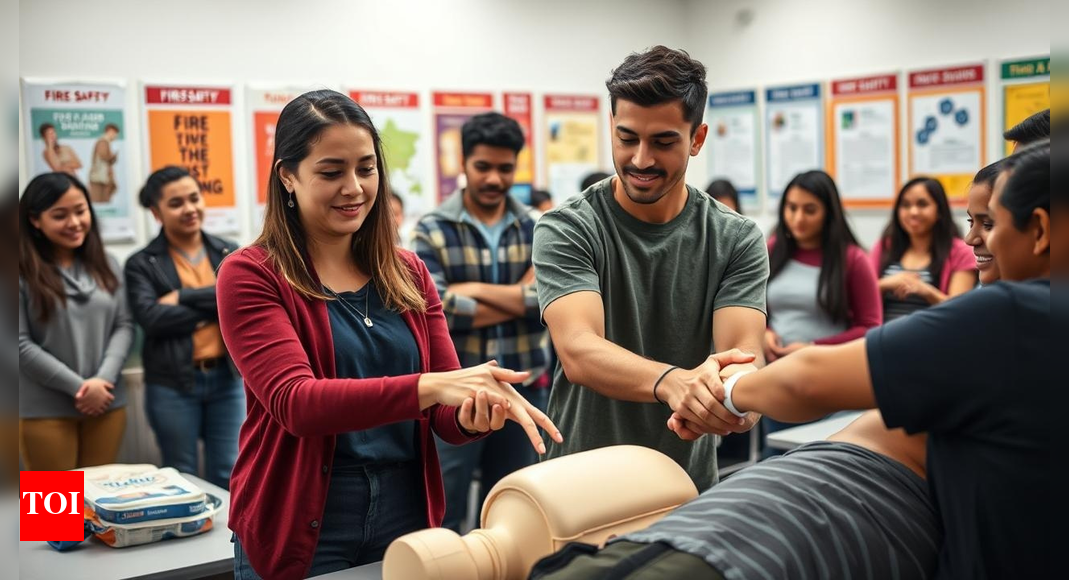
The proposed training would include skills like using fire extinguishers, performing CPR, and responding to emergencies.
The rationale behind this proposal is linked to security threats from Russia and the ongoing war in Ukraine.
There is an emphasis on bolstering civil defense alongside military preparedness.
An Asian roundup piece notes the topic only as ongoing discussions, signaling that the measure is under debate rather than enacted.
Based on the provided sources, there is no evidence of a binding order at this stage.
The proposal is under consideration with supportive stakeholders and includes caveats for student wellbeing.
Coverage Differences
Contradiction
DW (Western Mainstream) states that the interior minister "has proposed" integrating practical crisis training into schools, while The Times of India (Asian) frames it as "discussions"—a softer, non-committal formulation—implying debate rather than directive action. Both diverge from the claim that an order has been issued; neither source reports an official order.
Tone/Narrative
DW (Western Mainstream) provides detailed policy framing and context tied to national security and civil defense, whereas The Times of India (Asian) presents it as one brief item within a global news digest, signaling lower emphasis and fewer specifics.
Education Stakeholders on Crisis Preparedness
Key education stakeholders are portrayed as broadly supportive but with conditions.
DW reports that the German Teachers’ Association welcomes the plan for building student resilience and competence for real-life crises.
The Federal School Students Council also supports preparedness to increase safety and reduce stress during emergencies, while stressing the need for school social workers and psychologists so students are not overwhelmed by difficult topics.
The Asian roundup notes the issue’s existence but omits detailed reactions, consistent with its digest format.
Both sources situate the conversation within routine schooling rather than as ad hoc drills.
Coverage Differences
Missed information
DW (Western Mainstream) details supportive reactions from the German Teachers’ Association and the Federal School Students Council, including mental-health caveats; The Times of India (Asian) mentions the debate but does not include stakeholder responses or implementation caveats.
Tone/Narrative
DW (Western Mainstream) frames the move as institutional resilience-building within education, whereas The Times of India (Asian) presents it as a brief item in a wide-ranging news carousel, giving it less narrative depth or policy context.
Proposed Emergency Skills Curriculum
DW specifies that the proposed curriculum additions would teach students to operate fire extinguishers, perform CPR, and respond to emergency scenarios.
These practical skills are intended to be part of standard instruction rather than occasional exercises.
The security rationale connects the classroom focus directly to civil defense, reflecting concerns related to Russia’s war on Ukraine.
Student welfare remains a key consideration, with calls for social workers and psychologists to accompany lessons so that students are supported and not forced into distressing content alone.
The Asian digest highlights the discussion but does not detail the specific skills or the support framework.
Coverage Differences
Missed information
DW (Western Mainstream) lists specific skills—fire extinguishers, CPR, emergency response—and the need for mental-health support in schools; The Times of India (Asian) does not detail these concrete components, only acknowledging that such training is being discussed.
Narrative emphasis
DW (Western Mainstream) connects the classroom plan to national civil defense and the war in Ukraine, while The Times of India (Asian) does not frame it within this geopolitical context, likely due to its digest format.
School Crisis Preparedness Proposal
What remains unclear from the available coverage is any formal timeline, legal mandate, or nationwide order compelling schools to adopt these modules.
Both sources frame the development as a proposal under discussion with broad but conditional support, aimed at embedding crisis readiness into everyday school life.
The distinction matters: the sources do not substantiate that the interior minister has issued an enforceable order.
Additional reporting would be needed to verify any shift from proposal to binding directive or to clarify how curricula, teacher training, and student safeguards would be standardized across states.
Coverage Differences
Ambiguity/Uncertainty
Neither DW (Western Mainstream) nor The Times of India (Asian) provides evidence of a binding nationwide order, leaving implementation timelines and mandate status unclear.
Contradiction with prompt framing
The user’s framing of an ‘order’ conflicts with both sources, which report a proposal or discussions rather than an enacted mandate.