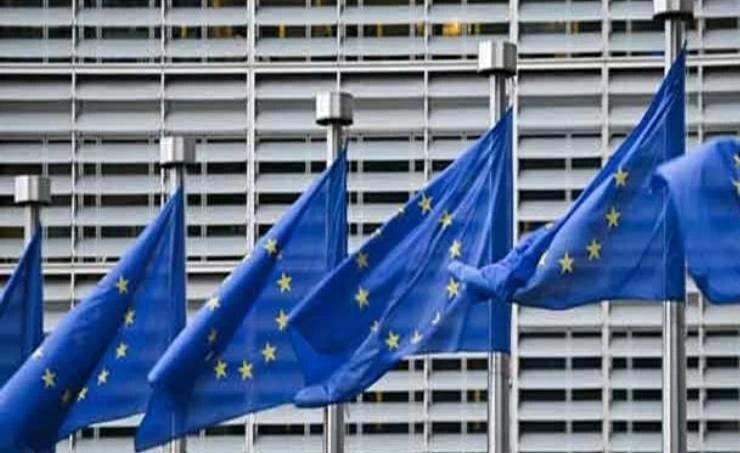
Germany and Italy Block EU Bid to Suspend EU-Israel Trade Pact in Luxembourg
Key Takeaways
- Germany and Italy blocked bid to suspend EU-Israel Association Agreement in Luxembourg.
- Push to suspend the EU-Israel Association Agreement failed to gain unanimity.
- Spain, Slovenia, and Ireland pressed for suspension; further measures planned for May 11.
EU-Israel pact blocked
Germany and Italy blocked a bid to suspend the EU-Israel trade association agreement during an EU foreign ministers meeting in Luxembourg on Tuesday, leaving the bloc split on whether to take punitive action over Israel’s war in Gaza and violence in the occupied West Bank and Lebanon.
“Germany and Italy have blocked a bid to suspend a European Union trade pact with Israel”
In the lead-up to the Foreign Affairs Council, Spain, Slovenia and Ireland urged a debate on suspending the association agreement, with Spain’s foreign minister Jose Manuel Albares saying he expected “every European country to uphold what the International Court of Justice and the UN say on human rights and the defence of international law”.

German Foreign Minister Johann Wadephul called the proposal “inappropriate”, insisting that “We have to talk with Israel about the critical issues,” and that “That has to be done in a critical, constructive dialogue with Israel.”
Italian Foreign Minister Antonio Tajani joined the pushback, telling reporters “No decision will be taken today” and later saying the bid had been shelved.
After the meeting, Tajani said, “Other possible initiatives will be discussed at the next ministerial meeting on May 11, and we will evaluate them,” according to ANSA as quoted by Al Jazeera.
POLITICO described the outcome as EU foreign ministers rejecting the push because Spain, Slovenia and Ireland failed to win the unanimity needed to suspend the agreement.
TRT World similarly reported that Kaja Kallas later confirmed there was “no support to suspend the agreement either fully or partially,” because suspension requires unanimity.
How the push formed
The push to suspend the EU-Israel association agreement was framed by Spain, Slovenia and Ireland as a response to Israel’s actions in Gaza, the occupied West Bank and Lebanon, and it was tied to the agreement’s human-rights clause.
Al Jazeera reported that the three governments sent a joint letter to EU foreign policy chief Kaja Kallas last week, saying Israel had taken measures that “contravene human rights and violate international law and international humanitarian law,” and that they breached the 1995 agreement outlining political, economic and trade relations between the EU and Israel.
The ministers pointed to a recently passed Israeli law that would impose the death penalty on Palestinians convicted in military courts of killing Israelis, describing it as “a grave violation of fundamental human rights” and a further step in the “systematic persecution, oppression, violence and discrimination” faced by Palestinians.
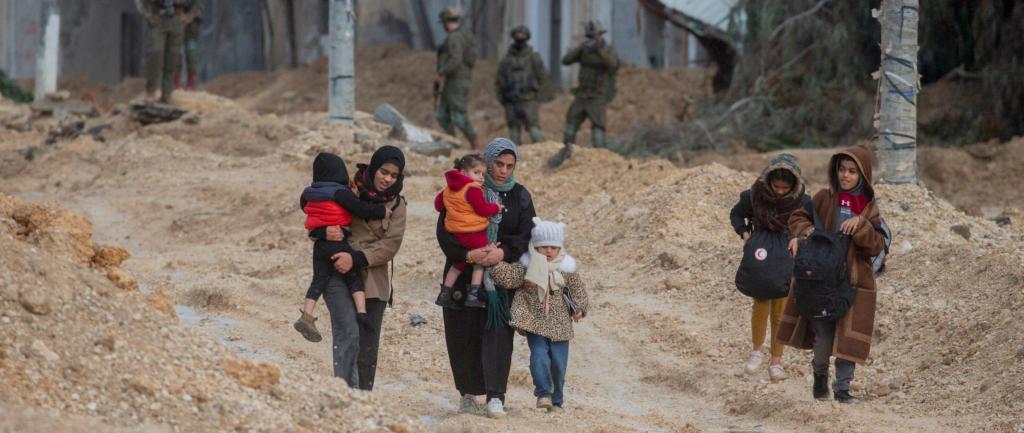
They also cited humanitarian conditions in Gaza as “unbearable,” with continuing violations of an October “ceasefire” and insufficient aid entering the territory.
In addition, the letter warned that violence in the West Bank was intensifying with settlers acting “with absolute impunity” and Israeli military operations causing civilian deaths.
Al Jazeera said the three countries argued Israel was in breach of Article 2 of the EU-Israel Association Agreement, which ties relations to respect for human rights, and that an EU review had already found Israel failing to meet those obligations.
The Guardian added that the EU’s political leverage debate was revived by recent shifts in Europe, noting that “Hungary’s veto was the only thing preventing the package of sanctions against violent settlers,” and that EU officials expected sanctions targeting extremist settlers could be revived once a new Hungarian government takes office next month.
POLITICO and Truthout both described the procedural hurdle as the need for unanimity for suspension, while Truthout also said the meeting in Luxembourg was held to consider suspending the EU’s special trade agreement with Israel.
Voices on both sides
The meeting in Luxembourg brought sharply contrasting reactions from European officials and rights groups, with supporters of suspension arguing that Europe’s credibility was at stake while Germany and Italy emphasized dialogue.
“Proposal to suspend EU trade agreement with Israel shelved: Italy 'Other possible initiatives will be discussed at the next ministerial meeting on May 11,' says Foreign Minister Antonio Tajani Burak Bir 21 April 2026•Update: 21 April 2026 LONDON The Italian foreign minister said Tuesday that a proposal to suspend the EU-Israel Association Agreement has been shelved, adding that EU members will discuss alternatives next month”
Spanish Foreign Minister Jose Manuel Albares said, “Today Europe’s credibility is at stake,” and he urged reconsideration of the association agreement, while Amnesty International’s Erika Guevara-Rosas said the EU’s failure to act represented “a moral failure” and “illustrates brazen contempt for civilian lives”.
Guevara-Rosas told reporters that “At this point, the EU’s decision to maintain its trade agreement with Israel represents a moral failure and illustrates brazen contempt for civilian lives, particularly in the Occupied Palestinian Territory (OPT) and in Lebanon.”
Irish Foreign Minister Helen McEntee argued the EU needed to “move in unison” and called Israel’s conduct “completely unacceptable,” while Wadephul insisted that “We have to talk with Israel about the critical issues,” and that dialogue should be “critical, constructive”.
Italian Foreign Minister Antonio Tajani said “No decision will be taken today” and later that “Other possible initiatives will be discussed at the next ministerial meeting on May 11, and we will evaluate them,” framing the outcome as a deferral rather than a rejection of all options.
TRT World reported that Kaja Kallas said there was “no support for this needed in the room,” and that “Given that the suspension of the association agreement needs unanimity, there was no support for this needed in the room.”
POLITICO quoted Belgium’s Maxime Prévot saying, “We must be able to act in order to weigh on the debate,” reflecting continued pressure even after the failure to suspend.
On the rights side, Truthout reported that “A group of two dozen UN experts also signed a statement urging the EU to suspend the agreement,” saying “Europe faces a clear moral test,” and that “The EU cannot credibly claim to uphold human rights while sustaining preferential trade with a State whose conduct has been found by multiple international bodies as amounting to genocide, crimes against humanity, and war crimes.”
How outlets framed it
Different outlets described the same Luxembourg meeting in sharply different terms, with mainstream reporting emphasizing procedural limits and alternative measures, while Western alternative outlets and rights-focused coverage framed the outcome as moral failure and contempt.
POLITICO said the ministers “ultimately declined to suspend the landmark treaty,” explaining that Spain, Ireland and Slovenia failed to win the unanimity needed, and it described Germany and Italy as “playing a key role in blocking the proposal.”

TRT World similarly emphasized the mechanics of unanimity, quoting Kaja Kallas that “there was no support to suspend the agreement either fully or partially,” and it described the bloc as “deeply divided” as pressure mounted over Israel’s war in Lebanon and actions in the occupied West Bank.
By contrast, Common Dreams called the move a “Shame!” and said Germany and Italy “blocked an effort to pause the trade deal,” quoting Wadephul calling it “inappropriate” and Tajani saying “no decision will be taken today,” while Amnesty International’s statement called the decision “a moral failure” and “illustrates brazen contempt for civilian lives.”
Truthout described the same event as a “moral test” and said the EU foreign ministers blocked a push backed by “UN human rights experts,” while also quoting Spanish Foreign Minister José Manuel Albares: “Today, Europe’s credibility is at stake.”
The Guardian framed the meeting as part of a broader European shift, writing that “It was a bad week for Israel in Europe” and linking the Luxembourg debate to Viktor Orbán’s loss of power in Hungary and Italy’s suspension of a defense pact.
The Guardian also quoted Mitvim thinktank director Maya Sion-Tzidkiyahu saying, “I expect once the [new] Tisza government is in place, that would be one of the first things the EU would like to push,” and it described sanctions on violent settlers as likely to be revived.
Meanwhile, Al Jazeera reported that opponents said the suspension effort had been “definitively shelved,” and it quoted Tajani about May 11 as the next step for “Other possible initiatives.”
Even within mainstream coverage, the Times of Israel described the meeting as “sparred” between diplomats and included a detailed breakdown of what would be paused if the agreement were suspended, including “€6 million (NIS 23.5 million) in financial support to Israel” and “€14 million (NIS 55 million) in annual support for projects supporting Israel in the context of the Abraham Accords.”
Next steps and stakes
The immediate consequence of the Luxembourg meeting was that the EU did not agree on suspending the EU-Israel association agreement, but multiple sources said the debate would continue through alternative measures and a next ministerial meeting.
“Germany and Italy on Tuesday rejected proposals to halt the EU’s cooperation agreement with Israel, even as anger mounts within the bloc over Israel’s actions in Lebanon and the occupied West Bank”
Al Jazeera reported that Tajani said “Other possible initiatives will be discussed at the next ministerial meeting on May 11, and we will evaluate them,” and it described opponents as saying the suspension effort had been “definitively shelved.”
TRT World said Kallas confirmed there was “no support to suspend the agreement either fully or partially,” and it emphasized that suspension needs unanimity among all 27 EU member states, while partial suspension of trade benefits would require a qualified majority.
POLITICO likewise said suspension failed because Spain, Slovenia and Ireland did not win unanimity, but it described a possible path through “measures that require a qualified majority of votes,” including targeted sanctions or partial measures focused on trade.
The Times of Israel added that if the agreement were suspended, “the EU’s €6 million (NIS 23.5 million) in financial support to Israel and €14 million (NIS 55 million) in annual support for projects supporting Israel in the context of the Abraham Accords” would be put on pause.
Amnesty International warned that the EU’s failure to act would be “remembered as another shameful chapter,” and it urged member states to “unilaterally suspend all forms of cooperation with Israel that may contribute to its grave violations of international law.”
In parallel, the Guardian described a broader trajectory in which long-delayed sanctions against violent settlers in the occupied West Bank could move forward, quoting Maya Sion-Tzidkiyahu that “I expect once the [new] Tisza government is in place, that would be one of the first things the EU would like to push.”
Al Jazeera also said Ireland was seeking to revive its Occupied Territories Bill, first introduced in 2018, which would ban trade in goods and services from settlements in occupied Palestinian territory, and it reported that progress had stalled despite unanimous backing in the lower house of parliament, the Dail.
Finally, Al Jazeera reported that Spain and Slovenia moved to curb trade with Israeli settlements after public protests, with Slovenia banning imports of goods produced in Israeli-occupied territories in August and Spain following with a decree that came into force at the beginning of 2026.
More on Europe

Germany and Italy Block EU Push to Suspend Israel Association Agreement in Luxembourg
20 sources compared
European Court Of Justice Strikes Down Hungary’s 2021 Anti-LGBTQ Law For Breaching EU Values
21 sources compared

Rumen Radev’s Progressive Bulgaria Wins Bulgaria Snap Election, Securing Majority in 240-Seat Parliament
13 sources compared
Rumen Radev’s Progressive Bulgaria Wins Bulgaria Parliamentary Election in Landslide
32 sources compared