Full Analysis Summary
Germany's Afghan Return Policy
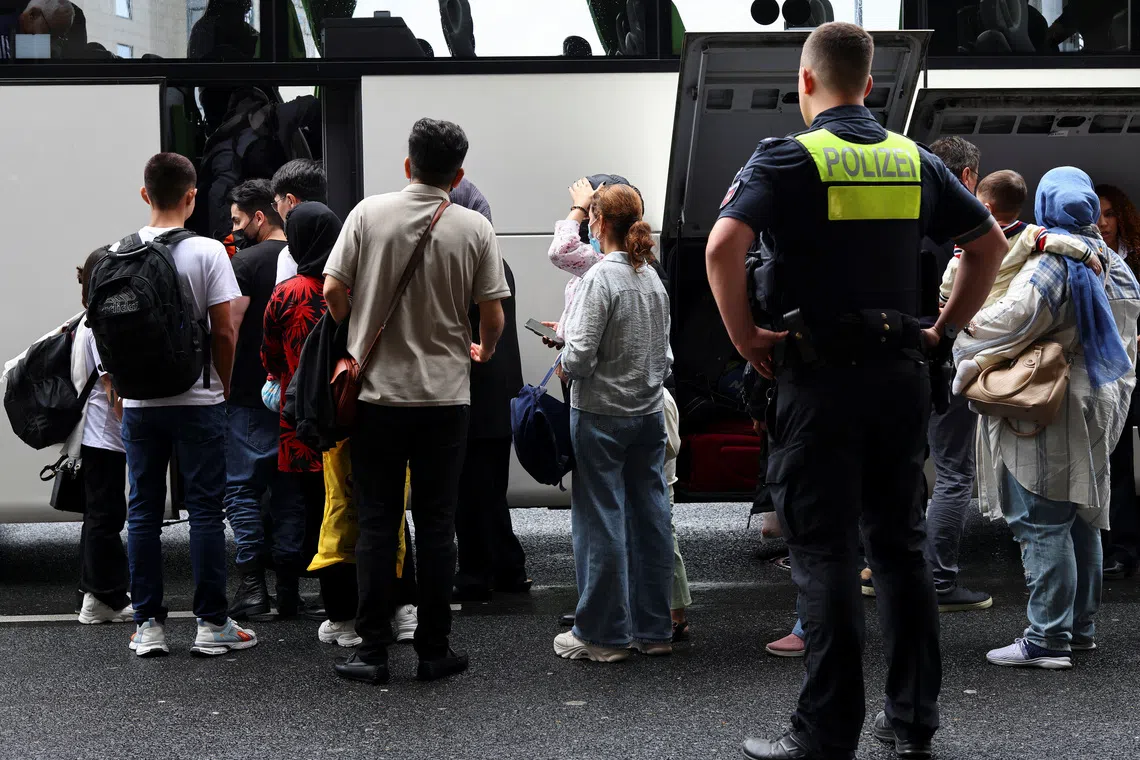
Germany is offering cash incentives to Afghan nationals stranded in Pakistan to abandon resettlement attempts and instead return to Afghanistan or a third country.
This move is framed as part of a broader shift toward voluntary returns alongside a strengthened deportation system.
The Straits Times reports that the program was announced by Interior Minister Alexander Dobrindt on November 5 to address migration concerns amid rising support for the far-right AfD.
Entry to Germany remains open only to those with confirmed approvals after security checks.
DW places this step within Berlin’s wider effort to encourage voluntary departures while expanding detention capacity and enforcing deportations if necessary.
SyriacPress, however, highlights concerns over political rhetoric telling refugees they “must go home,” emphasizing fears that the voluntary-return narrative may pressure other refugee groups toward forced repatriation.
Coverage Differences
tone
The Straits Times (Asian) presents a policy‑and‑process tone, focusing on the announcement date, target population, and linkage to AfD support. DW (Western Mainstream) adopts an administrative lens, emphasizing detention capacity, voluntary‑return targets, and enforcement mechanics. SyriacPress (Other) is alarmed and rights‑oriented, foregrounding the statement that refugees "must go home" and the anxieties this creates among Syrian Christians.
narrative
The Straits Times (Asian) links the program to domestic politics, citing rising AfD support as a driver, while DW (Western Mainstream) frames it in operational terms (detention beds, unclear nationalities, voluntary‑return ratios). SyriacPress (Other) narrates the policy context through the lens of Syrian refugee fears and party divisions rather than logistical targets.
Refugee Resettlement Challenges
According to The Straits Times, around 2,000 Afghans approved under an earlier resettlement scheme have been stuck in Pakistan for months after the conservative government froze the program.
While those with confirmed approvals may still enter after security checks, others are being steered toward paid “voluntary return.”
DW provides a broader perspective where authorities promote voluntary departures because they can outnumber forced removals, as seen in Berlin in 2019.
Deportations are complicated when identities are unclear, which also encourages the use of voluntary returns.
SyriacPress reports a contrasting political climate, with senior leadership urging refugees to return.
The report highlights ongoing violence and sectarian risks cited by rights groups, which increases skepticism about whether “voluntary” choices are truly safe or free from pressure.
Coverage Differences
missed information
The Straits Times (Asian) details the backlog of approximately 2,000 Afghans stuck in Pakistan and the freeze on the resettlement scheme, information not specified by DW (Western Mainstream) or SyriacPress (Other).
narrative
DW (Western Mainstream) frames voluntary return as a pragmatic tool that often outpaces forced deportations, while SyriacPress (Other) frames return debates through ongoing danger and fear among refugees; The Straits Times (Asian) frames the Afghan offer as a policy response tied to domestic political pressure from the AfD.
Refugee Deportation Challenges
Operationally, DW reports a tightening deportation infrastructure with only 10 of 16 states having dedicated detention facilities.
The nationwide capacity for detainees is about 800 beds, while the detainee population reached roughly 6,000 in 2024, mostly men.
The federal goal is to expand capacity and increase voluntary returns to about 15,000 in 2025 alongside some 1,700 deportations, while maintaining the threat of enforcement.
The Straits Times focuses on immediate incentives for Afghans in Pakistan and the government’s refusal to disclose payout amounts or uptake, making the program’s scale unclear.
SyriacPress highlights how high-level calls for refugees to return home intersect with ongoing reports of violence, kidnappings, and sectarian attacks.
These conditions fuel fears that tightening enforcement and political messaging will pressure returns even where safety is uncertain.
Coverage Differences
unique/off-topic
DW (Western Mainstream) uniquely supplies granular system metrics—detention capacity, detainee counts, and return targets—information not present in The Straits Times (Asian) or SyriacPress (Other).
missed information
The Straits Times (Asian) flags a lack of transparency about the incentive amounts and beneficiaries, which neither DW (Western Mainstream) nor SyriacPress (Other) quantifies or confirms.
Migration Policy and Political Debate
Politically, The Straits Times situates the Afghan offer within a landscape of rising AfD support, indicating that migration control responses are calibrated to domestic pressure.
DW presents the state’s approach as a technocratic balance: encouraging voluntary exits, expanding detention capacity, and enforcing deportations where needed.
SyriacPress reports on CDU divisions and quotes leadership portraying Syria as entering a new chapter under Ahmad al‑Sharaa.
Rights advocates counter that return remains unsafe, reflecting a polarized debate about what counts as a safe or ethical return policy.
Coverage Differences
contradiction
SyriacPress (Other) reports claims that the war is over and refugees "must go home," while simultaneously reporting rights groups' warnings that return is unsafe due to ongoing violence and kidnappings—implicitly contradicting the premise that conditions are safe for return.
narrative
The Straits Times (Asian) ties migration policy to electoral dynamics (AfD), while DW (Western Mainstream) emphasizes governance mechanics and measurable targets; SyriacPress (Other) centers vulnerable communities and intra‑party divisions as the lens to understand return policy.
Challenges in Afghan Return Program
Important uncertainties remain regarding the Afghan return program.
The Straits Times notes that Berlin has not disclosed how much cash is being offered or how many Afghans have accepted it, limiting transparency about the program’s scope and impact.
DW highlights practical obstacles that can delay deportations, such as unclear nationalities and missing documents.
DW also projects large voluntary return numbers for 2025 alongside continued enforcement efforts.
SyriacPress reports that despite political claims of post-war normalcy, ongoing violence and sectarian attacks make return unsafe for many.
This situation reinforces that what is labeled as “voluntary” may be influenced by policy pressure and disputed safety assessments.
Coverage Differences
missed information
The Straits Times (Asian) uniquely highlights the absence of data on cash amounts and uptake; DW (Western Mainstream) and SyriacPress (Other) do not provide those figures.
tone
DW (Western Mainstream) retains a logistical, forecast‑driven tone about returns and deportations, while SyriacPress (Other) stresses danger and fear among refugees; The Straits Times (Asian) emphasizes policy opacity and political drivers.