Europe06 December, 20253 min read
Germany's Bundestag Votes to Reintroduce Voluntary Military Service, Authorizes Needs-Based Conscription for 18-Year-Olds
Bundestag voted to reintroduce voluntary military service for 18-year-olds starting January 2026 Legislation allows needs-based conscription if voluntary recruitment falls short
14 outlets told this the same way.
Outlets did split on Marco Rubio Urges Europe To Awaken From Slumber In Athens Speech →
German military service reform
Germany’s Bundestag has approved a controversial law reintroducing a revamped system of military service aimed at boosting the Bundeswehr, passing the measure by 323–272. Under the new framework, all 18-year-olds will be sent a questionnaire asking whether they are willing to join the armed forces. Completion of the questionnaire will be mandatory for men and voluntary for women, which the government says builds a pool of potential recruits while keeping service voluntary for now.
“The bill, passed on 5 December 2025, will send all 18-year-olds a request in January asking if they’re willing to join; men will be required to reply and men born after 1 January 2008 will undergo phased-in medical evaluations.”
The law also creates a pathway for needs-based conscription that could be activated only after a separate parliamentary vote and, if numbers require, may use random selection. Government figures presented the reform as a response to Russia’s full-scale invasion of Ukraine and as a move to strengthen Germany’s role in European defence and conventional forces.
Bundeswehr expansion and recruitment
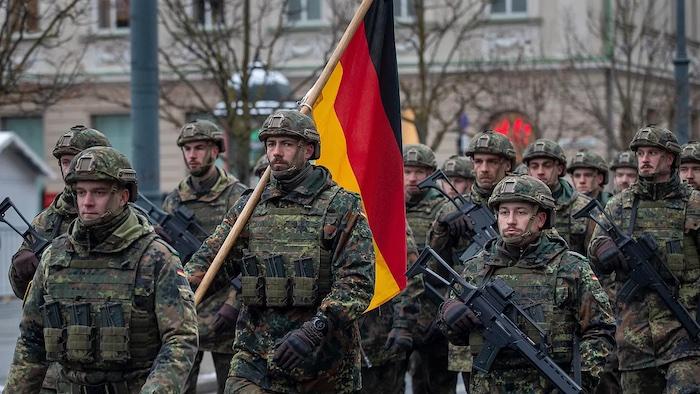
The law sets ambitious expansion targets for the Bundeswehr and lays out measures designed to entice recruits. Reported targets include growing active personnel from roughly 182,000-183,000 today to about 260,000 and building a reservist pool of around 200,000 in the coming decade(s). Officials also highlight recruitment incentives and capacity changes, including advertised volunteer pay of roughly €2,600 per month, plans for higher pay, better training and short-term enlistment options, and a requirement for the Bundeswehr to build the capacity to process hundreds of thousands of potential recruits annually.
Media framing of German reform
Key political figures and context shape how outlets describe the reform. Chancellor Friedrich Merz is widely reported as a driving force pushing to rebuild and 'build what he calls Europe's strongest conventional army'. Defence Minister Boris Pistorius is quoted framing the reform as strengthening Germany's role in European defence and as a practical step to speed mobilisation if needed.
“The measure is part of Chancellor Friedrich Merz’s plan to build what he calls Europe’s strongest conventional army.”
Some reporting situates the vote inside wider coalition and domestic policy debates. For example, SSBCrack notes the Bundestag was also debating contentious pension reform, underlining the fragile coalition politics surrounding the package.
Youth protests and objections
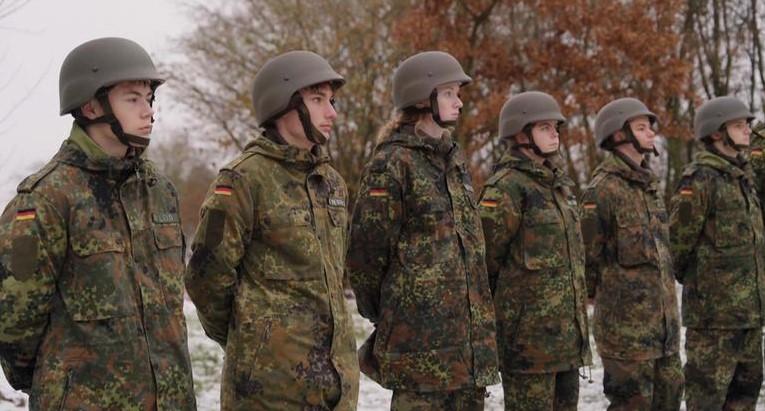
Youth and civil society reactions are a consistent theme: multiple outlets report planned student strikes in up to 90 cities and protests such as an expected gathering of about 1,500 people in Hamburg. Organisers and some reports use stark language to explain opposition; students are quoted saying they do not want to spend months or half a year of their lives locked in barracks 'learning to kill'.
Opposition parties and the Left are urging resistance and pushing information on conscientious objection. Some government spokespeople invite protest but emphasise limited immediate obligations, such as answering a questionnaire and a benign medical.
Reporting inconsistencies and dates
Reporting differs on international comparisons and some implementation details, leaving certain elements ambiguous in the coverage. Multiple outlets link the move to wider European trends, noting France’s recent voluntary programme and Denmark’s steps on conscription. Sources vary on precise start dates for questionnaires and medical checks, with some reports saying January 2026 for questionnaires and July 2027 for medicals.
“The vote makes Germany one of several European countries reintroducing or expanding national‑service schemes (France recently launched a separate voluntary programme for 18‑ and 19‑year‑olds).”
Other outlets give different timings, with Sky stating the bill passed on 5 December 2025 and NBC using phrases like 'from next year' and 'From January 2027 the Defense Ministry must report ...'. These discrepancies create ambiguity about exact sequencing and immediate obligations for young people.