
Ghalibaf advances politically, and the Guards bear the burden of war... Who rules Iran today?
Key Takeaways
- Ali Khamenei assassinated on February 28, reshaping Iran's leadership framework.
- Ali Larijani assassinated on March 18, removing key security leadership.
- A governance formula beyond a single ruler is emerging.
Power shift after leadership transition
Today the question in Iran is no longer who is the Leader but who runs the state after blows to the highest levels of power.
“Today the question in Iran is no longer who is the Leader but who runs the state after blows to the highest levels of power”
After the assassination of the former Leader Ali Khamenei on February 28, and then the Secretary General of the Supreme National Security Council Ali Larijani on March 18, a governance formula more complex than the image of a one-man leadership began to unfold.
What has appeared up to March 22 is a practical distribution of power, embodied in granting the new Leader legitimacy and continuity, while the Revolutionary Guards hold the tools of war and security, and Parliament Speaker Mohammad Bagher Ghalibaf advances to the political forefront more than any other civilian name, while the government handles daily administration and prevents the erosion of state institutions.
Officially, the succession was decided on March 9 when the Assembly of Experts announced the selection of Mojtaba Khamenei as the new Leader.
But his first public signals did not go toward broad restructuring, but toward stabilizing continuity.
He directed the continuation of the work of those appointed directly by his father until further notice, then dedicated his New Year message on the occasion of the Iranian New Year to emphasize economic resistance in the context of unity and national security.
Constitutionally, the Leader retains the final say in the armed forces, public policy, and war and peace, while the President, though the highest official after the Leader, exercises his powers except in matters directly related to leadership.
This means that the center of legitimacy remains clear, but the center of daily war administration is no longer confined to it alone.
Ghalibaf's rhetorical ascent
As for Ghalibaf, his rise here does not require formal description as much as the language he himself reveals.
His posts on his X account after Larijani’s assassination moved from the Parliament Speaker's rhetoric to the language of a man who sets the ceiling of engagement and crafts political messages for war.
Ghalibaf spoke of the Strait of Hormuz not returning to what it was before the war, then announced that the eye-for-an-eye formula had entered into effect and a new level of confrontation had begun, and he placed Larijani’s assassination within a broader mobilization narrative when he said this people would bear thousands like him, then mocked American narratives about destroying Iran’s missile capability.
It is not hard to see that this language does not resemble an ordinary parliamentary commentary, but a language of a warfront political front, speaking from within the decision center rather than from its margin.
Ghalibaf's track record
What makes Ghalibaf qualified for this ascent is not his speech alone but his track record.
“Today the question in Iran is no longer who is the Leader but who runs the state after blows to the highest levels of power”
He is among the few who have passed through the levers of Iran’s hard power as well as civil administration and electoral politics together.
He began with the Revolutionary Guards during the Iran-Iraq War, then led the Guards’ air force, moved to head the police between 2000 and 2005, before taking the post of Tehran mayor from 2005 to 2017, then returning to the heart of power via the Parliament as its president since 2020.
This path gave Ghalibaf what many lack at a moment of war: insider knowledge of the security establishment, experience in managing the bureaucratic state, and the ability to address the political sphere in public.
Therefore, it seems, after Larijani’s disappearance, the most ready to fill the space bridging the Guards and the governance institutions and the political front.
Impact of Larijani's loss
The weight of this ascent is heightened because Larijani’s assassination was not merely the loss of a senior official, but the loss of a man who combined more than one role at the same time.
The Leader’s position described him in the obituary as the head of the Supreme National Security Council and representative of the leadership in it, and a person with diverse political, military, security, and administrative experience.
In other words, the system did not lose only a post, but a persona that connected the religious, security, and political institutions.
With his absence, the space for major intermediaries narrowed, and the space for faces capable of speaking in a language of deterrence and mobilization widened, headed by Ghalibaf.
More on Iran

President Trump Says Iran Deal Within Reach Amid Talks With Senior Iranian Official
10 sources compared

Trump Approves Iran Operation After Netanyahu Presses for Joint Strike on Khamenei
12 sources compared

President Donald Trump orders ICE officers deployed to airports amid DHS shutdown.
227 sources compared
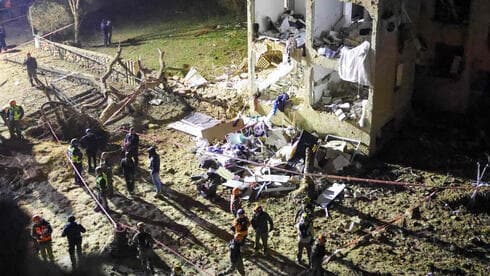
Iranian Missiles Strike Israel; Officials Report 180 Injured Amid Conflicting Casualty Figures.
12 sources compared