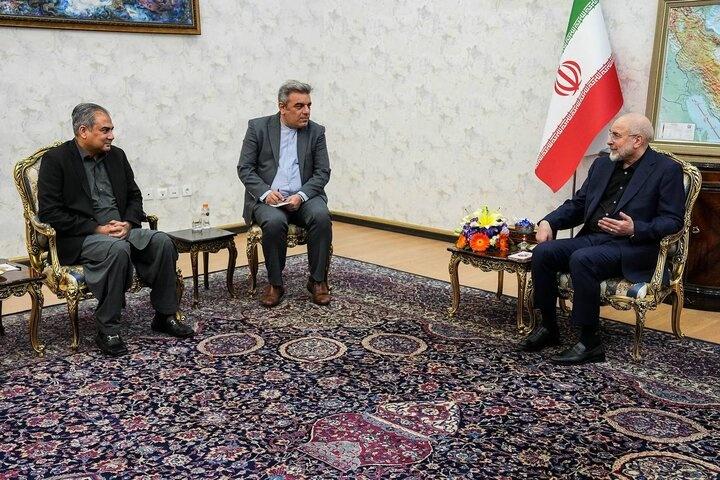
Ghalibaf Says U.S. Presence Breeds Insecurity in West Asia, Meets Pakistan’s Interior Minister
Key Takeaways
- Ghalibaf says U.S. presence in West Asia breeds insecurity.
- Remarks delivered during Tehran talks with Pakistan’s Interior Minister Mohsin Naqvi.
- Officials cite recent regional events proving the U.S. presence undermines regional stability.
Tehran meeting on U.S. role
Iranian Parliament Speaker Mohammad Bagher Ghalibaf met Pakistan’s Interior Minister Syed Mohsin Naqvi in Tehran on Sunday afternoon and argued that U.S. presence in the region breeds insecurity rather than security.
“Tehran, IRNA – Parliament Speaker Mohammad Bagher Ghalibaf has emphasized that recent events have shown that the presence of the United States in the region not only does not bring security but also creates the ground for insecurity”
Ghalibaf said, "Some regional governments assumed the U.S. presence would bring them security, but recent incidents proved that this presence is not security-generating, but rather provides the groundwork for insecurity."

In the same meeting, Ghalibaf said bilateral relations between Tehran and Islamabad are currently favorable and that cooperation in political, economic, cultural, and security fields must increase and accelerate compared to the past.
Naqvi conveyed greetings from Pakistan’s Prime Minister, Parliament Speaker, and Army Chief to Ghalibaf, adding, "The nations of the two countries were already close, but now they have become closer."
Condemnation and mediation hopes
Press TV reported that Ghalibaf told Naqvi in Tehran that joint U.S.-Israeli aggression against Iran exposed the reality that American military presence brings “nothing but insecurity” to West Asia.
Press TV quoted Ghalibaf saying, "Recent events have made it clear that the US presence has not brought security to the region; rather, it has itself become a source of insecurity and instability," while also describing the U.S. and Israeli regime as bringing “evil and instability” through war, intervention, and pressure policies.
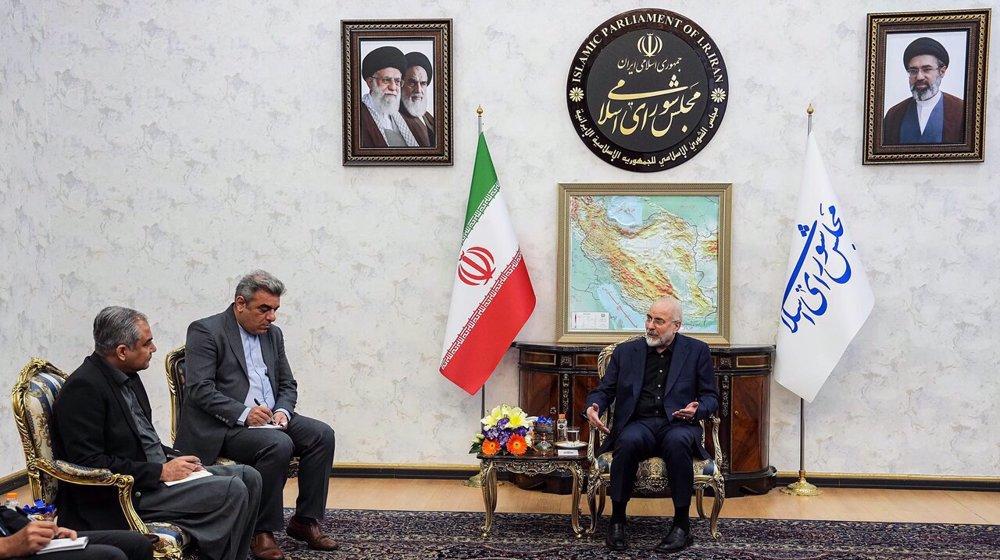
The same Press TV account said Naqvi praised Iran’s position during negotiations in Islamabad and expressed hope that Islamabad would help bring the negotiations to a successful conclusion.
Press TV also stated that Pakistan has been brokering indirect negotiations between Tehran and Washington after the two sides agreed to a ceasefire following 40 days of intense fighting on April 8, and that talks in Islamabad on April 11–12 collapsed over excessive U.S. demands.
Ceasefire, strikes, and next steps
Türkiye Today said the Pakistani Interior Minister Mohsin Naqvi met separately with Iranian President Masoud Pezeshkian and parliament Speaker Mohammad Baqer Ghalibaf in Tehran on Sunday, with both sides crediting Islamabad’s mediation for the ceasefire that halted a conflict begun in February.
“Ghalibaf received the visiting Pakistani minister in Tehran on Sunday afternoon”
Türkiye Today described the ceasefire brokered through Pakistani mediation as taking effect on April 8, halting exchanges that had included U.S. and Israeli strikes on Iran, Iranian retaliatory strikes targeting Israel and U.S. allies in the Gulf, and the closure of the Strait of Hormuz.
Türkiye Today added that subsequent talks in Islamabad failed to produce a durable settlement and that U.S. President Donald Trump later extended the truce indefinitely.
In that same reporting, Ghalibaf argued that Washington’s military and political footprint undermines stability, saying, "Recent events showed that the U.S. presence in the region causes insecurity," and Naqvi said Pakistan hopes ongoing negotiations will yield a concrete result.
More on Iran

Trump and Netanyahu Hold Tense Call Over New Iran Deal Proposal, Axios Says
10 sources compared

U.S. Senate Advances Tim Kaine War Powers Resolution To End War With Iran
20 sources compared
JD Vance Says U.S. Made A Lot Of Progress In Iran Talks After Trump Postponed Attack
21 sources compared

US Central Command Chief Brad Cooper Rejects Responsibility for Minab School Strike
10 sources compared