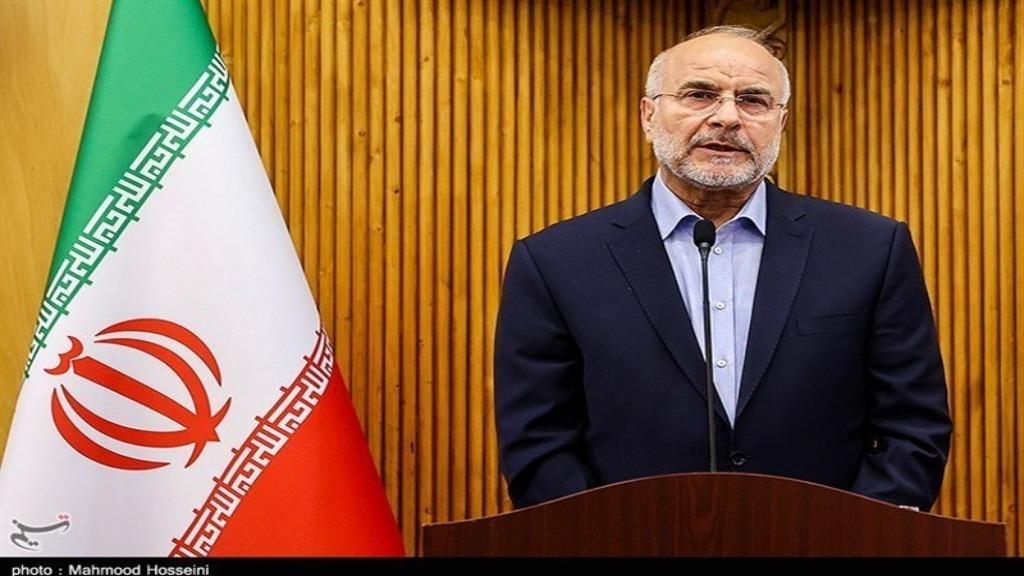
Ghalibaf Warns US Mine-Clearing Vessels Would Be Fired Upon In Strait Of Hormuz
Key Takeaways
- Ghalibaf warns US mine-clearing vessels would be fired upon amid provocations.
- Hormuz under Iranian control; Tehran holds strategic oil leverage.
- US provocations; regime-change aims deemed delusional.
Hormuz Control and Warnings
Iran’s Parliament Speaker Mohammad Bagher Ghalibaf said the Strait of Hormuz is under Iranian control, describing an American attempt to remove mines as a violation of the ceasefire and warning that American mine-clearing vessels would be fired upon if they advanced even a little.
“Iran’s Parliament Speaker Mohammad Bagher Qalibaf has issued a direct and calculated response to fresh provocations from the US administration, warning that Washington has exhausted its playbook in the oil market while Tehran still holds decisive strategic cards”
In a televised interview, Ghalibaf said that “if there is any crossing through the strait at present, it is under our control,” and he warned that if the United States continues the blockade, “navigation through the Strait of Hormuz will be restricted.”
The IRGC Navy said it would close the Strait of Hormuz starting Saturday afternoon, April 18, “until the blockade is lifted,” and it added that “approaching the waterway constitutes collaboration with the enemy and that the offending vessel will be targeted.”
The IRGC Navy also stressed that “no vessel may depart its moorings in the Gulf waters and the Sea of Oman,” and that “approaching the Strait of Hormuz will be considered collaboration with the enemy, and the violating vessel will be targeted.”
In the same reporting, CNN was cited saying Tehran would give priority to ships that pay transit fees to cross the Strait of Hormuz, with a senior Iranian official explaining that limits on the number of ships allowed to pass meant Iran would prioritize faster responders that pay for security and safety services.
The article also ties the tightening to broader market and diplomatic signals, noting that Brent crude fell 11 percent to $88 per barrel after the announcement of the reopening of the Strait of Hormuz, while British Foreign Secretary Yvette Cooper said on Saturday, April 18, that “the Strait of Hormuz has not yet returned to normal.”
Mine-Clearing, Blockade, and Fire
The Iranian statements were framed as a response to what Tehran described as repeated American violations and maritime piracy under the cover of the blockade, with the Khatam al-Anbiya Central Headquarters announcing on Saturday, April 18, that transit through the strait again came under tight military control.
The report says the Khatam al-Anbiya Central Headquarters cited “repeated American violations and maritime piracy under the cover of the blockade” as the reason for reimposing tighter oversight.
It also says Iran had previously agreed “in good faith to allow managed passage for a limited number of oil tankers and merchant ships,” but that “continuing American actions forced Tehran to reimpose tighter oversight.”
The same account describes a direct escalation at sea: “two merchant ships were fired upon while attempting to pass through the strait,” according to “three sources in maritime security and navigation,” with the incident occurring on Saturday, April 18 after Iran announced renewed tightening of its control.
TankersTrackers was cited saying that two Indian vessels, after being fired upon by IRGC forces in the Strait of Hormuz, were forced to alter course and head west, and it identifies one as “a giant oil tanker flying the Indian flag, carrying about two million barrels of Iraqi oil.”
The article adds that Reuters said ship-tracking systems had previously shown a convoy of eight tankers crossing the Strait of Hormuz “in the first broad movement of ships since the start of the US and Israeli military strikes on Iran on February 28 of last month, about seven weeks ago.”
Diplomatic Deadlines and Truce
The Hormuz tightening unfolded alongside a broader ceasefire timeline described in the same reporting, including a two-week truce and a specific Wednesday deadline.
“Iran's Parliament Speaker Mohammad Bagher Ghalibaf said in a televised interview that the Strait of Hormuz is under Iranian control, adding that his country faced an American attempt to remove mines and calling it a violation of the ceasefire”
The article says American President Donald Trump warned that if no peace agreement is reached by Wednesday, April 22, “the end of the two-week truce, fighting could resume.”
It also states that Tehran had announced on Friday, April 17, following a separate 10-day ceasefire brokered by the United States between Israel and Hezbollah in Lebanon, a temporary reopening of the Strait of Hormuz.
The report then says that on Saturday, April 18, the Khatam al-Anbiya Central Headquarters announced that transit through the strait again came under tight military control by the Islamic Republic.
The same account says Washington did not immediately respond to the statements, and it places the situation in a “delicate diplomatic moment” by quoting British Foreign Secretary Yvette Cooper as saying, “we are in a delicate diplomatic moment; a ceasefire has been reached, but normal movement through the strait has not yet resumed.”
The article also includes a market reaction tied to the reopening, stating that Brent crude fell 11 percent to $88 per barrel after the announcement of the reopening of the Strait of Hormuz.
Qalibaf’s Oil Leverage Message
In parallel with the operational statements about Hormuz, Iran’s Parliament Speaker Mohammad Bagher Qalibaf issued a message that framed the confrontation in terms of oil leverage and strategic options.
Al-Manar TV Lebanon reported that Qalibaf warned the US had exhausted its playbook in the oil market while Tehran still held “decisive strategic cards,” and it said he posted the message on Sunday.
The report includes a line from Qalibaf’s social media post that reads, “They brag about the cards,” and it presents a supply-demand equation that includes “SOH (partly played)+BEM(unplayed)+Pipelines(unplayed).”
Al-Manar TV Lebanon also says analysts interpreted the message as a “calm, factual warning to US policymakers: do not mistake temporary market maneuvers for real strength.”
The same report states that while the Islamic Republic has only partially activated its options, including “the Strait of Hormuz, the Bab-el-Mandeb Strait, and key pipeline routes,” the United States has already burned through its easiest and most immediate measures, “notably Strategic Petroleum Reserve releases and limited demand-side pressure.”
It further claims that further US provocations risk driving pump prices toward “six dollars a gallon or higher,” and it links that to the “summer vacation” reference as a domestic political cost for the US administration.
Strategic Analysis and Non-Negotiables
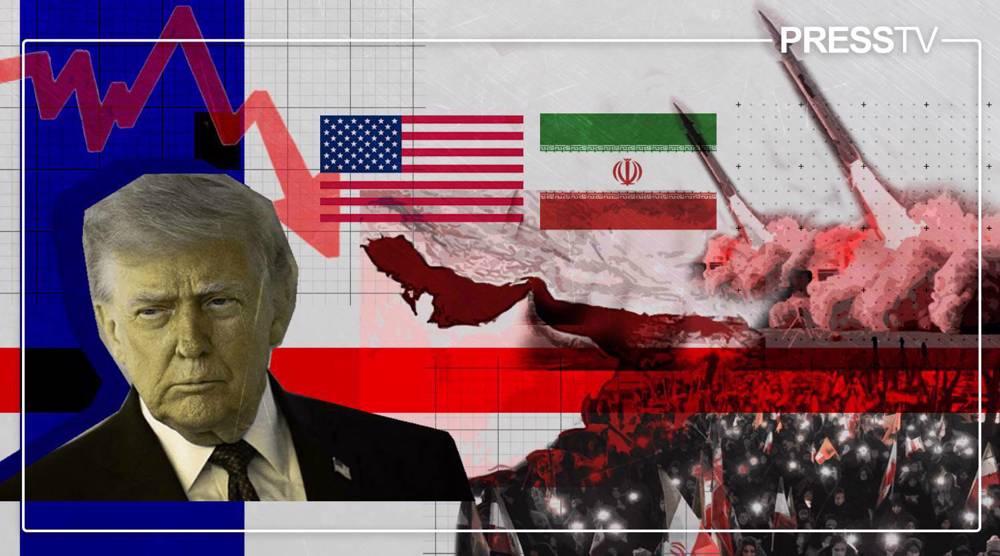
Press TV’s strategic analysis portrays Iran’s posture as one of leverage and refusal to concede on missiles, enrichment, and control of the Strait of Hormuz, while it depicts US diplomacy as driven by desperation.
“By Press TV Strategic Analysis Desk America launched a war of aggression against the Islamic Republic of Iran with a checklist of lofty and ambitious goals: “regime change,” destruction of Iran’s nuclear infrastructure, crippling of its missile program, and forcing a retreat from the region”
The analysis says America launched a war of aggression against the Islamic Republic of Iran with a checklist including “regime change,” “destruction of Iran’s nuclear infrastructure,” “crippling of its missile program,” and “forcing a retreat from the region,” and it asserts that “Not a single objective was achieved.”
It claims that “The complete control over the Strait of Hormuz now rests firmly in Iranian hands,” and it argues that “Iran was never the aggressor,” adding that Iran “absorbed the first blows” and endured “the assassination of its beloved Leader and top-ranking military commanders and senior officials.”
The analysis also frames American diplomatic activity—“the Islamabad talks, the back-channel whispers, the theatrical media performances”—as “the death spasm of a drowning empire.”
Press TV says a “60-day congressional deadline ticks down,” and it links the pressure to “Midterm elections loom” and “Global economic turmoil rages,” while it claims “Domestic support collapses” as the American public turns against the war.
In its description of Iran’s “red line,” Press TV says Iran’s posture after a “40-day war” includes “absolute refusal to grant any concession to the aggressor – on missiles, on enrichment, or the Strait of Hormuz,” and it insists that “Negotiation does not mean surrendering strategic assets.”
More on Iran
U.S. Military Strikes Multiple Targets in Iran After Bahrain, Kuwait, Jordan Face Iranian Fire
12 sources compared

U.S. Launches Self-Defense Strikes on Iran After Apache Helicopter Downing Near Strait of Hormuz
14 sources compared
U.S. Military Strikes Multiple Targets in Iran After Trump Warns Tehran Will Pay Price
16 sources compared
U.S. Launches Self-Defense Strikes Against Multiple Targets in Iran After Helicopter Downing
12 sources compared