
Gimlet Labs Raises $80M Series A Led by Menlo Ventures
Key Takeaways
- Gimlet Labs' $80 million Series A led by Menlo Ventures.
- Multi-silicon inference cloud unifies CPUs, GPUs and memory-heavy systems.
- Founded by a Stanford adjunct professor.
Company Background
Gimlet Labs, founded by Stanford adjunct professor Zayn Asgar, has emerged as a promising AI infrastructure startup addressing critical bottlenecks in AI inference performance.
“SAN FRANCISCO, March 23, 2026 (GLOBE NEWSWIRE) -- Gimlet Labs, the Applied AI research and product company, today announced that it has seen record demand for its agent inference cloud since the company emerged from stealth five months ago with eight-figure revenues”
The company positions itself as solving fundamental challenges in AI computing through innovative software that unifies diverse hardware architectures.

According to mezha.net, Asgar established the company specifically to tackle AI inference bottlenecks with software capable of unifying CPUs, GPUs, and memory-heavy systems.
This foundation in academic research and practical problem-solving has positioned Gimlet as a unique player in the competitive AI infrastructure landscape.
The company's founding team, including cofounders Michelle Nguyen, Omid Azizi, and Natalie Serrino, brings significant experience from their previous work together at Pixie, an observability tool startup acquired by New Relic in 2020.
Technology Innovation
Gimlet Labs has developed groundbreaking technology that addresses the inherent heterogeneity challenges in modern AI infrastructure.
The company claims to have created the world's first and only "multi-silicon inference cloud" - a software toolkit that enables AI workloads to run simultaneously across different types of hardware.

According to mezha.net, this solution can distribute application workloads among standard processors (CPU), GPUs optimized for AI, and memory-rich systems.
Asgar emphasized this capability with the statement, "We actually run on any available hardware."
The technology operates by slicing up agentic workloads so they can be spread across all kinds of hardware, and the company claims it reliably speeds AI inference up by 3x to 10x for the same cost and power consumption.
TechCrunch reports that Gimlet can even slice the underlying model so that it runs across different architectures, using the best chip for each portion of the model.
Funding Success
Gimlet Labs has successfully secured significant funding to accelerate its growth and market expansion, raising an $80 million Series A round led by Menlo Ventures.
“Stanford adjunct professor and successfully exited founder Zain Asgar just raised an $80 million Series A for a startup that solve the AI inference bottleneck problem in an astute way”
According to Markets Insider, this latest investment brings the company's total funding to $92 million since its inception.
The round attracted prominent participation from multiple venture capital firms, including Factory, which had previously led the seed round, as well as Eclipse, Prosperity7, and Triatomic.
The funding momentum was substantial, with TechCrunch reporting that after Asgar randomly encountered Tim Tully about a year ago and received angel investments from Stanford professors, VCs began calling, leading to a term sheet that quickly attracted a "pretty big swarm of funding" and an oversubscribed round.
The company secured participation from notable individual investors including Sequoia's Bill Coughran, Stanford Professor Nick McKeown, former CEO of VMware Raghu Raghuram, and Intel CEO Lip-Bu Tan.
Market Position
The company's strategic positioning targets the most demanding segments of the AI infrastructure market, focusing on frontier labs and large-scale AI deployments.
Gimlet's product, delivered either as software or through an API to its own Gimlet Cloud, is specifically designed for the largest AI model labs and data centers rather than rank-and-file AI app developers.
According to TechCrunch, the company has already established partnerships with major chip makers including NVIDIA, AMD, Intel, ARM, Cerebras, and d-Matrix, demonstrating strong industry validation.
Menlo Ventures partner Tim Tully emphasized the strategic importance of Gimlet's approach, stating that "heterogeneity is inevitable, and Gimlet Labs is ahead of it."
Similarly, Prosperity7 Ventures Managing Director Abhishek Shukla noted that "homogeneous silicon cannot deliver the performance and efficiency these deployments require" and that Gimlet's "multi-silicon orchestration is the missing layer in the stack."
This recognition of industry trends toward heterogeneous computing environments positions Gimlet as addressing a critical gap in current AI infrastructure solutions.
Business Performance
Gimlet Labs has demonstrated strong business traction and market acceptance since its public launch in October 2023.
“A Stanford adjunct founded Gimlet Labs to solve AI inference bottlenecks with software that unifies CPUs, GPUs, and memory heavy systems”
According to TechCrunch, the company reported eight-figure revenues out of the gate, indicating at least $10 million in initial business.
The startup's customer base has more than doubled in the last four months, now including a major model maker and an extremely large cloud computing company, although Asgar declined to name these specific clients.
This rapid growth in customer acquisition suggests strong market demand for Gimlet's heterogeneous computing solutions.
The company currently employs 30 people and is planning to use its new funding to expand its team and rapidly scale out its inference cloud to serve frontier labs' urgent demand for faster and more efficient inference.
The combination of strong early revenue, expanding customer base, and strategic funding positions Gimlet Labs for continued growth in the competitive AI infrastructure market.
More on Technology and Science

UN Says 2025 Heat Will Last Thousands of Years
11 sources compared

UN Warns 2025 Heat Record Will Endure for Thousands of Years
14 sources compared
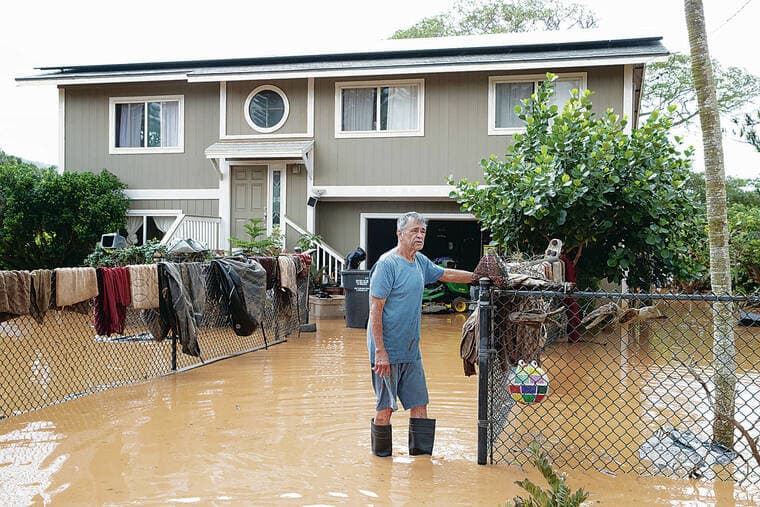
Hawaii Suffers Its Worst Floods in Over 20 Years, Prompting Thousands to Evacuate
46 sources compared

Kona Low Storms Strike Oʻahu and Maui, Hawaii Faces Worst Flooding in 20 Years
24 sources compared