Goldman Sachs' analysis of "How long will the Iran war last": The market has only traded "inflation," not "recession."
Key Takeaways
- Goldman Sachs' Top of Mind report says markets price in inflation shocks, not recession.
- Markets ignore the devastating impact of high energy costs on global growth.
- Deadlock in Strait of Hormuz cited as a factor.
Market pricing and forecast
Goldman Sachs' latest flagship macro report, 'Top of Mind,' released on March 20, warned that global assets are currently only fully pricing in 'inflationary shocks,' while completely ignoring the devastating impact of high energy costs on global economic growth.
“Original author: Gao Zhimou Original source:Wall Street News In its latest flagship macro report, "Top of Mind," released on March 20, Goldman Sachs warned that global assets are currently only fully pricing in "inflationary shocks," while completely ignoring the devastating impact of high energy costs on global economic growth”
The report notes a 'deadlock' in the Strait of Hormuz that makes a short-term end to the war unlikely, and says that once market expectations prove false, 'downward growth (recession)' will be the second shoe to drop, pushing global asset prices into an extremely violent reversal.
Goldman Sachs has comprehensively lowered its 2026 growth forecasts for major economies such as the United States and the Eurozone, raised its inflation expectations, and significantly postponed the next Federal Reserve rate cut from June to September.
It also mentions a CCTV News report on March 22 that Iran's representative to the International Maritime Organization said Iran allows non-'enemy' vessels to pass through the Strait of Hormuz but requires coordination and arrangements with Iran on security issues.
Strategic deadlock and Iran strategy
Goldman Sachs' analysis argues that the core suspense of this conflict lies not in whether the US military can win tactically, but in when the Strait of Hormuz can be untied.
Iran views the conflict as a 'fight for survival' and has learned a lesson from the 12-Day War in June 2025, opting for a protracted war using asymmetric weapons such as low-cost drones to spread the costs as widely as possible until it obtains security guarantees (including substantial sanctions relief) to ensure the long-term survival of the Islamic Republic.
Vakil, director of the Middle East program at the Chatham House, emphasizes that Iran's command structure is far more robust than the market imagines, noting the Islamic Revolutionary Guard Corps (IRGC) manages daily defense through a decentralized 'mosaic command structure' and that this system remains functioning.
Former U.S. Middle East envoy Dennis Ross describes another deadlock: mediation by Putin could be the fastest path to break the impasse, but conditions are not in place especially after the assassination of Ali Larijani, which reduces the probability of reaching a peace agreement in the short term.
Donegan, the former U.S. Fifth Fleet Commander, bluntly states that military escort can help but cannot restore normal flow.
Supply disruption and price dynamics
Goldman Sachs quantifies the scale of the disruption: current estimated losses in Persian Gulf oil flows amount to as much as 17.6 million barrels per day, representing 17% of global supply, 18 times the peak of the Russian disruption in April 2022.
“Original author: Gao Zhimou Original source:Wall Street News In its latest flagship macro report, "Top of Mind," released on March 20, Goldman Sachs warned that global assets are currently only fully pricing in "inflationary shocks," while completely ignoring the devastating impact of high energy costs on global economic growth”
Actual flow in the Strait of Hormuz has plummeted from a normal 20 million barrels per day to 600,000 barrels per day, a drop of 97%.
Some crude is diverted via the Saudi East-West Pipeline to Yanbu Port and the UAE Habshan-Fujairah Pipeline, but the net redirection capacity of these two pipelines is only 1.8 million barrels per day.
Goldman Sachs notes that roughly 25% of production in the Persian Gulf region comes from offshore operations, making capacity recovery extremely complex.
The crisis also hits LNG: the European gas benchmark (TTF) has surged by over 90% to €61/MWh; Qatar Energy CEO Saad Al-Kaabi confirms that damage to the Ras Laffan LNG plant (77 mtpa) will reduce LNG production by 17% over the next two to three years, and if Qatar's LNG production halts for more than two months, TTF could approach €100/MWh.
In response to the crisis, the U.S. government has released 172 million barrels from the SPR (about 1.4 million barrels per day), exempted Russian and Venezuelan oil from sanctions, and suspended the Jones Act for 60 days; Alec Phillips notes SPR inventories remain below 60% of capacity and could fall to 33% by mid-year.
The report also flags ongoing concerns about an export ban, though it is not currently treated as a baseline.
Outlook, risks, and policy implications
Goldman Sachs constructs three medium-term oil price projection scenarios and warns that if sluggish flows keep the market focused on disruption risk, Brent could break through its 2008 record high.
Historical data suggest that four years after the five largest supply shocks, affected countries' production is on average still more than 40% below normal levels.
The crisis also affects LNG and energy prices: a 25% Gulf offshore share and long recovery imply a protracted period of higher energy costs.
The European LNG disruption and the Ras Laffan shutdown imply that a two-month halt could push LNG prices higher.
The energy shock is already affecting the macroeconomy: Joseph Briggs suggests that for every 10% rise in oil prices, global GDP falls by more than 0.1%, global inflation rises by about 0.2 percentage points, and core inflation by 0.03-0.06 points; three weeks of disruption has shaved roughly 0.3% off global GDP, and a disruption lasting 60 days could reduce global GDP by about 0.9% and lift global prices by about 1.7%.
In pricing terms, Kamakshya Trivedi argues the market has failed to factor in 'downward growth' risk, and once energy prices stay high, markets will shift from an inflation focus to a recession focus.
In the MENA region, GCC states lose about $700 million in oil revenue daily, and two months of disruption could approach $80 billion; the Egyptian pound has been the worst-performing frontline market currency since the start of the war.
The key variable is the timetable for opening the Strait of Hormuz, and despite optimistic signals from Trump and Energy Secretary Wright that the war will end in weeks, Goldman Sachs believes that the survival game, control of the Strait, and lack of mediation mean the disruption will last longer than weeks, pushing investors from an inflation view toward a growth slowdown or recession.
More on Iran

President Trump Says Iran Deal Within Reach Amid Talks With Senior Iranian Official
10 sources compared

Trump Approves Iran Operation After Netanyahu Presses for Joint Strike on Khamenei
12 sources compared

President Donald Trump orders ICE officers deployed to airports amid DHS shutdown.
227 sources compared
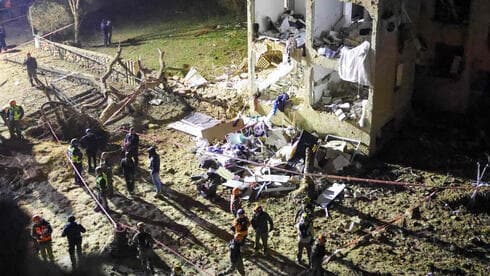
Iranian Missiles Strike Israel; Officials Report 180 Injured Amid Conflicting Casualty Figures.
12 sources compared