Technology and Science14 January, 20262 min read
Google Launches Gemini 'Personal Intelligence' to Mine Gmail, Photos, Search and YouTube for Personalized Answers
Google launched Personal Intelligence in Gemini, connecting Gmail, Photos, Search and YouTube Opt‑in beta rolling out in U.S. to AI Pro and AI Ultra subscribers
43 outlets told this the same way.
Gemini Personal Intelligence
Google has launched a beta feature called Personal Intelligence inside its Gemini app. When a user opts in, the assistant can access selected Google apps (Gmail, Google Photos, YouTube, and Google Search) to produce more context-aware, personalized responses and proactive suggestions.
“On January 14, 2026, Google announced the beta launch of ‘Inteligência Pessoal’ (Personal Intelligence) for its Gemini AI assistant. The feature lets Gemini access data from Gmail, Google Photos, YouTube and Google Search to combine general knowledge with a user’s personal information and history, enabling more accurate, context-aware answers and proactive suggestions.”
The feature is off by default, requires explicit permission to connect specific apps, and is initially rolling out in the United States to Google AI Pro and AI Ultra subscribers on web, Android, and iOS before a wider release. Google says the capability combines a user’s personal history with Gemini’s general knowledge to deliver practical, tailored results.
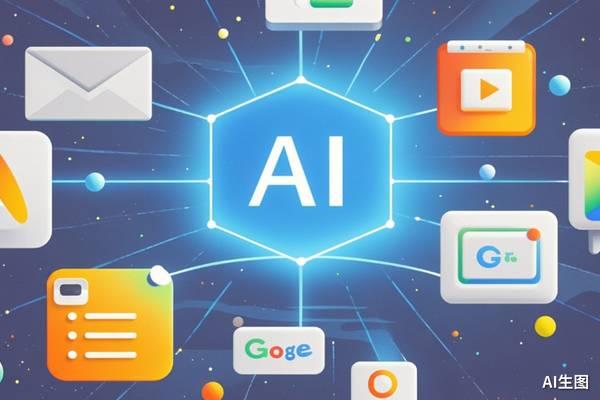
Gemini Personal Intelligence Overview
Personal Intelligence extends Gemini's retrieval capabilities to reason across multiple first-party sources such as emails, photos, video, and search history rather than merely retrieving single items. Google demonstrated cross-source reasoning with a tire-size example in which Gemini linked emails, trip photos, and a license-plate image to identify a vehicle and recommend tires. Google says Gemini will cite sources and can explain which connected items it used to produce an answer.
Google privacy controls
Google and several outlets emphasize user privacy and control. Personal Intelligence is off by default and must be enabled manually. Users can choose which apps to connect.
“The feature is opt‑in: users enable it in the Gemini app via the ‘For you’ option; it’s off by default and can be turned off in Settings → Connected apps.”
The feature offers temporary chats designed to avoid personalization. It also provides options to regenerate replies without personalization.
Google says it will not directly train core models on personal inboxes or photo libraries. Some reports note that limited data, such as prompts and responses, may be used to improve functionality.
Google Personal Intelligence launch
Personal Intelligence is launching as a U.S. beta for paying subscribers on personal accounts, available to Google AI Pro and AI Ultra users. Google has excluded business, enterprise and education (Workspace) accounts from the initial rollout. Some outlets frame the launch as a direct challenge to rivals such as Apple Intelligence and as a means for Google to leverage its app ecosystem advantage.
Google beta risks and implications
Reports flag limitations, risks, and broader implications. Google warns the beta can still produce inaccuracies or over-personalization, such as incorrectly linking unrelated topics. Some outlets warn that heavily personalized results could make it harder to track or measure search visibility.
“Google warns the beta can still produce inaccuracies or ‘over-personalization’ (incorrectly linking unrelated topics), so user feedback is important.”
Commentators raise privacy questions despite the opt-in model. Others highlight the competitive edge Google gains by leveraging first-party data while promising user controls and feedback mechanisms to refine the system.
