Technology and Science12 March, 20263 min read
Google Launches Groundsource, Turns News Into AI Flash-Flood Forecasts
This article is an automated aggregation of coverage from news outlets. Our editorials offer in-depth analysis curated by the NewsCord team.
Google uses AI to convert news archives into flood forecasting data Researchers mined millions of local reports and decades of journalism for datasets
What Groundsource is
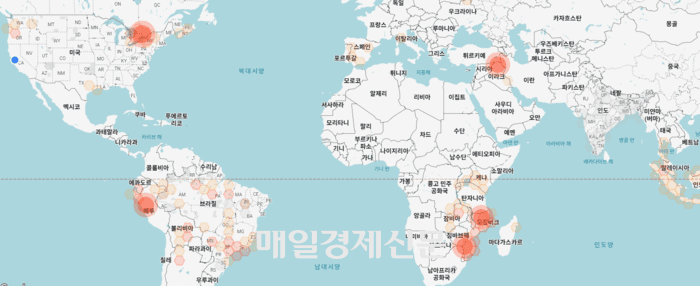
Google’s research team has launched Groundsource, a new method that converts decades of qualitative news reporting into a structured, global flash-flood dataset used for forecasting. Research at Google says “we are introducing Groundsource — a scalable framework for extracting verified ground truth from unstructured data, allowing us to map the historical footprint of disasters with unprecedented precision,” and reports that the project produced a database “comprising 2.6 million historical flood events spanning more than 150 countries.” The Tech Buzz framed the approach as deploying LLMs to “transform decades of qualitative news reports into quantitative training data for flash flood forecasting systems,” while PhonAndroid notes that “In total, the AI identified 2.6 million flood-related events.”
“Google's researchers are deploying large language models to transform decades of qualitative news reports into quantitative training data for flash flood forecasting systems.”
How it works
Groundsource extracts event details by combining multilingual text processing with the Gemini large language model and geospatial mapping; Google says the “most critical step of the extraction process is done using the Gemini Large Language Model (LLM).” Research at Google describes engineering “a sophisticated prompt that guides Gemini through a strict analytical verification process” including classification, temporal reasoning, and spatial precision, and Google uses translation and Google Maps Platform to standardize locations. TechCrunch and El.kz emphasize that the project aims to turn qualitative reports into quantitative datasets — TechCrunch quoted Juliet Rothenberg saying “Because we’re aggregating millions of reports, the Groundsource dataset actually helps rebalance the map,” while El.kz reported the team hopes “using LLMs to develop quantitative data sets from written, qualitative sources could be applied to efforts to building data sets about other ephemeral-but-important-to-forecast phenomena.”
Accuracy and limits
Google reports technical validation showing substantial but imperfect accuracy: manual reviews found “60% of extracted events were accurate in both location and timing,” and “82% were accurate enough to be practically useful for real-world analysis.” Research at Google also states that spatiotemporal matching showed Groundsource “captured between 85% and 100% of the severe flood events recorded by GDACS between 2020 and 2026,” demonstrating coverage gains over traditional archives. At the same time independent reporting highlights limitations: El.kz notes the product is “fairly low resolution, identifying risk across 20-square-kilometer areas,” and that it is “not as precise as the US National Weather Service’s flood alert system, in part because Google’s model doesn’t incorporate local radar data.”
“In manual reviews, we found that 60% of extracted events were accurate in both location and timing.”
Deployment and impact
Google has already integrated Groundsource outputs into forecasting products and frames impact in operational terms: Research at Google says the data enabled forecasts that “provide near-global urban flash flood forecasts up to 24 hours before the event,” and that the team is “rolling out these forecasts in Google’s Flood Hub.” PhonAndroid similarly reports “The model is already used on the Flood Hub platform, which displays at-risk areas in 150 countries.”
Advocates and industry partners see the project as pragmatic: FindArticles summarizes that “Converting trusted narratives into ‘ground truth’ at scale is a pragmatic way to widen the training pool,” while FindArticles adds that practical success will be judged by measurable outcomes — “Impact will be measured by outcomes on the ground: fewer fatalities, faster evacuations, and reduced asset losses.” Google and partners also plan technical upgrades such as fusing local radar and gauges and refining resolution, reflecting both the promise and the pathways to improvement.