
GOP tempers flare over how to pass SAVE America Act
Key Takeaways
- Senate Republicans are divided on how to pass the SAVE America Act.
- Trump aims to push the act through the Senate despite Democratic opposition.
- Sen. Mike Lee is a leading proponent of the bill.
GOP tensions on SAVE Act
Senate Republicans are grappling with how to advance President Trump's top priority, the Safeguard American Voter Eligibility (SAVE America) Act, amid strong Democratic opposition and disagreements about strategy.
“byAlexander Bolton03/18/26 06:00 AM ET Tempers are starting to boil within the Senate Republican Conference as disagreements arise over how to handle President Trump’s No”
Senator Mike Lee, a leading backer of the bill, sparked tensions by posting on X that Republicans who oppose forcing Democrats into a talking filibuster should be replaced.
The debate centers on whether to use a prolonged floor fight to force a simple-majority path or to find a more viable route, as Trump pressures the party to act despite no Democratic support.
The Senate approved a motion to proceed on the bill 51-48, with Lisa Murkowski the lone Republican voting no, and Senator Thom Tillis absent due to a travel delay.
Senate conservatives argue for a lengthy floor debate to exhaust Democrats, while others warn the tactic may be impractical or stall the chamber.
Senate vote and leadership stances
On the policy front, Republicans largely align on the core elements of the House-passed bill, such as requiring documented proof of citizenship to register and ensuring identification to vote, but remain divided on how to proceed.
Lee and other conservatives want to force a talking filibuster to pressure Democrats into concessions, betting that extended debate will produce enough votes to pass.
Others, including Senator Rick Scott, have floated attaching the SAVE Act to a must-pass bill like the Foreign Intelligence Surveillance Act’s (FISA) Section 702 surveillance authority or pursuing a 60-vote path, illustrating deep strategic disagreements.
Several leaders, including Senate Majority Leader Mitch McConnell, voted to begin debate as a courtesy to the leadership despite privately not supporting the measure, while Senator Lisa Murkowski warned that floor time is a precious commodity and the bill has little chance of becoming law.
Senator John Cornyn signaled a preference for avoiding complication by not tying the bill to the FISA extension.
Core policy elements and strategy
Republicans largely agree on the core elements of the House-passed bill, including requiring documented proof of citizenship to register and ensuring identification to vote, but remain divided on how to proceed.
“byAlexander Bolton03/18/26 06:00 AM ET Tempers are starting to boil within the Senate Republican Conference as disagreements arise over how to handle President Trump’s No”
Lee and other conservatives want to force a talking filibuster to pressure Democrats into concessions, betting that extended debate will produce enough votes for passage.
Scott floated attaching the SAVE Act to a must-pass bill such as the Foreign Intelligence Surveillance Act’s (FISA) Section 702 surveillance authority or pursuing a 60-vote path, illustrating deep strategic disagreements.
McConnell and Murkowski made clear their divergent views on the viability of advancing the bill, with Cornyn urging a cautious approach to avoid tying it to the FISA extension.
Rural opposition and amendments
Republicans from rural states are pushing back against Trump’s push to strengthen no-excuse mail-in voting, arguing that in states like Montana voters rely on voting by mail and would face hardship if restricted.
Senators Tim Sheehy and Steve Daines spoke up at lunch, saying they supported the SAVE Act overall but opposed eliminating mail-in voting in their states and favored creating hardship exemptions.
Some rural Republicans warned that a broader ban could harm their political standing.
The debate also includes Eric Schmitt’s amendment, which would implement Trump’s calls to abolish no-excuse absentee voting and, in addition, would ban transgender athletes from participating in women’s sports and prohibit gender transition surgeries for minors, complicating the crafting of language that satisfies both security goals and voter access.
More on USA
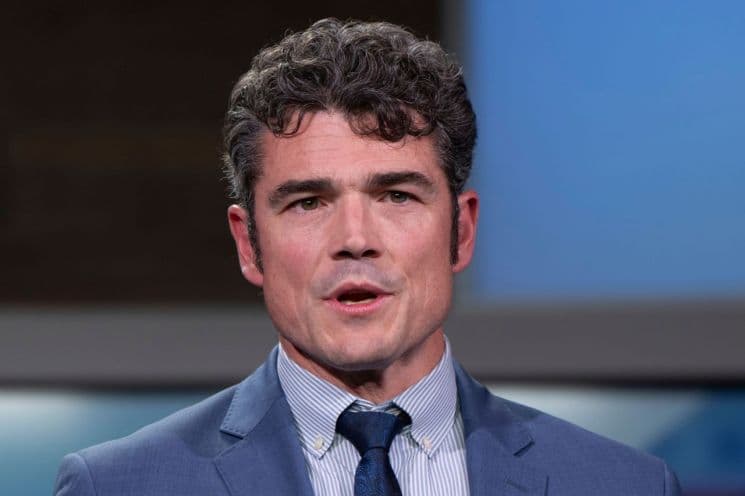
FBI investigates Joe Kent, former National Counterterrorism Center director, for allegedly leaking classified information.
81 sources compared

Lt. Gov. Juliana Stratton Wins Illinois Democratic Senate Primary to Replace Durbin
171 sources compared

Senators Grill Mullin Over DHS Nomination as Intel Officials Testify on Top Threats
91 sources compared

César Chávez Faces Sexual Abuse Allegations, Including Rape of Dolores Huerta and Other Survivors
34 sources compared