Protests21 February, 20263 min read
Greater Manchester Police Arrest 9–11 People During Britain First March and Counter‑Protests in Manchester City Centre
This article is an automated aggregation of coverage from news outlets. Our editorials offer in-depth analysis curated by the NewsCord team.
Sources conflict: BBC and GMP reported nine arrests; Manchester outlets reported eleven. Arrests included suspicions of assaulting an emergency worker and public order and dispersal breaches.

5 outlets told this the same way.
Manchester march and protests
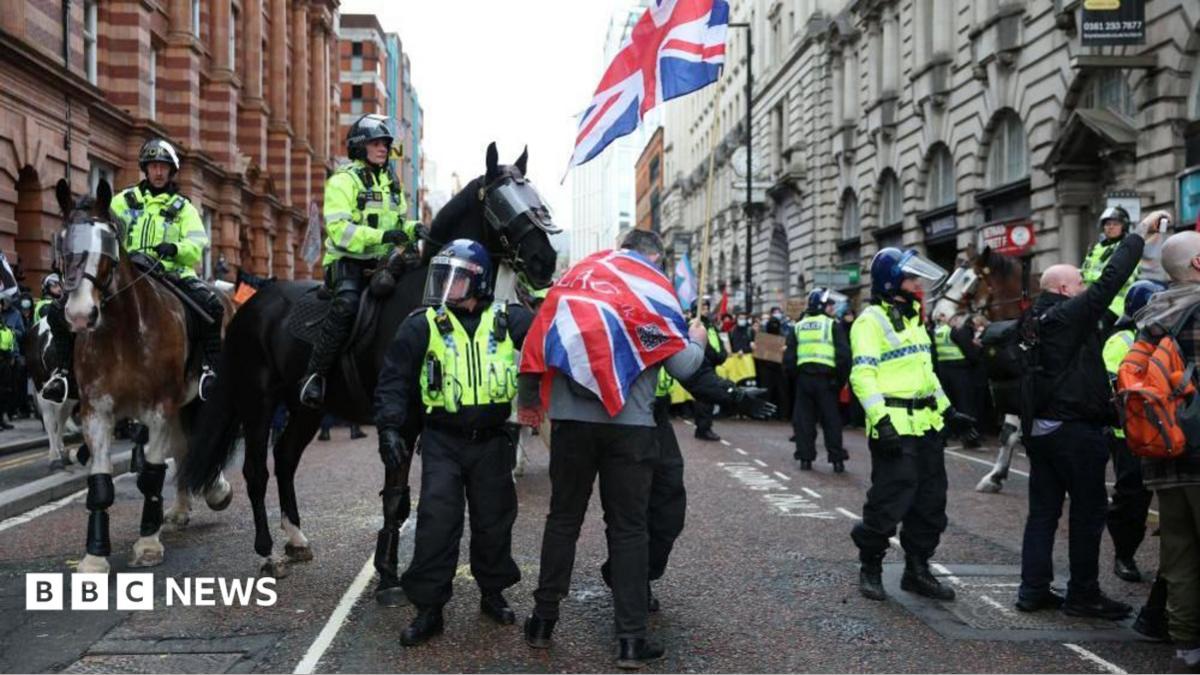
On 21 February in Manchester city centre, a Britain First march drew hundreds of participants and triggered multiple counter‑protests. The Manchester Evening News described the march as "a march for remigration and mass deportations." A counter‑protest included a rally in Piccadilly Gardens at which Jeremy Corbyn spoke.
“Hundreds attended a Britain First ‘march for remigration and mass deportations’ in central Manchester today, while several counter-protests took place — including a rally in Piccadilly Gardens at which former Labour leader Jeremy Corbyn spoke.”
Greater Manchester Police said it made 11 arrests linked to the demonstrations and later de‑arrested two people, leaving nine in custody. The force said several demonstrations were peaceful and used a section 34 dispersal order until 8pm to manage disruption.
Arrests and alleged offences
Police said the initial arrest figure was 11, with two people later de-arrested so nine remained in custody. The three sources provide broadly the same account of that sequence but differ slightly in wording. Manchester Evening News lists the arrest breakdown as two on suspicion of preventing a breach of the peace, two for assaulting emergency workers, four for public order offences, one for assault, one under the Crime and Disorder Act and one for breaching a dispersal notice, and says two were later de-arrested—one given a summons and one handed a dispersal notice.
The Bury Times gives the same detailed breakdown. The BBC summarises the alleged offences, saying the nine are in custody on suspicion of 'assaulting an emergency worker, public order offences, breach of the peace and breaching a dispersal notice'.

Manchester policing response
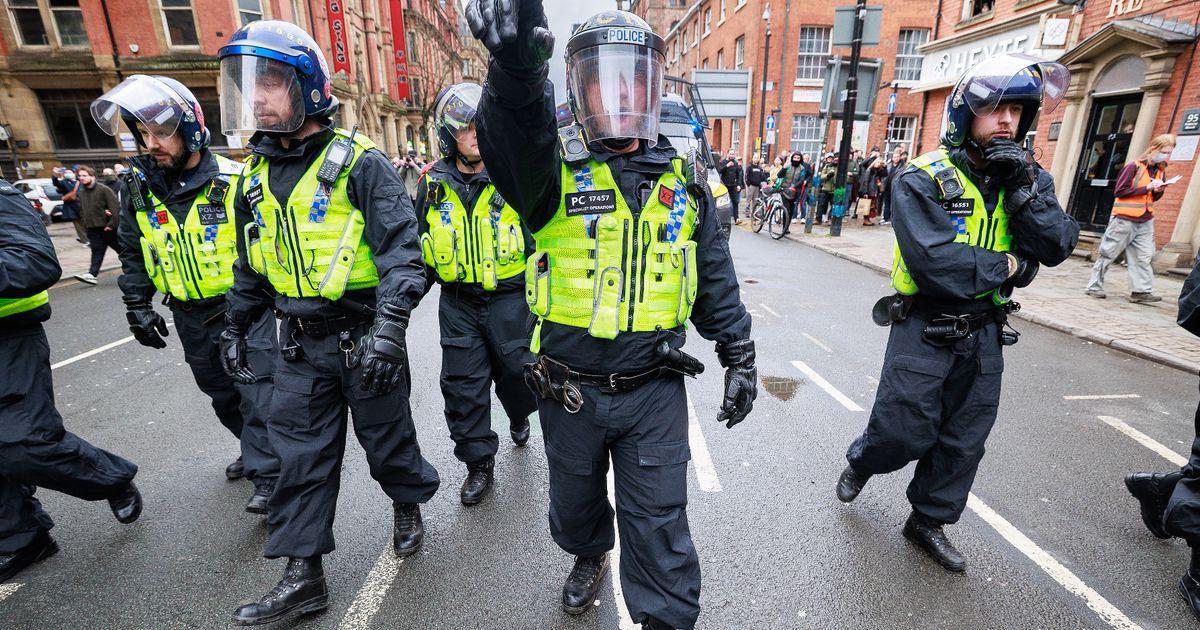
Greater Manchester Police deployed extra resources to manage the events and used a city-centre dispersal order. The BBC reports police brought in "about 50 extra officers plus mounted and dog units" and says the dispersal order was in force from 10:00 GMT until 20:00 GMT. The BBC notes such orders "can allow removal for up to 48 hours to prevent anti-social behaviour."
“Police brought in about 50 extra officers plus mounted and dog units to manage the events.”
Manchester Evening News describes a "significant policing operation with extra resources" and says a section 34 dispersal order remained in place until 8pm. The Bury Times similarly describes a "major policing operation."
Police response to protests
All three sources report police emphasised protecting public safety and the right to protest while seeking to minimise disruption. The BBC quotes senior officers saying they were prioritising public safety and working with communities and businesses to keep protests "safe and respectful." Manchester Evening News quotes Assistant Chief Constable Rick Jackson saying officers sought to protect the right to protest while minimising impact on the public.
The Bury Times reports the policing response without quoting the same officer but aligns on the priority of an organised policing operation. The BBC also describes that "hundreds from various groups were able to protest safely" despite disruption.
Comparison of three reports
The core facts across Manchester Evening News, The Bury Times and the BBC are consistent: a Britain First march and counter‑protests, an initial arrest figure of 11 with two later de‑arrests, and nine people remaining in custody. Manchester Evening News uniquely notes Jeremy Corbyn’s presence at a counter‑protest rally in Piccadilly Gardens, a detail not in the BBC or Bury Times snippets. The BBC uniquely supplies specific policing numbers, timings and legal context for the dispersal order.
“Police brought in about 50 extra officers plus mounted and dog units to manage the events.”
Where the snippets differ, the variations are mainly tone and emphasis, with local outlets giving granular arrest lists and local quotes and the BBC giving policing scale and legal context. If any details remain uncertain — for example the longer‑term status of those in custody beyond the immediate reporting — the three sources do not provide further follow‑up.