Europe13 January, 20262 min read
Greenland PM Jens-Frederik Nielsen Rejects Trump's Bid To Buy Greenland, Chooses Denmark And NATO
Greenland's prime minister declared the territory will remain part of Denmark, not the United States President Trump publicly floated buying Greenland and threatened seizing the island
17 outlets told this the same way.
Outlets did split on Marco Rubio Urges Europe To Awaken From Slumber In Athens Speech →
Greenland rejects U.S. offer
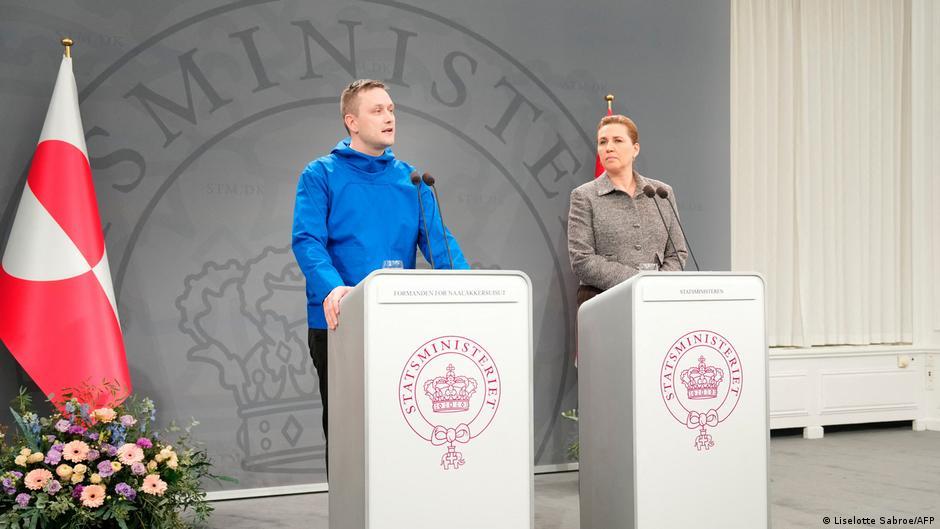
Greenland's prime minister, Jens-Frederik Nielsen, publicly rejected U.S. President Donald Trump's renewed proposals to buy or seize Greenland, declaring the island will remain with Denmark and align with NATO and the EU.
“Greenland’s prime minister Jens-Frederik Nielsen said Tuesday that Greenland chooses Denmark — and NATO/EU ties — over the United States, pushing back on President Donald Trump’s repeated calls to acquire the island.”
At a Copenhagen press conference Nielsen said Greenland would 'pick Denmark here and now,' and insisted that 'Greenland does not want to be owned by the United States.'

Denmark's prime minister, Mette Frederiksen, warned that 'the hardest part is still ahead.'
Leaders framed the episode as a diplomatic rift that nonetheless keeps open Arctic-security cooperation with NATO and U.S. partners.
Greenland acquisition controversy
The immediate trigger was President Trump's public rationale that Greenland was strategically valuable to the U.S. for national security and access to minerals, along with his repeated warning that the island could be taken 'one way or the other.' U.S. officials argued that control would prevent Russia or China from gaining influence, a point that appeared across outlets.
Reporting also noted that the U.S. already operates the Pituffik military base on the island. The rhetoric prompted bipartisan pushback in Europe and raised concern that even talk of forcible acquisition could strain alliance ties.
Greenland public opinion
Coverage emphasized that Greenland’s political leaders and most residents oppose U.S. control and that many favor independence, citing polls and officials’ statements. DW reported a 2025 poll showing 56% support full independence while only 6% would support joining the United States, and Greenlandic politicians and MPs were quoted saying "Greenland is not for sale" and that most do not want U.S. citizenship. Those domestic opinions were used by officials to justify remaining with Denmark and within the multilateral NATO framework.
“A 2025 poll showed 56% of Greenlanders favor full independence from Denmark while only 6% support joining the United States; Nielsen’s Demokraatit party backs a gradual route to independence.”
Arctic diplomacy meetings
Denmark and Greenland sought to de-escalate through diplomacy, with foreign ministers and senior Danish and Greenlandic officials arranging to meet U.S. counterparts in Washington to discuss Arctic security.
Multiple outlets reported that U.S. Vice President J.D. Vance and Secretary of State Marco Rubio were due to meet Danish Foreign Minister Lars Løkke Rasmussen and Greenlandic Foreign Minister Vivian Motzfeldt at the White House, and officials framed the meetings as attempts to manage alliance relations and avert lasting damage to transatlantic ties.

Arctic security measures
European partners and Copenhagen signaled concrete steps to reassure Greenland and shore up Arctic defence. Denmark pledged increased healthcare and infrastructure spending and measures to boost Arctic defence, including buying 16 additional F-35 jets. NATO and Danish officials said they would work to strengthen the territory’s defence.
“Denmark has moved to calm tensions by pledging more healthcare and infrastructure spending and boosting Arctic defence, including buying 16 additional F‑35 fighter jets.”
Some outlets reported European countries, led by the UK and Germany, discussing a possible military presence in Greenland. Leaders used stark language, calling U.S. pressure "unacceptable," underscoring how strongly Denmark and Greenland viewed the proposal as out of line with alliance norms.