Full Analysis Summary
Greenland proposal reactions
Denmark's government and Greenland's leadership publicly rejected U.S. President Donald Trump's renewed suggestion that the United States could acquire Greenland, projecting a united European front and stressing sovereignty and security concerns.
Danish Prime Minister Mette Frederiksen warned that "the world order as we know it" is over and urged closer U.S.-European cooperation while citing Arctic security and Russia.
Greenland Premier Jens-Frederik Nielsen said Greenland will "resist foreign pressure" even as it supports increased Arctic surveillance.
CNBC notes that Trump said he "has a framework for a deal on Greenland," though he gave no details.
El Mundo reports Frederiksen insisting that Arctic security "belongs to NATO" and not to the United States.
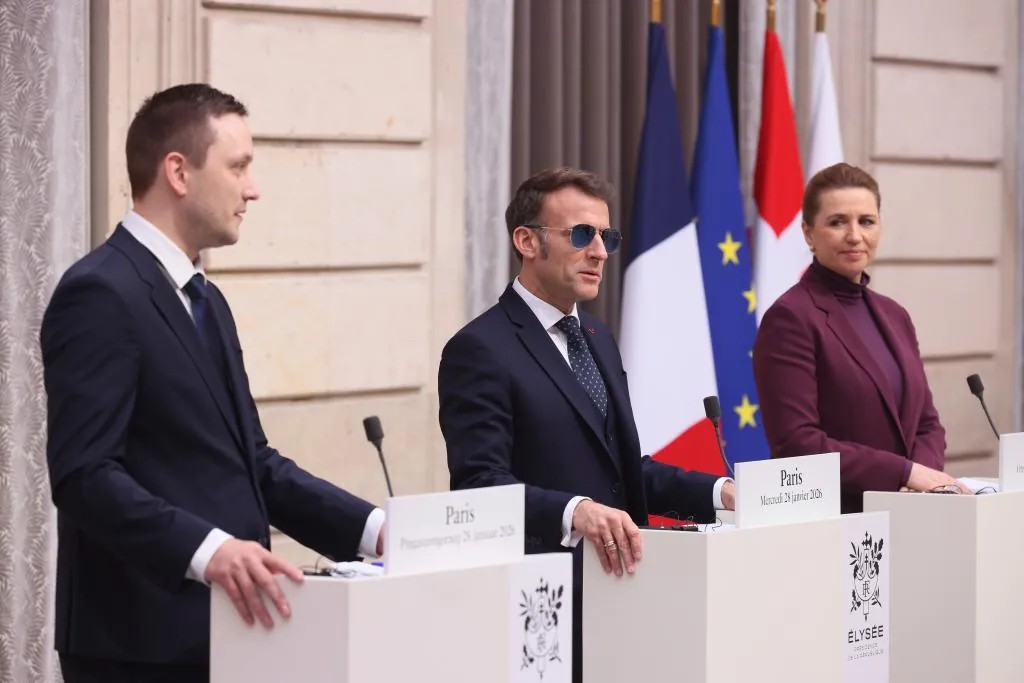
El Mundo also reports that French President Emmanuel Macron described the episode as provoking a European "strategic awakening."
AnewZ does not cover the Greenland dispute and instead focuses on other foreign-policy items such as a reported Trump plan for the Palestinian territories, underscoring that not all outlets prioritized Greenland.
Coverage Differences
Tone and emphasis
CNBC (Western Mainstream) frames the response around direct quotes from Danish and Greenland leaders warning of systemic change and local opposition and cites Trump’s comment about a deal framework; El Mundo (Western Mainstream) emphasizes European strategic unity and NATO’s role while highlighting Macron’s political framing and a related social‑media controversy. AnewZ (Other) does not report on Greenland at all and instead focuses on other diplomatic matters, illustrating an omission by that outlet rather than a conflicting account.
Denmark and Greenland visits
Leaders from Denmark and Greenland used visits to European capitals to underline unity and seek allies after the U.S. episode.
CNBC reports that Frederiksen and Greenland’s Nielsen spoke together at a Paris forum, met Germany’s Chancellor Friedrich Merz, and planned to see French President Emmanuel Macron.
El Mundo details the Élysée meeting where Frederiksen and Nielsen reiterated European solidarity and where Macron read part of his remarks in Danish, thanking Denmark and Greenland for their partnership.
Both mainstream outlets present the diplomatic outreach as a coordinated response.
AnewZ contains no reporting on these Greenland-focused visits and instead reports on separate diplomatic initiatives in the Middle East and Ukraine, indicating a divergence in editorial focus across sources.
Coverage Differences
Narrative emphasis
CNBC (Western Mainstream) highlights the meeting sequence and direct statements by Frederiksen and Nielsen and references meetings with Chancellor Merz and planned talks with Macron; El Mundo (Western Mainstream) focuses on the Élysée visit’s symbolic acts (Macron reading in Danish) and the language of European solidarity and tools like the EU anti‑coercion instrument. AnewZ (Other) omits this diplomatic thread entirely and instead reports on unrelated diplomatic developments, showing a unique/off‑topic coverage choice rather than a contradiction.
Arctic security coverage
Coverage emphasizes significant strategic and regional security concerns.
CNBC notes Frederiksen cited Arctic security and Russia when warning about broader shifts in the "world order" and reports that Greenland supports increased Arctic surveillance.
El Mundo makes NATO's role central by quoting Frederiksen that Arctic security "belongs to NATO" and by citing Macron's call for vigilance and use of EU instruments such as the anti-coercion measure.
Together these accounts frame the Greenland episode as part of a wider conversation about Arctic defence, NATO responsibilities, and European strategic autonomy.
AnewZ omits Arctic security in its snippet and instead discusses other conflict zones, reflecting divergent topical priorities across outlets.
Coverage Differences
Emphasis on security frameworks
CNBC (Western Mainstream) frames the issue around Arctic surveillance and the leadership’s call for U.S.–European cooperation in the face of Russian concerns; El Mundo (Western Mainstream) emphasizes NATO’s primacy for Arctic security and Macron’s push for European tools (EU anti‑coercion instrument). AnewZ (Other) does not address Arctic security in its coverage, underscoring a missed topic in that source rather than a conflicting factual claim.
Greenland public opinion and sovereignty
Public sentiment and sovereignty were highlighted by the Danish and Greenland leaders and emphasized in reporting.
CNBC cites opinion polls showing most Greenlanders oppose U.S. control and many favor independence from Denmark, and reports Nielsen's commitment to address local fears while resisting outside pressure.
El Mundo similarly frames the matter as one of sovereignty and gratitude for French support against perceived U.S. threats.
AnewZ provides no polling or sovereignty detail on Greenland, reinforcing that some outlets prioritized local public opinion while others focused on unrelated international diplomacy.
Coverage Differences
Coverage of public opinion and sovereignty
CNBC (Western Mainstream) provides direct polling information and quotes Nielsen on resisting pressure and addressing fears, giving prominence to Greenlanders’ views; El Mundo (Western Mainstream) underscores sovereignty and diplomatic solidarity (Macron’s support), but does not supply the polling figures cited by CNBC. AnewZ (Other) omits Greenland public‑opinion detail entirely and instead reports on other international diplomatic topics, a missed information difference rather than a contradiction.
Media reactions to Greenland dispute
El Mundo notes a controversy over an AI-manipulated penguin image posted on the White House's X account that was interpreted as promoting Greenland's annexation.
El Mundo uses that detail to show how the dispute spilled into symbolic and social-media terrain.
CNBC focuses on the leaders' statements, meetings, the strategic implications, and Trump's unspecified framework for a deal on Greenland.
AnewZ's snippet makes no mention of the penguin story or the Greenland dispute, demonstrating editorial divergence in what each outlet chose to highlight.
Across the two mainstream outlets, the tone is one of defiance and calls for collective security.
The AnewZ piece illustrates omission of the story rather than direct disagreement.
Coverage Differences
Unique/off‑topic vs. symbolic coverage
El Mundo (Western Mainstream) includes the symbolic detail of an AI‑manipulated penguin image and frames the issue in terms of European strategic awakening; CNBC (Western Mainstream) concentrates on leaders’ diplomatic responses, security concerns and Trump’s undeveloped claim about a deal framework. AnewZ (Other) does not report the Greenland episode and instead covers different diplomatic topics, an omission that affects readers’ exposure to this story.