Europe09 March, 20262 min read
Greens Defeat Chancellor Friedrich Merz's CDU in Baden-Württemberg Regional Test
This article is an automated aggregation of coverage from news outlets. Our editorials offer in-depth analysis curated by the NewsCord team.
Greens narrowly led the vote over the CDU in Baden-Württemberg, about 30.3% versus 29.7%. Far-right AfD surged to about 18.8%, becoming the state's third-largest party.

Baden-Württemberg election result
The Greens narrowly held onto power in Baden-Württemberg in the March 8 regional election. They edged out the CDU across a series of close projections and set the stage for a likely Green-CDU coalition. Multiple projections placed the Greens around 30-32% versus the CDU near 29-31%.
“In the March 8 regional election in Baden-Württemberg, the Greens narrowly held onto the only German state they have governed since 2011, edging out the CDU which had hoped to retake the historically conservative region. A Green–CDU coalition is expected, with Cem Özdemir (60), the Greens’ lead candidate and former agriculture minister, set to succeed long-serving and popular minister‑president Winfried Kretschmann.”
Broadcasters and outlets described the result as a razor-thin victory, and analysts noted that the final count will determine the exact balance of power. The outcome leaves Cem Özdemir (60), the Greens' lead candidate, set to succeed long-serving minister-president Winfried Kretschmann and to lead coalition talks with the CDU.
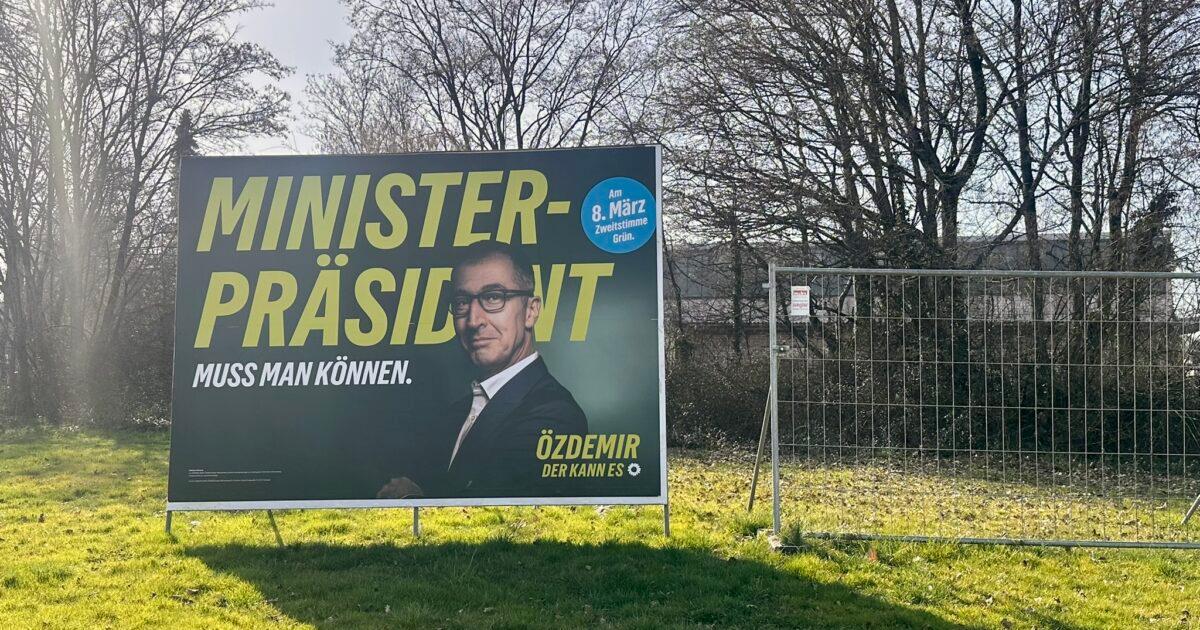
Özdemir minister-president bid
Cem Özdemir is poised to take over as minister-president, campaigning as a pragmatic, centrist Green who pledged continuity with Winfried Kretschmann's green-conservative approach and to maintain industrial competitiveness while advancing environmental goals.
Reports highlighted Özdemir's emphasis on an "equal partnership" with the CDU and his intent to build on the last decade's successes in the state, presenting him as a continuity candidate in Germany's richest, industrial southwest.

CDU election setback
The CDU underperformed relative to expectations. The result dealt a blow to federal CDU leader Chancellor Friedrich Merz and left state candidate Manuel Hagel weakened after late-campaign troubles. Coverage noted internal CDU rivalries, doubts about Hagel's strength, and a campaign video controversy.
“CDU candidate Manuel Hagel (37), backed by Chancellor Friedrich Merz, underperformed after late‑campaign troubles; internal CDU rivalries and doubts about Hagel’s strength were noted.”
Hagel ultimately conceded and CDU figures defended him while accusing opponents of underhanded tactics. Observers said the result increases pressure on the CDU at the national level and raises questions about campaign management in key states.
State election results
The far‑right AfD made notable gains, roughly doubling in share to around 18% in several projections. The SPD collapsed to about 5.5%.
Both the FDP and The Left hovered below or near the 5% threshold, meaning final counts will be decisive for which smaller parties enter the state parliament. Analysts warned that the AfD’s surge and the fragmentation of the vote complicate coalition arithmetic, potentially forcing unconventional alliances and making exploratory talks politically fraught.

Baden‑Württemberg election stakes
Beyond the raw numbers, commentators stressed the symbolic and economic stakes: Baden‑Württemberg is Germany’s automotive heartland (home to Mercedes‑Benz and Porsche), and the vote was framed against concerns about energy transition, industrial competitiveness, economic contraction and job losses.
“In a razor‑thin result in Baden-Württemberg — Germany’s automotive heartland — the Greens narrowly topped the vote, winning 30.2% to the CDU’s 29.7% (a margin of about 0.5 percentage points, ~27,000 votes).”
The tight margin — reported as roughly 0.5 percentage points (about 27,000 votes) in some counts — means recounts remain possible and the result will have reverberations for national politics, particularly for Chancellor Merz and CDU strategy.
