Full Analysis Summary
Bekkersdal tavern shooting
Just before 1 a.m. on Sunday, about a dozen gunmen opened fire at the KwaNoxolo (also spelled Kwanoxolo) tavern in the Tambo section of the Bekkersdal township southwest of Johannesburg.
The attack killed nine people and wounded at least 10 others, police said.
Witnesses and officials reported attackers arriving in a white minibus (kombi) and a silver sedan and firing both inside the bar and at people in the streets as they fled.
Among the dead was an online car-hailing driver who had just dropped off a passenger.
Authorities described the assault as unprovoked and said the victims included both men and women.
Coverage Differences
Detail emphasis and casualty breakdown
Western mainstream outlets like BBC (Western Mainstream) present a precise gender breakdown and official phrasing — “seven men and two women were killed” — while others (e.g., Al Jazeera, Sky News) emphasize the overall toll and mode of attack without specifying genders. The Guardian (Western Mainstream) highlights that some victims were robbed of valuables, an element not mentioned in all reports. These variations reflect differing emphases: exact official tallies versus the broader picture of the attack and its immediate effects on victims.
Naming and location details
Some reports use the tavern name KwaNoxolo/Kwanoxolo (Express & Star, Daily Mail), while others refer generally to a tavern in Bekkersdal (BBC, Al Jazeera). Vehicle descriptions vary slightly (white minibus vs white kombi) though all sources agree on two vehicles and the attackers’ mobility, indicating consistent core facts but minor naming/translation differences.
Manhunt and investigation
Police and specialised units launched a large-scale manhunt immediately after the attack.
Gauteng Serious and Violent Crime Investigations and the national Crime Detection Tracing Unit pursued leads, collected witness statements and gathered forensic evidence while canvassing the area, and officials said no arrests had been made by Sunday afternoon.
Authorities said they deployed serious-crime investigators, intelligence officers and forensic teams to follow up on witness statements and evidence.
Coverage Differences
Scale and description of response
Some outlets (International Business Times UK, South China Morning Post) stress the deployment of forensic teams and serious‑crime units and describe a broad, coordinated police response; others (Evrim Ağacı, justthenews) add context by noting appeals for information and explicitly stating that no arrests had been made. The emphasis therefore varies between operational detail and the ongoing, unresolved status of the investigation.
Reporting of motive and certainty
Multiple sources explicitly say the motive is unknown (Al Jazeera, Qatar Tribune), while some political or regional reporting (Los Angeles Times, The Guardian) situate the attack within broader patterns of gang violence or criminality, which may imply likely motives even if officials have not confirmed them. The difference is between strictly reporting the police statement of unknown motive and contextual analysis that suggests possible causes.
Armed attack details
Witnesses and police described the attackers as heavily armed, saying they used pistols and at least one AK-47 and fired continuously as people fled.
Reports consistently cited roughly a dozen assailants and noted some wore balaclavas or masks.
Vehicles mentioned across coverage included a white minibus (kombi) and a silver sedan, although outlets varied in local terminology.
Several sources also reported that shootings occurred both inside the tavern and in surrounding streets as the attackers escaped.
Coverage Differences
Weapons and modus operandi emphasis
Most mainstream reports (The Guardian, Northwich Guardian, Daily Mail) explicitly list weapons — “an AK‑47 and several 9mm pistols” — while other outlets (Los Angeles Times, Express & Star) emphasize masked attackers and the chaotic flight. The variance is mainly one of emphasis: weapon details versus the attackers’ appearance and behaviour as they fled.
Number and identity of attackers
Nearly all sources converge on “about a dozen” attackers, but some (International Business Times) report police estimates like “up to 12 suspects may have been involved,” reflecting either rounding or cautious language from officials; no outlet provides confirmed identities, and several explicitly say suspects are unidentified.
Mass attacks in South Africa
The shooting comes amid a recent string of mass attacks at bars and taverns in South Africa and sits against a backdrop of persistently high violent-crime and homicide rates.
Coverage links the Bekkersdal massacre to other recent incidents, including a December attack near Pretoria that killed at least 12, and cites national homicide statistics — nearly 26,000 homicides in 2024 — and the frequent use of illegal firearms as context.
Political and civic actors are calling for stronger responses: the Democratic Alliance has urged a special task force, while residents and commentators have demanded better policing and action against illegal arms.
Coverage Differences
Contextual framing and causes
Analyses differ by source type: West Asian/analytic outlets like Evrim Ağacı emphasize structural drivers — “poverty, unemployment and inequality” — as part of the problem and discuss long‑term remedies, while Western mainstream outlets (Los Angeles Times, Sky News) stress immediate policing failures and the high homicide statistics. Some domestic reporting frames the attacks as symptomatic of organized‑crime and gang turf wars (Evrim Ağacı), whereas police statements and some mainstream outlets describe them as “pure criminality” (The Guardian) without deeper sociopolitical diagnosis.
Policy responses highlighted
Some sources (Los Angeles Times, International Business Times) quote political calls for a special task force and heightened policing, whereas other analyses (Evrim Ağacı) stress the government’s stated crackdowns on illegal dealers but say critics argue deeper social problems must be addressed. This shows divergence between immediate security measures and calls for structural solutions.
Local violence and responses
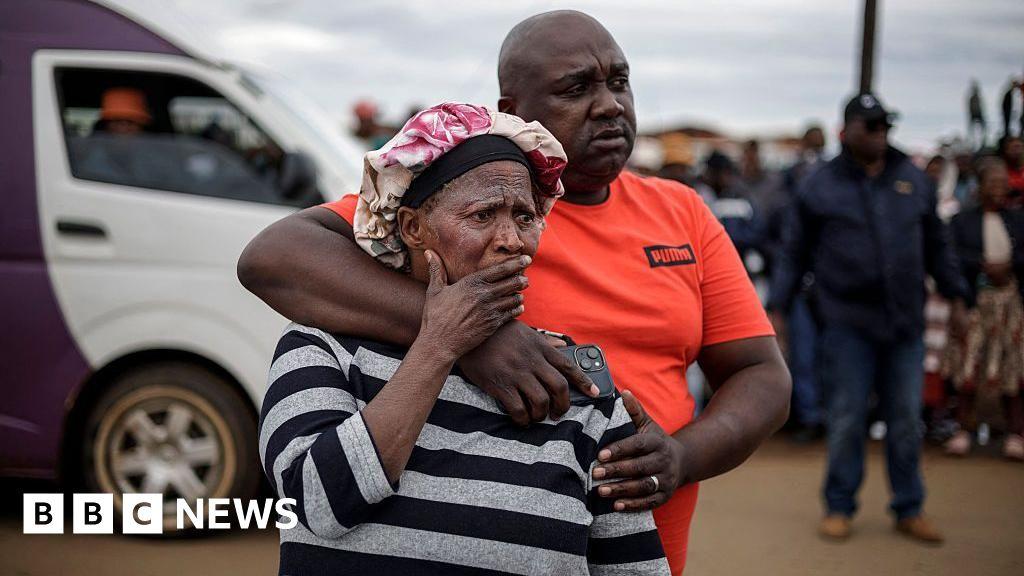
Residents and officials said the community was shaken and called for action as families mourned.
Witnesses reported that rescuers carried some injured people to a clinic.
Locals said nightly gunfire and criminal activity are common, and there were calls for increased police presence and community policing.
Some media outlets emphasized the immediate human toll and community trauma, while others framed the incident in debates over policing, illegal firearms and organized crime.
Coverage Differences
Tone and human-focus vs. policy-focus
Regional and local reporting (International Business Times, BBC, The Guardian) foreground the community shock and immediate human impact — “the community deeply shaken” and “rescuers carried some injured people to a clinic” — while analytic outlets and opinion pieces (Evrim Ağacı, Los Angeles Times) broaden the frame to policy and crime‑prevention debates. The divergence is between human‑interest immediacy and structural analysis.
Reporting on victims and details
Some outlets explicitly name a ride‑hail driver among the dead (Daily Mail, South China Morning Post, Northwich Guardian), underlining the randomness of the victims, while others focus on numbers and police response without individual details. That results in different reader impressions about the nature of the tragedy.
