H5N5 Bird Flu Kills Washington Resident in First Known Human Fatality

H5N5 Bird Flu Kills Washington Resident in First Known Human Fatality

22 November, 202518 sources compared
Techonology and Science

Key Points from 18 News Sources

  1. 1

    An older Grays Harbor County resident died after contracting the H5N5 bird flu.

  2. 2

    Deceased had underlying health conditions and kept a backyard flock exposed to wild birds.

  3. 3

    Washington State health officials said public risk from the H5N5 case is low.

Full Analysis Summary

H5N5 human fatality report

Washington state health officials say an older adult from Grays Harbor County who kept a backyard flock has died after infection with the rare bird-flu strain H5N5.

This death is believed to be the first known human fatality from that strain in the United States.

Multiple outlets report the individual had underlying health conditions.

Their poultry had been exposed to wild birds, prompting the state to treat the case as an isolated but serious event.

Officials and news outlets emphasize the novelty of a human death from H5N5 in the U.S.

Several reports note the patient had been treated for H5N5 prior to dying.

Coverage Differences

Narrative emphasis

Mainstream local outlets (Toronto Star, Santa Fe New Mexican, CBS7) and international mainstream outlets (The Hindu, UNN) present the basic facts straightforwardly — the death, the patient’s age/underlying conditions, and backyard flock exposure — while some other outlets either add contextual quotes or note sourcing differences (e.g., UNN cites AP). Tabloid or more interpretive outlets (The Mirror US) include expert color (a researcher’s analogy) that frames the virus’ behavior; other outlets (Daily Express, CBS News snippets provided) did not include full articles in the material we received. This creates variation in tone from purely factual reporting to slightly more interpretive coverage.

Source completeness/missing content

Some provided snippets were incomplete or non-article material (Daily Express, CBS News, Newsmax), which means their coverage is absent in our dataset and they cannot be used to add facts but can be noted as missing or non-article content.

Public health update

State and federal public-health authorities emphasized that the public risk remains low, saying there is currently no evidence of sustained human-to-human transmission and that close contacts are being monitored.

Officials from Washington's Department of Health and the CDC said the case does not indicate an increased public-health risk, and local outlets reported that no other people have tested positive so far while contacts remain under observation.

Coverage Differences

Tone and reassurance

Mainstream sources (theweek.in, WJAR, 10News, Santa Fe New Mexican) repeatedly relay official reassurances — 'risk to the public is low' and 'no evidence of human‑to‑human transmission' — while some outlets add phrasing that underscores monitoring and sampling (WJAR notes environmental sampling). Reuters-linked coverage (NewsX) highlights official monitoring and the isolated nature of the case. There is broad consistency in official reassurance across types, with differences mostly in how prominently the reassurance is framed.

Source details added

Local reporting (WJAR, Santa Fe New Mexican) includes operational details such as Department of Health sampling in the flock’s environment and active monitoring of contacts; national/international pieces tend to emphasize the CDC’s assessment without always quoting sampling results.

H5N5 and H5N1 comparison

Contextual reporting across outlets placed H5N5 in relation to the better-known H5N1 strain.

Several sources state H5N5 is not thought to be more dangerous to humans than H5N1.

H5N1 caused about 70 U.S. human infections in 2024–2025, most of them mild.

Journalists and some reports explain a biological difference, saying the two strains differ in a viral protein involved in releasing and spreading the virus between cells.

Coverage Differences

Technical detail vs. general comparison

Some outlets (Toronto Star, Santa Fe New Mexican, CBS7) provide a concise technical comparison — noting 'the strains differ in a viral protein' — while others (Mirror US) emphasize expert commentary comparing behavioral similarity and use metaphors to make that comparison more accessible. The technical-detail outlets present the virological distinction without metaphor; the Mirror provides a researcher quote to add interpretive context.

Focus on prior H5N1 cases

Several local and national outlets reference the count of ~70 H5N1 human infections in 2024–25 (mostly mild), using that history to contextualize the current H5N5 death; this consistent reference shapes a comparative risk narrative across many sources.

Avian influenza investigation

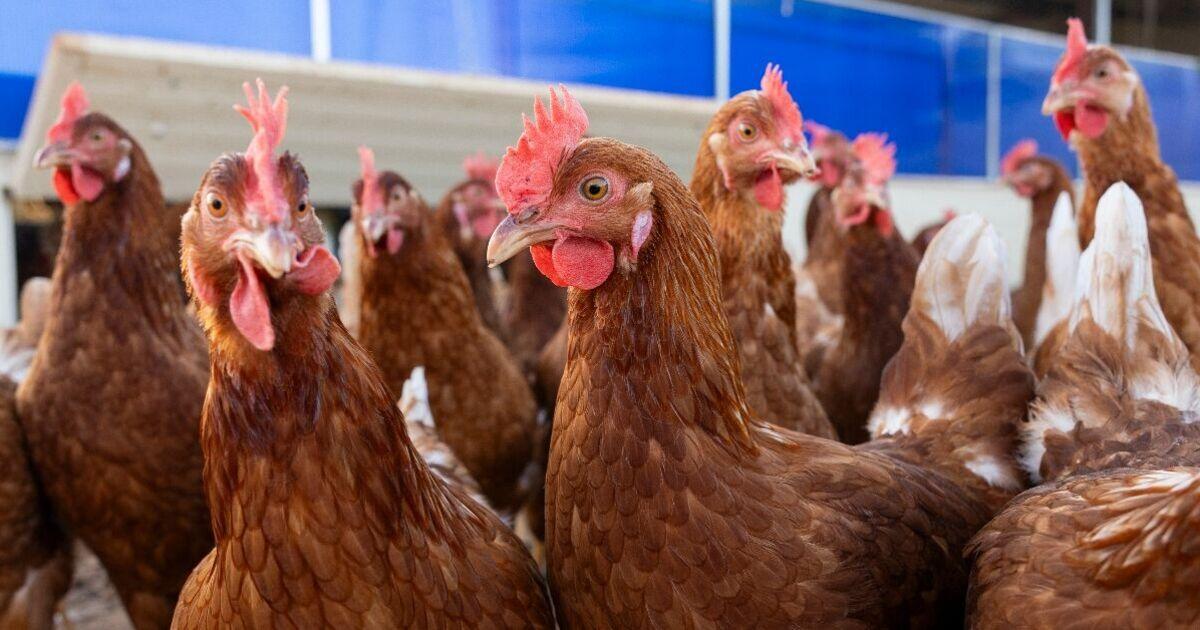
Investigators are focusing on poultry exposure and environmental sampling.

Local reports say Department of Health sampling detected avian influenza virus in the flock's environment.

Investigators view domestic poultry, their environment, or wild birds as the most likely source of the human infection.

Some experts suggest H5N5 may prefer different bird species, which could explain how the virus circulates among birds while human cases remain rare.
Coverage Differences

Evidence vs. hypothesis

Local outlets (WJAR, CBS7, Santa Fe New Mexican) report positive environmental sampling and treat poultry exposure as the likely source; The Mirror US and academic quotes (Webby) introduce hypothesis about species preference and behavioral similarity to H5N1. Reuters-linked NewsX emphasizes monitoring and isolated-case framing rather than species-preference hypotheses. This shows a split between on-the-ground sampling details and interpretive hypotheses about bird‑host ecology.

Local specifics vs. national summaries

Local stations (WJAR, CBS7) include operational investigative details (environmental sampling, monitoring of contacts) that national/international outlets sometimes summarize more briefly as 'no increased public‑health risk' without the sampling detail.

H5N5 coverage comparison

Mainstream global outlets (The Hindu, UNN, theweek.in) and local U.S. outlets (Toronto Star, Santa Fe New Mexican, CBS7, WJAR) present consistent factual reporting and public-health reassurances.

Tabloid or interpretive outlets (The Mirror US) add researcher analogies and more narrative color.

Some sources in our set provided no article text or only legal or marketing notices (Daily Express, CBS News, Newsmax), creating gaps in cross-source comparison.

Overall, the reports align on the core facts: a first presumed H5N5 human fatality linked to backyard poultry exposure and a low perceived public risk.

They differ, however, in tone, the amount of expert commentary, and whether operational sampling details are included.
Coverage Differences

Tone and added commentary

The Mirror US (Western Tabloid) includes quoted expert analogies and interpretive language (Webby’s tire metaphor) that give more narrative color; mainstream outlets focus more on straightforward facts and official statements. Missing or non-article content from Daily Express, CBS News, and Newsmax means they contribute little factual detail in this dataset.

Corrections and factual clarity

Some local outlets explicitly note corrections to earlier reporting (gender misidentification removed), showing attention to factual clarity in follow-up reporting.

All 18 Sources Compared

10News

First human death reported from rare H5N5 bird flu in Washington

Read Original

Albuquerque Journal

Washington state man believed to be the first to die from a rare strain of bird flu

Read Original

CBS News

Washington state resident dies after contracting a bird flu strain never before detected in humans, officials say

Read Original

CBS7

Washington state resident believed to be first to die from rare strain of bird flu

Read Original

Daily Express

First human death from rare H5N5 bird flu strain confirmed in US

Read Original

mb.ntd

Washington State Man Believed to Be the First to Die From Rare Strain of Bird Flu

Read Original

NBC Connecticut

Washington state man believed to be first to die from a rare strain of bird flu

Read Original

Newsmax

Wash. Resident Believed First to Die From Rare Strain of Bird Flu

Read Original

NewsX

Washington Records First Human Death Linked To H5N5 Bird Flu, Health Department Confirms

Read Original

Santa Fe New Mexican

Washington state resident believed to be the first to die from a rare strain of bird flu

Read Original

The Guardian

Bird flu: first ever death from rare H5N5 strain is recorded in US

Read Original

The Hindu

Washington State man believed to be first to die from rare strain of H5N5 bird flu in U.S.

Read Original

The Independent

Washington state man believed to be the first to die from a rare strain of bird flu

Read Original

The Mirror US

First human infected with rare strain of bird flu dies, Washington state announces

Read Original

theweek.in

Washington state man believed to be first to die from rare strain of bird flu

Read Original

Toronto Star

Washington state resident believed to be the first to die from a rare strain of bird flu

Read Original

WJAR

Bird flu: Washington state resident believed to be first to die from rare strain of H5N5

Read Original

Українські Національні Новини

Bird flu: first death from rare H5N5 strain recorded in US

Read Original