
Hawaii National Guard Assists Rescuers After Oahu Flash Floods
Key Takeaways
- National Guard assisting search and rescue operations after Oahu floods.
- Rescue and recovery efforts underway on Oahu.
- Coordination with Honolulu first responders in responding to floods.
Overview of Flooding Event
Hawaii experienced severe flash flooding on Oahu island, prompting the deployment of Hawaii's National Guard to assist first responders in search and recovery operations.
“BREAKING Iran denies US President Donald Trump’s claim that it wants to make a dealSeveral reported killed in air attack on Iran-aligned armed group in IraqBuilding in northern Israel damaged after latest Iranian missile attack Click to pause breaking news tickerpause-square-backgroundClose Breaking News Tickerclose Toggle Play National Guard in Hawaii assist after Oahu flood Rescue missions are underway as Hawaii suffers its worst flooding in 20 years”
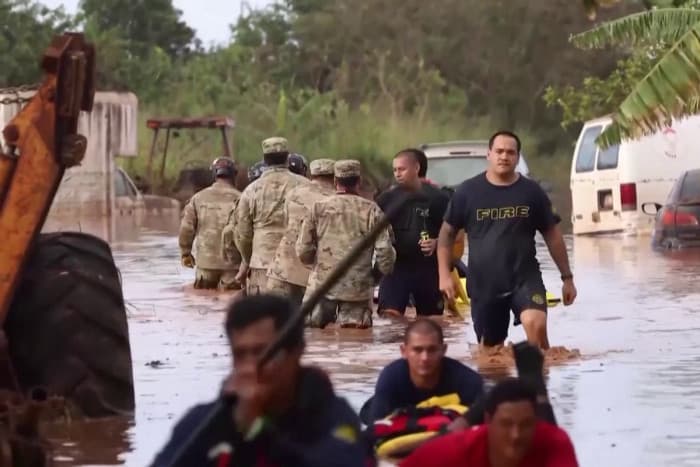
The flooding hit the North Shore area particularly hard on Saturday, March 21, 2026, with rescue efforts continuing through the weekend as the state faced its worst flooding in 20 years.

National Guard troops were stationed around the state in every county to respond to the brutal storms, which were described as a 'Kona Low' - a winter storm system known for bringing heavy rains and strong winds to the Hawaiian islands.
The severe weather event triggered widespread emergency response across multiple agencies, with the National Guard playing a central role in coordinating rescue operations.
Military Rescue Operations
Military helicopters conducted numerous critical rescue missions throughout the flooding crisis, saving dozens of stranded residents.
Black Hawk helicopters operated by the National Guard rescued nearly four dozen people near the Waiʻanae area, demonstrating the vital role of military aviation in disaster response.
The Coast Guard also contributed significantly, with MH-65 crews finding two people who had been stranded by flooding and had written 'SOS' in the sand to signal their distress.
Navy helicopters joined the effort as well, with an MH-60 Sea Hawk from Helicopter Maritime Strike Squadron 37 rescuing five people who had taken refuge on a rooftop to escape the rising waters.
These coordinated aerial rescue operations were essential in reaching victims in areas inaccessible by ground transportation due to the extensive flooding.
Evacuations and Damage Scale
The scale of the flooding disaster prompted massive evacuation efforts and caused extensive damage across Oahu.
“Members of the National Guard and Coast Guard are carrying out extensive search and rescue efforts in Hawaii, as the state is hit by the largest and worst flooding in two decades”
State officials issued evacuation orders for roughly 5,500 people, with the North Shore area being particularly affected.
Governor Green reported that the storm has caused around $1 billion in estimated damages, highlighting the economic impact of the natural disaster.
Although no fatalities were reported from the flooding itself, the impact on homes and infrastructure has been extensive throughout the weekend.
The storms, which continued through the weekend, threatened several islands, with Oahu experiencing the most severe flash flooding.
Hawaii had been heavily hit by rain in the preceding week, and the additional storms on Friday caused saturated grounds to flood, creating dangerous conditions across the island.
Infrastructure Concerns
Infrastructure concerns became a major focus of the emergency response efforts, particularly regarding critical infrastructure that could fail under the strain of the flooding.
National Guard troops deployed overnight to monitor the 120-year-old Wahiawa dam on Oahu, which officials feared could potentially fail as water levels continued to rise.
The dam's age and the unprecedented water pressure created a serious safety concern that required continuous monitoring.
State officials reported that water levels had stabilized as of Sunday, providing some relief from the immediate structural concerns.
However, damage to the state's power grid left approximately 2,000 residents still without electricity, highlighting the ongoing challenges in restoring essential services.
The extensive damage to infrastructure systems underscored the vulnerability of Hawaii's critical infrastructure to extreme weather events and the importance of proactive monitoring and emergency preparedness.
Multi-Agency Coordination
The Hawaii flooding response demonstrated extensive multi-agency coordination between military, state, and federal organizations.
“Hawaii’s National Guard assisted the City and County of Honolulu first responders in search and recovery efforts after flash floods hit Oahu’s North Shore on Saturday (March 21)”
The Hawaii National Guard worked alongside the City and County of Honolulu first responders, creating a unified command structure for the search and recovery operations.
The Coast Guard played a crucial role by staging several cutters and other boats in preparation for rescue calls, while also flying air crews from Coast Guard Air Station Barbers Point to assess damage and conduct rescues.
The Navy contributed helicopter assets to the effort, providing additional aerial rescue capabilities.
This coordinated response across multiple military branches and civilian agencies showcased the effectiveness of integrated disaster response systems and highlighted the importance of pre-established protocols for emergency situations.
The collaboration between these different entities was instrumental in managing the crisis and ensuring the safety of Hawaii's residents during the unprecedented flooding event.
More on Technology and Science
UN Says 2025 Heat Will Last Thousands of Years
11 sources compared

UN Warns 2025 Heat Record Will Endure for Thousands of Years
14 sources compared
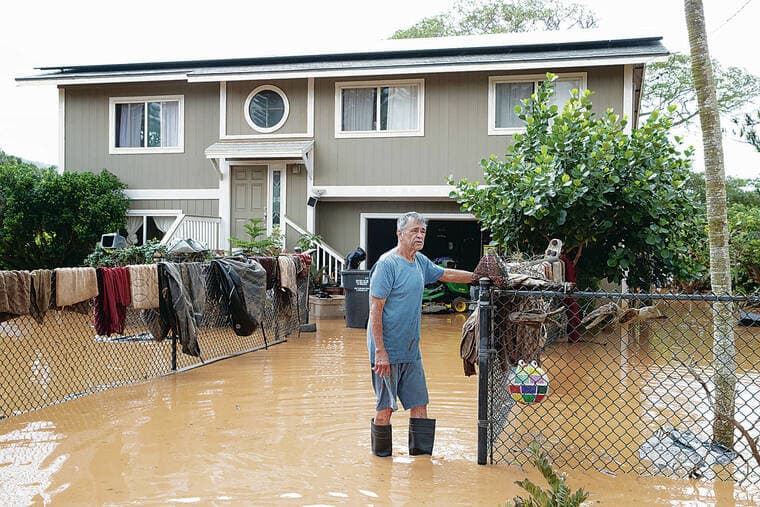
Hawaii Suffers Its Worst Floods in Over 20 Years, Prompting Thousands to Evacuate
46 sources compared

Kona Low Storms Strike Oʻahu and Maui, Hawaii Faces Worst Flooding in 20 Years
24 sources compared