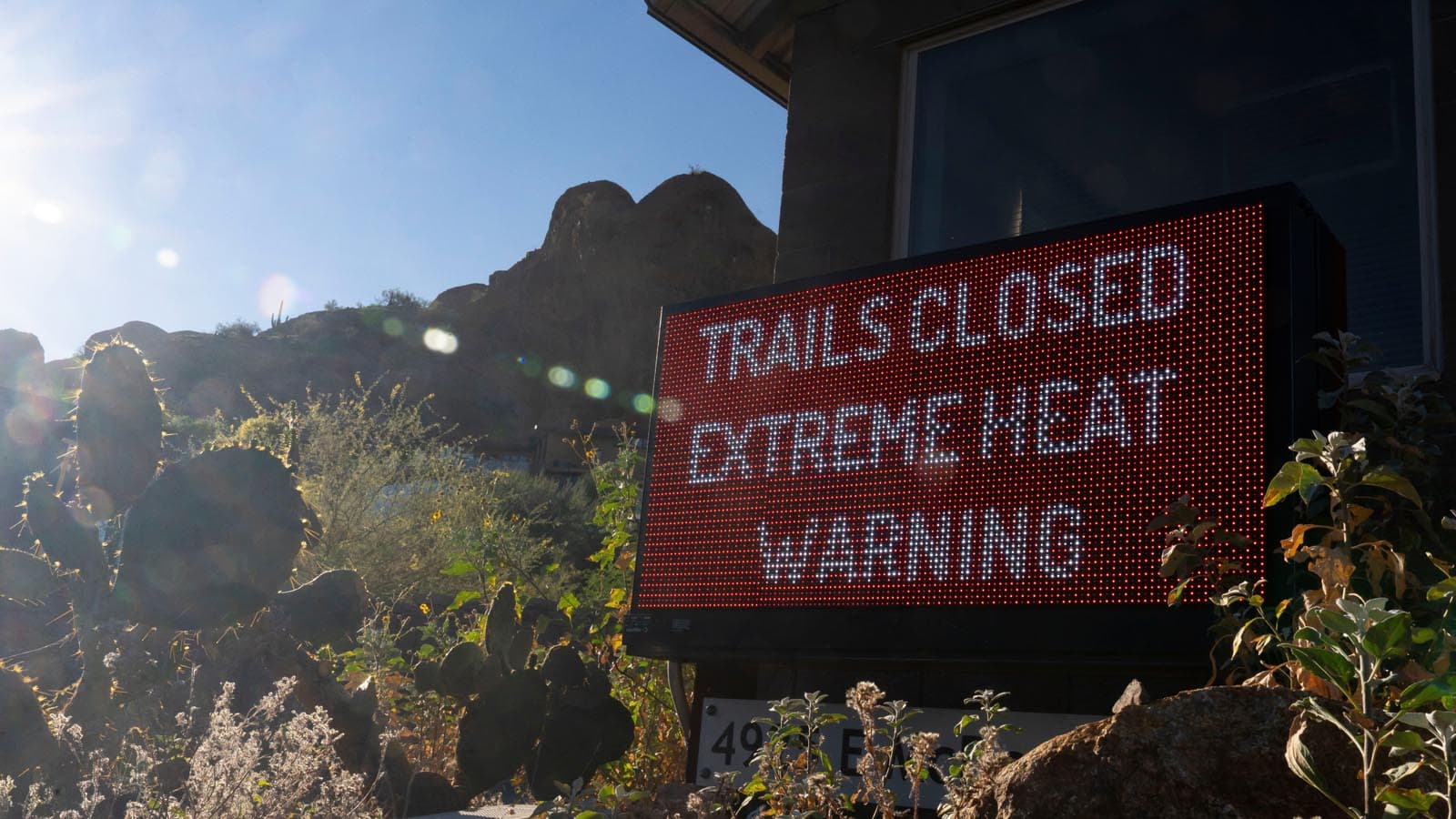
Heatwave shatters March records as Southwest bakes under extreme temperatures
Key Takeaways
- March heat wave shatters records across the U.S. Southwest and West.
- Many locations hit 100°F-plus highs and set March records.
- World Weather Attribution and scientists link the heatwave to human-caused climate change.
Record-Breaking Heat
A dangerous heat wave shattered March temperature records across the U.S. Southwest on March 21, 2026.
“Many records have already broken, in some cases by huge margins”
Temperatures reached unprecedented levels up to 112°F (44.4°C) in Arizona and Southern California communities.

This extreme weather event occurred months ahead of the typical hot season.
Four cities clustered within about 50 miles of each other all hit 112°F.
This smashed the highest March temperature previously recorded in the United States.
Death Valley scorched at 105°F while often foggy San Francisco tied its historic March record at 86°F.
Skiers in Colorado were hitting the slopes shirtless as temperatures soared.
Climate Change Attribution
Climate scientists have definitively linked this unprecedented heat wave to human-caused climate change.
Multiple international research groups concluded the event would have been 'virtually impossible' without global warming.

A report by World Weather Attribution found that human-caused warming added between 2.6°C to 4°C to the temperatures.
Attribution scientist Clair Barnes from Imperial College of London added 4.7°F to 7.2°F (2.6°C to 4°C) to the temperatures.
The scientists called the event so rare that it's only 'expected to occur about once every 500 years.'
Extreme Classification
More than a dozen scientists, meteorologists and disaster experts have classified this March heat wave in a 'ultra-extreme classification.'
“Waterloo Lambeth Around the Globe Record-breaking heat builds into the Plains this weekend, easing briefly before intensifying again by midweek”
They placed it alongside other major weather disasters of recent years.
Stanford University climate scientist Chris Field categorized this heat wave as one of several 'giant events' in the last six years.
These include the 2021 Pacific Northwest heat wave, the 2022 Pakistan floods, and killer hurricanes Helene, Harvey and Sandy.
Weather historian Chris Burt noted this Southwest heatwave has temperatures up to 16.7 degrees Celsius above normal.
The event has been compared to the East Antarctica heatwave of 2022 when temperatures were 45 degrees Celsius warmer than normal.
Social and Economic Impact
The record-breaking heat has created significant economic and social impacts throughout the Southwest.
Multiple ski resorts have been forced to close or shrink operations amid rapid snowmelt and high temperatures.

The National Weather Service issued extreme heat warnings for much of the Southwest.
These warnings ranged from Los Angeles and coastal southern California to Las Vegas.
Specific warnings were issued against leaving children or pets in cars.
Climate Central Chief Meteorologist Bernadette Woods Placky noted it's 'hard to even keep up with how extreme our extremes are becoming.'
Former FEMA Director Craig Fugate said officials were 'operating outside the historical playbook more and more.'
Future Climate Trends
Looking ahead, climate scientists warn this record heat wave is part of a broader trend.
The trend involves increasingly extreme weather that will continue to intensify.
According to NOAA's Climate Extremes Index, the area of the U.S. hit by extreme weather in the past five years has doubled from 20 years ago.
The United States is breaking 77% more hot weather records now than in the 1970s.
The number and average cost of billion-dollar weather disasters is twice as high as just 10 years ago.
Andrew Weaver stated, 'What used to be unprecedented events are now recurring features of a warming world.'
The forecast shows April, May and June are likely to be hotter than normal almost everywhere in the U.S.
Arizona, Nevada, Utah and New Mexico are expected to see an even more sizzling spring than typical.
More on Technology and Science

Hawaii's Worst Flooding in 20 Years Threatens Dam, Prompts Evacuations as More Rain Looms
11 sources compared

Hawaii Deploys National Guard as Worst Flooding in 20 Years Swamps Oahu
68 sources compared
Record heat blankets the US Southwest as March logs hottest temperature in Arizona
10 sources compared

Trump administration unveils national AI framework to preempt state AI laws
31 sources compared