
‘He’s in trouble’: Trump’s niece and sharpest family critic on the real motive behind his Iran war
Key Takeaways
- Donald Trump returned to power pledging to end United States involvement in others' wars.
- Trump campaigned promising to end wars in Ukraine and Gaza, and broker Middle East stability.
- Trump's niece, his sharpest family critic, criticized his motives for an Iran war.
From peacemaker to war
When Donald Trump returned to power, he campaigned on ending wars abroad, brokering stability in the Middle East and prioritising domestic affordability, but his rhetoric shifted as the United States launched Operation Epic Fury against Iran.
“When Donald Trump returned to power, he did so on a promise he repeated with unusual clarity: the United States, he said, had spent too long fighting other people’s wars”
The operation — quickly nicknamed “Operation Epstein Distraction” online — arrived amid other displays of Trump’s desire for recognition, including a January 2026 moment when Venezuelan opposition leader María Corina Machado handed him her Nobel medal at the White House, even as the Nobel Committee made clear the prize cannot be transferred or shared.
In late 2025 and early 2026 Trump dismissed the affordability crisis as a “hoax,” criticised the Nobel Committee, threatened tariffs against Norway and revived his demand that the United States should gain control of Greenland, and said he no longer felt obligated to “think purely of peace.”
Within weeks of those remarks, the United States had entered a direct military confrontation with Iran.
Operation Epic Fury claims
Operation Epic Fury targeted Iranian missile installations, naval bases and other strategic sites and killed Ayatollah Ali Khamenei, Iran’s supreme leader, whom Donald Trump later described on Truth Social as “one of the most evil people in History.”
The White House presented the operation as decisive and necessary to dismantle Iran’s capacity to threaten American allies and regional stability, while Israeli defence minister Israel Katz called the attacks a “pre-emptive strike” and US Secretary of State Marco Rubio said Washington had acted in anticipation of Iranian aggression.
Trump offered shifting explanations for the campaign — citing Iran’s nuclear ambitions, its ballistic missile programme and its network of militant groups — but critics and intelligence assessments complicated those claims, including a US Defense Intelligence Agency analysis suggesting Iran was unlikely to possess missiles capable of reaching American territory until 2035 and the observation that Trump had previously declared Iran’s nuclear programme “obliterated” during earlier strikes on Iranian facilities.
Human cost and escalation
The war’s human cost has mounted quickly: in Iran more than 1,255 people have been killed and over 12,000 wounded, including at least 168 children and 165 primary-school girls killed when a missile strike hit the Shajareh Tayyebeh elementary school in Minab while classes were in session.
“When Donald Trump returned to power, he did so on a promise he repeated with unusual clarity: the United States, he said, had spent too long fighting other people’s wars”
Retaliatory attacks widened the conflict beyond Iran’s borders: Israel reported 13 deaths and nearly 1,929 injuries, eight US soldiers were killed with 18 wounded, and renewed Israeli operations in Lebanon left more than 570 people dead and over 1,400 injured.
Iran responded with drone and missile strikes across the Gulf, targeting sites in Saudi Arabia, the UAE, Bahrain, Jordan, Oman, Qatar and Cyprus and causing civilian and military deaths and injuries, compounding the human toll and heightening regional tensions.
Mary Trump's critique
Mary L. Trump, the president’s niece, psychologist and author of Too Much and Never Enough, has emerged as a prominent critic who argues the war is driven by her uncle’s personal psychology rather than coherent strategy.
She said, “The man who is bombing their country has no interest in them, and he has no plan to create the conditions in which they can become free,” and framed the motive as desperation to avoid humiliation: “He’s in trouble, and he knows it.”
In a blog post titled “What Is It All For?” she questioned the strategic logic of a war of choice, wrote that the rationale has changed repeatedly and warned the conflict will cost “untold lives and untold billions of dollars” while damaging US credibility and making “The Middle East is a tinderbox.”
She also highlighted economic consequences, noting Iranian threats to choke off the Strait of Hormuz have already sent energy markets into turmoil, driving up fuel and LPG prices, forcing small businesses and restaurants to cut back and adding pressure to households — a result she says contradicts Trump’s campaign agenda — and she concluded, “They are insulated. They are enriched. They are protected.”
“You are not.”
More on Iran
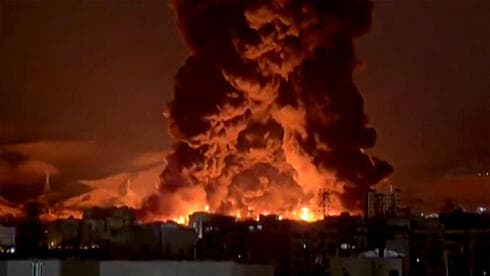
US obliterates military targets on Iran’s Kharg Island, Trump warns
13 sources compared

US Deploys About 2,500 Marines to Middle East After Iran Attacks Gulf Shipping
33 sources compared
FBI Warns of Iranian Drone Plot Based on Unverified Tip; California Says No Credible Threat
10 sources compared

White House Demands ABC Retract Report Claiming Iran Sought To Launch Drone Attacks On California
11 sources compared