
Hezbollah Carries Out 23 Rocket, Drone Attacks on Israeli Sites in Al-Biyadah and Al-Qantara
Key Takeaways
- Hezbollah attacked Israeli gatherings and vehicles in southern Lebanon.
- Rockets and drones were used in the attacks.
- The strikes caused confirmed hits and injuries to Israeli forces.
Cross-border attacks reported
A series of attacks along the Lebanon–Palestine border and across areas described by the sources as Israeli-occupied territory and the occupied Syrian Golan were reported in statements attributed to the Islamic Resistance in Lebanon (Hezbollah) and in responses acknowledged by Israeli military channels.
In one report, the Islamic Resistance in Lebanon announced it carried out operations targeting “gatherings of soldiers and Israeli army vehicles along the Lebanon–Palestine border,” describing them as a response to “ongoing violations of the ceasefire agreement.”
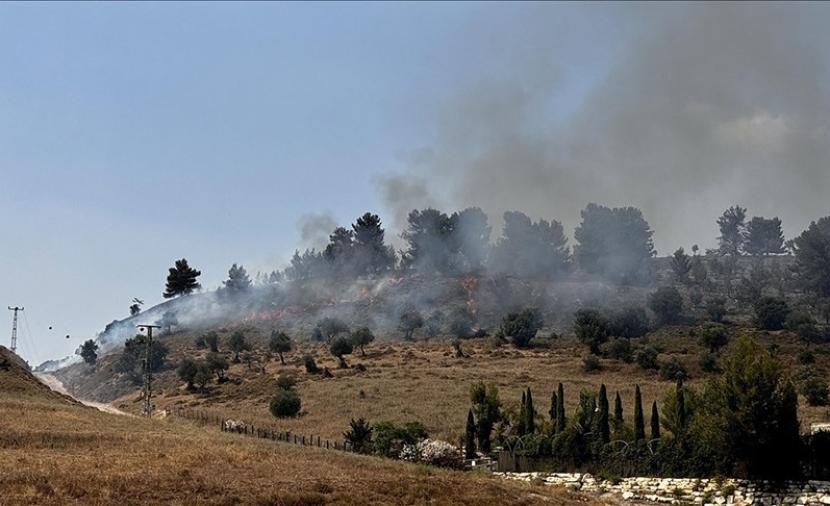
The same source said the resistance targeted a “leadership headquarters of Israeli forces in the town of Al-Biyadah with a rocket volley,” and also shelled “the newly established site at Balat with artillery shells,” confirming “direct hits.”
It further stated the resistance struck “a gathering of occupation soldiers and vehicles in the town of Al-Qantara in southern Lebanon,” and targeted other gatherings in Al-Biyadah using artillery, “resulting in confirmed injuries among the targeted forces.”
Another outlet, Al-Quds News Agency, said Hezbollah issued statements through its “War Media” on Wednesday, March 4, 2026, announcing “23 military operations” against Israeli army sites, bases, and military gatherings.
In that account, Hezbollah’s fighters said they targeted a gathering at “the al-Matla site” at “1:20 a.m.” with “a volley of rockets,” and later confirmed targeting “the headquarters of the Israel Aerospace Industries (IAI)” at “2:00 a.m.” with “a squadron of assault drones.”
Timeline and locations named
The sources describe a tightly detailed timeline of strikes, repeatedly naming specific towns in southern Lebanon and specific targets described as Israeli military sites.
The Al-Quds News Agency account lists multiple operations with exact times, including a claim that Hezbollah targeted “the headquarters of the Israel Aerospace Industries (IAI) in the center of the occupied Palestinian territories at 2:00 a.m.” with “a squadron of assault drones,” and a claim that it targeted “the base named “G iva” for drone control east of the occupied city of Safed at 3:30 a.m.” with “a precision-guided missile.”
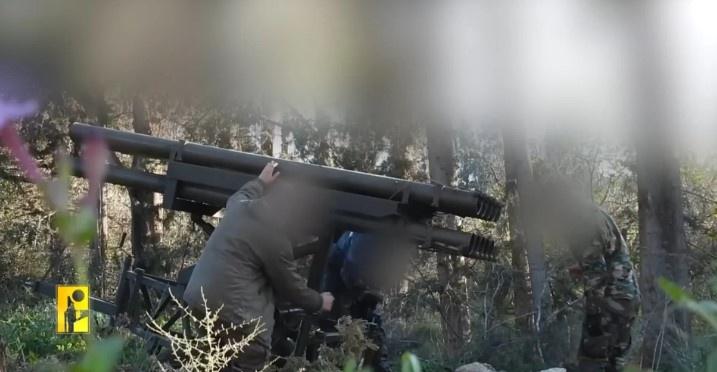
It also says Hezbollah targeted “the Northern Region Command headquarters of the Israeli army (Dado base), northeast of the occupied city of Safed, at 3:30 a.m.” with “a precision-guided missile,” and later reported targeting “a troop carrier in the village of Houla at 11:20 a.m. on Wednesday” with “a direct hit.”
In the same series, the War Media account says Hezbollah targeted “the Iron Dome radars at the site of Kiryat Eliezer” at “5:00 p.m. on Tuesday, March 3, 2026,” and targeted “the Ain Shemer air defense base” at “4:30 a.m.” east of “Hod HaSharon.”
The IRIB News Agency report says Hezbollah operations continued “from 9:30 to 15:50 local time,” including “artillery strikes on a gathering of Israeli troops in the city of Bint Jbeil” and around “the school in the village of Hula,” and it adds that suicide drones were used to target “military vehicles in the areas of Al-Biyadah, Al-Tayibah, and Rashaf.”
Another report tied to Hezbollah statements says fighters struck “the town of Al-Biyadha” at “10:35 this Saturday” with “a suicide drone,” and then targeted “the center of the Israeli soldiers' gathering in the Al-Qantara settlement at 14:30 today (Saturday) with artillery.”
Hezbollah claims and Israeli acknowledgements
Across the reports, Hezbollah’s statements emphasize “precise hits” and “casualties,” while Israeli military channels are described as acknowledging injuries to soldiers and, in one case, conceding the downing of an Israeli drone.
The IRIB News Agency report says Hezbollah “emphasized that in all these attacks, precise hits and casualties were inflicted on the Zionist enemy forces,” and it adds that “in one of the final attacks in front of the village of Al-Biyada, Israeli forces under heavy fire from the fighters of the Islamic Resistance were forced to withdraw from the area.”
That same IRIB account says Israel “acknowledged that two of its soldiers were wounded in these attacks,” and it specifies that the acknowledgement came “in a statement” after a “suicide drone attack.”
Another report, attributed to Hezbollah statements and carried by Mehr News Agency quoting Al-Manar, says fighters “directly struck the center of the Israeli troops' gathering in the town of Al-Biyadha with a suicide drone” at “10:35 this Saturday,” and then announced artillery targeting “the center of the Israeli soldiers' gathering in the Al-Qantara settlement at 14:30 today (Saturday) with artillery.”
Mehr’s account also says “the radio of the Zionist regime’s army acknowledged that in recent hours there have been intense rocket and drone attacks on its troops by the Islamic Resistance in Lebanon.”
It further states that Hezbollah’s War Information Office released “a video showing the downing of the Israeli army’s Hermes 450 drone by a surface-to-air missile.”
Ceasefire framing and escalation
The sources frame the attacks as responses to ceasefire violations and as part of a broader escalation described in political and military terms.
The Al-Khabr report says the Islamic Resistance in Lebanon announced operations “in response to what it described as ongoing violations of the ceasefire agreement,” and it adds that “the Lebanese side accuses the Israeli army of continuing to breach the truce and targeting civilian areas in southern Lebanon, resulting in civilian casualties and destruction of property.”

The IRIB News Agency report similarly says Hezbollah described its actions as continuing “from 9:30 to 15:50 local time,” and it connects the current fighting to a wider sequence, stating that “Israel began its aggressive war against Lebanon on March 2, 2026 (11 Esfand 1404), two days after the start of a joint aggression with the United States on the soil of our country.”
It also says that on “27 Farvardin, Trump announced a 10-day ceasefire and then extended it by three weeks between Lebanon and the Zionist regime,” while adding that “the Zionist regime has repeatedly violated the ceasefire by attacking various parts of Lebanon.”
Another report, from Al-Manar TV Lebanon, repeats the Hezbollah framing of “in defense of Lebanon and its people and in response to the ceasefire violation by the Israeli enemy and attacks on southern Lebanon villages,” and it describes a “barrage of rockets and artillery shells” that achieved “confirmed hits: statement 11.”
In the ANA News Agency report citing Al-Mayadeen, Hezbollah’s statements emphasize that operations were carried out “in defense of Lebanon and its people and in response to ceasefire violations by the Israeli regime and its attacks on the villages of southern Lebanon,” and it adds that “Israeli attacks on southern Lebanon have led to the martyrdom and injury of a number of civilians.”
What comes next in the reporting
While the sources do not provide a single consolidated “next step,” they do describe continuing operations, ongoing claims of strikes, and the political pressure surrounding drone threats and ceasefire violations.
The IRIB News Agency report says Hezbollah’s drone attacks “against Israeli troops operating in southern Lebanon have become a cause for concern in Tel Aviv,” and it quotes Benjamin Netanyahu describing the drone attacks as “a major threat to this regime” and urging the Israeli army to counter them.

It also states that “operations continued from 9:30 to 15:50 local time,” and it describes the final phase as forcing Israeli forces to withdraw “in front of the village of Al-Biyada” under “heavy fire from the fighters of the Islamic Resistance.”
In parallel, the Al-Quds News Agency War Media series says clashes continued “until the time of the statement” in one of its numbered claims, and it reports that helicopters “intervened to evacuate the wounded” after a rocket volley targeted “the settlement of Kiryat Shmona.”
The same series also says Hezbollah targeted multiple air defense and command-and-control sites, including “the Iron Dome radars at the site of Kiryat Eliezer,” “the Ain Shemer air defense base,” and “the Tel Hashomer base,” which it describes as “the Army General Staff headquarters southeast of Tel Aviv.”
Mehr News Agency and Nour News both emphasize the downing of the “Hermes 450 drone” by a “surface-to-air missile,” and they present the release of video footage as part of the resistance’s messaging.
More on Syria

Syria Positions Neutral Energy Corridor As Iraqi Oil Trucks Route Via Banias Port
20 sources compared
Syrian Commission Prepares War Crimes Charges Against Fadi Saqr Over 2013 Tadamon Massacre
90 sources compared
Syrian Security Forces Arrest Mohammad Mansoura, Former Assad Military Intelligence Chief
63 sources compared

FBI, House Oversight Committee Probe Deaths and Disappearances of U.S. Nuclear, Aerospace Scientists
13 sources compared