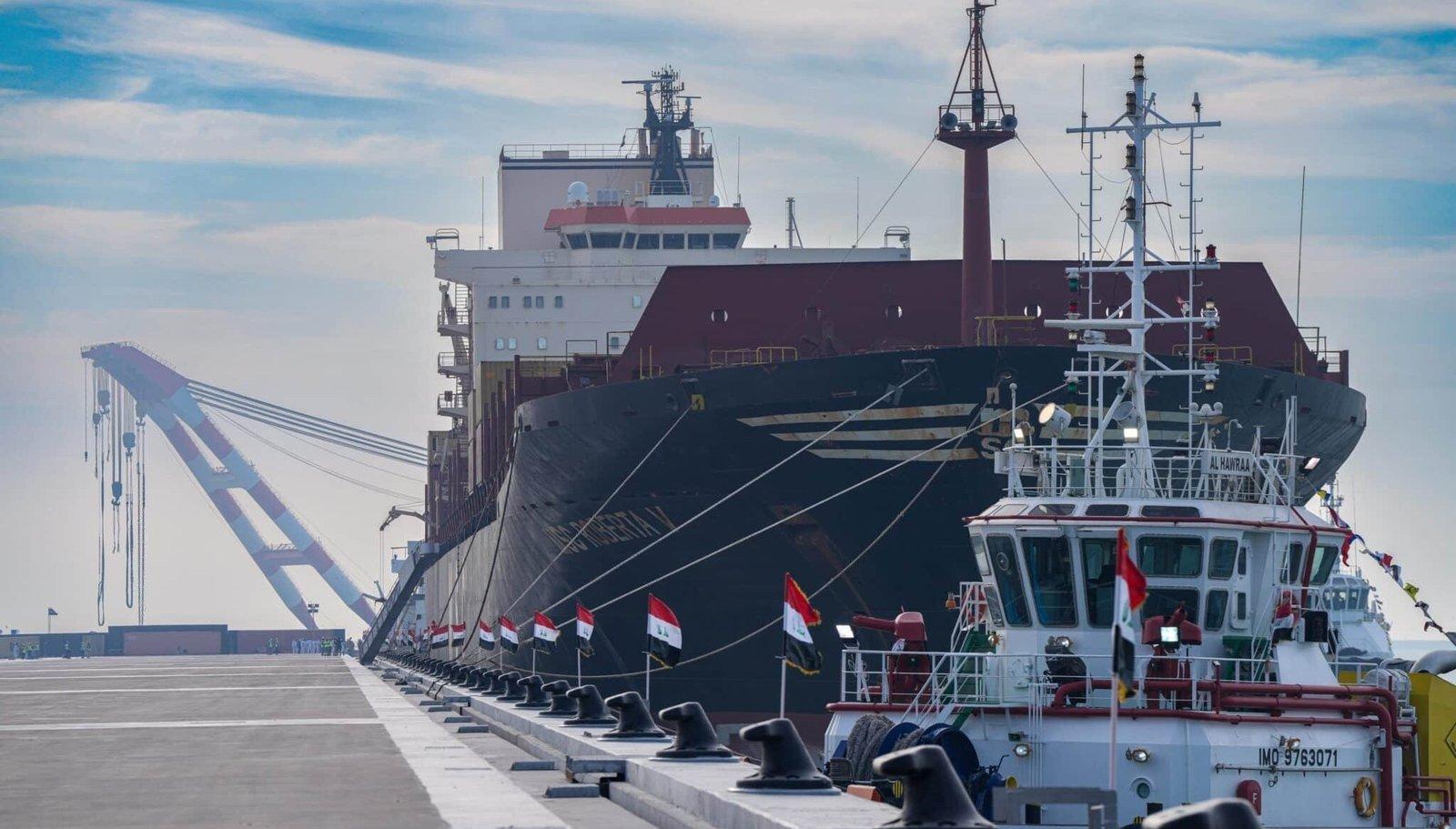
Syria Positions Neutral Energy Corridor As Iraqi Oil Trucks Route Via Banias Port
Key Takeaways
- Hundreds of Iraqi oil trucks head to Syria's Banias port as an overland energy corridor.
- The shift arises as the Strait of Hormuz is effectively blocked by conflict.
- Experts cite security, political stability, and infrastructure costs as major obstacles.
Neutral corridor pitch
Syria has positioned itself as a neutral corridor amid a widening regional conflict that has pitted the United States and Israel against Iran, with Damascus presenting its neutrality as both a strategic posture and a practical solution for disrupted energy routes.
“Toggle Play Syria becomes alternative energy corridor for oil as Hormuz effectively blocked Syria is receiving hundreds of Iraqi oil trucks hauling crude overland to its Baniyas port as an alternative energy corridor to Europe, creating a costly but crucial workaround while the Strait of Hormuz is largely blocked by the US-Israeli war on Iran”
In an account attributed to the Associated Press, Damascus “has exploited the recent developments to strengthen its relations with Arab states and the West through a firm commitment to neutrality,” while an official in the Syrian Foreign Ministry, عبيدة غضبان, said Syria has “no interest in allying with either side of the ongoing war.”

The same report describes a new logistics pathway for oil exports: “oil shipments are now being moved by trucks from Iraq to Syrian territory, and then shipped to European markets via the Syrian port of Banias on the Mediterranean Sea.”
The framing is explicitly geopolitical, with غضبان describing Syria as “an alternative artery” that links regional energy resources to Europe even as road transport costs more than sea shipping.
The pitch is reinforced by statements from interim Syrian President أحمد الشرع, who told European leaders in Cyprus that “Syria, which was once a arena for others' conflicts, has today, by the will of its people and its institutions, chosen to be a bridge of safety and a fundamental pillar of the solution,” and added that Syria is “the alternative and safe artery that links Central Asia and the Gulf to the heart of the European continent.”
The Los Angeles Times similarly describes Syria’s effort to rebuild international relations after Bashar Assad’s ouster in December 2024, saying Damascus “has seized on the opportunity to strengthen those relationships by staying neutral.”
In parallel, Al Jazeera reports the same overland workaround in operational terms, stating that “Syria is receiving hundreds of Iraqi oil trucks hauling crude overland to its Baniyas port as an alternative energy corridor to Europe.”
From war to corridor
The corridor narrative is presented as an adaptation to a regional escalation that has reshaped movement of energy and diplomacy, with multiple outlets tying Syria’s “few pockets of calm” to the shifting balance between U.S. and Israeli actions and Iran’s response.
Al-Jazeera Net describes Syria as “one of the few pockets of calm amid the escalating regional conflict,” attributing the opening to “the military confrontation between the United States and Israel on one side and Iran on the other.”

It also connects Damascus’s neutrality to the timing of U.S. posture in eastern Syria, quoting Noah Bonsi, senior Syria adviser on Middle East affairs at the International Crisis Group, saying Syria’s neutrality owes partly to a “lucky timing” and “the reduction of the U.S. military presence in eastern Syria before the war with Iran helped spare the country retaliatory strikes.”
The Los Angeles Times likewise says that “Despite missiles flying overhead — and occasionally falling on Syrian territory — Syria managed to stay on the sidelines,” and it links the neutrality to the closure of the Strait of Hormuz.
That outlet describes how, after the U.S.-Israeli war with Iran, “oil shipments have been trucked from Iraq into Syria and shipped to European markets via Syria’s Baniyas port,” framing the route as a workaround “as long as Iran maintains its stranglehold on the channel.”
The same article adds that a “key border crossing between northern Iraq and Syria reopened last month after being closed for more than a decade,” presenting it as an additional route for energy exports.
Al Jazeera’s energy-focused segment similarly emphasizes that the Strait of Hormuz is “largely blocked by the US-Israeli war on Iran,” making the overland corridor “costly but crucial.”
Strategic enemies and motives
Damascus’s neutrality is described not as alignment with either side, but as an attempt to avoid being pulled into the conflict while still leveraging the disruption for energy transit and diplomatic leverage.
“Who supports and who obstructs”
Al-Jazeera Net quotes عبيدة غضبان stressing that Damascus views both sides as “strategic enemies,” saying “Damascus views the two sides of the conflict as "strategic enemies," noting that Iran and its followers, as well as Israel with its expansionist policies, all aim to weaken the Syrian state.”
The Los Angeles Times similarly presents the same logic through direct quotation, reporting that Ghadban said his country had “no interest in allying with either side in the war,” and adding that “Both parties have an interest in weakening Syria.”
In the same Los Angeles Times account, interim Syrian President أحمد الشرع is quoted again, this time tying neutrality to a security posture, with the statement that “Syria, which was once an arena for others’ conflicts, has today chosen, through the will of its people and institutions, to be a bridge to security and a fundamental pillar of the solution.”
The article also describes Syria’s relationship to Israel after Assad’s fall, stating that “the Israeli military seized control of a U.N.-patrolled buffer zone in southern Syria and has been occupying it,” while also noting that early speculation about Syria intervening in Lebanon did not materialize.
It says “the Syrian military made no such move,” and that Al-Sharaa and other officials insisted they had “no interest in intervening in Lebanon.”
Al-Jazeera Net adds a further motive for neutrality by describing the economic constraints that come with the regional war, saying Bonsi argues Syria is not immune to “the harsh economic repercussions” and that Gulf investment hopes for reconstruction faced a setback.
Pipeline ambitions and skepticism
Beyond trucking crude through Baniyas, the sources describe a broader attempt to turn Syria into a pipeline corridor, while also showing skepticism about feasibility and novelty.
Euronews reports that “Washington plans to turn Syria into a corridor for energy pipelines toward Turkey and Europe,” and it says a document prepared by the U.S. envoy to Syria, Tom Barrack, surfaced outlining an “ambitious plan to bring Damascus back to the heart of the global energy map.”
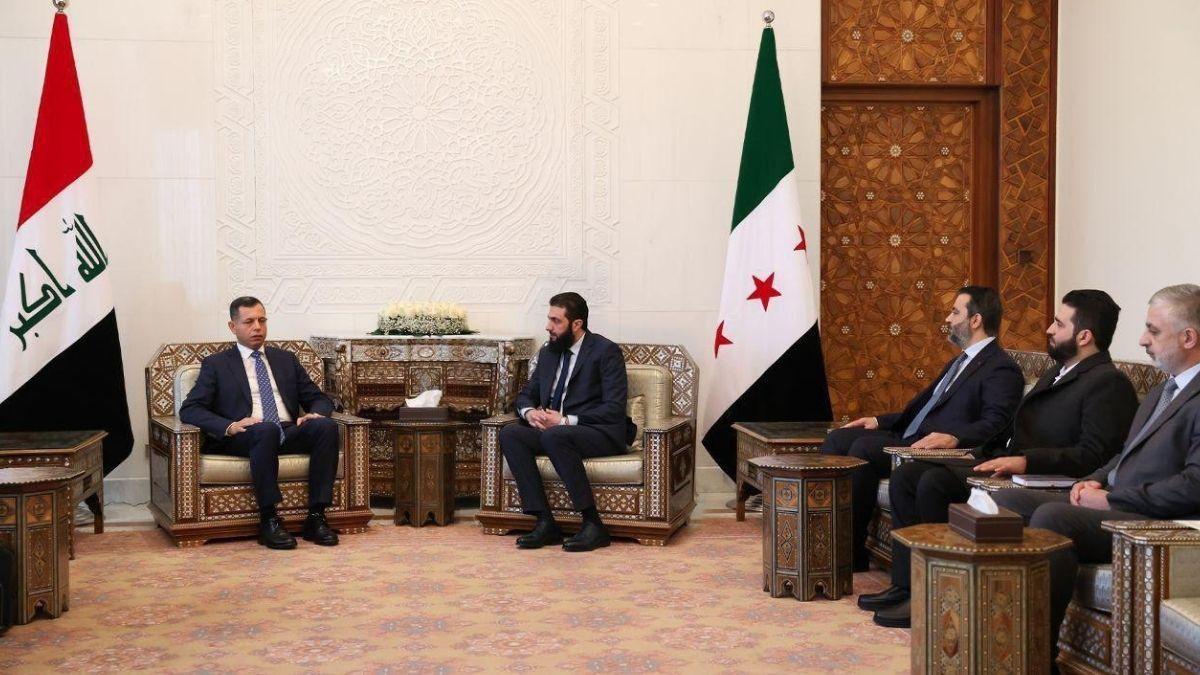
Euronews states that the plan is “based primarily on reviving and developing a vast network of existing and proposed pipelines,” and it clarifies that the term “land bridge” in Barrack’s plan “does not mean truck transport, but refers specifically to underground pipeline routes.”
The same report provides a set of pipeline axes, including “Kirkuk–Banias line (reviving the historic line from Iraq to the Mediterranean via Syria, at an estimated cost of $4.5 billion),” and “Qatar–Turkey gas line (a strategic project to move gas from the North Field through Jordan and Syria to Turkey and Europe).”
It also says “existing and extended lines such as the Azerbaijan–Kilis–Aleppo gas line, which entered service in August 2025,” and “the extension of the 'Arab Line' from Egypt through Syria to Turkey,” alongside “repairing more than 1,000 kilometers of networks in northeastern Syria and building new export lines.”
But the same Euronews piece includes direct pushback from journalist Sarkis Kasargian, who told Euronews: “I think Tom Barrack’s plan can be categorized as propaganda, because it is not new.”
He further warns that “creating a new network of pipelines and maintaining and guarding it and ensuring its safety—all of this is extremely difficult and complex,” while questioning why investors would choose Damascus over “Saudi ports on the Red Sea, Israeli ports on the Mediterranean, Turkish ports on the Mediterranean.”
Regional fatigue and escalation risk
While Syria’s neutrality is marketed as a stabilizing corridor, other reporting in the source set emphasizes how the broader region is locked into overlapping wars and a “strategic fatigue” that erodes the ability to sustain confrontation logics.
“Washington plans to turn Syria into a corridor for energy pipelines toward Turkey and Europe”
Ici Beyrouth frames the Middle East as a place where “war no longer emerges as an exceptional event but as a recurring reality,” and it says conflicts “overlap, prolong, and transform without ever disappearing completely.”
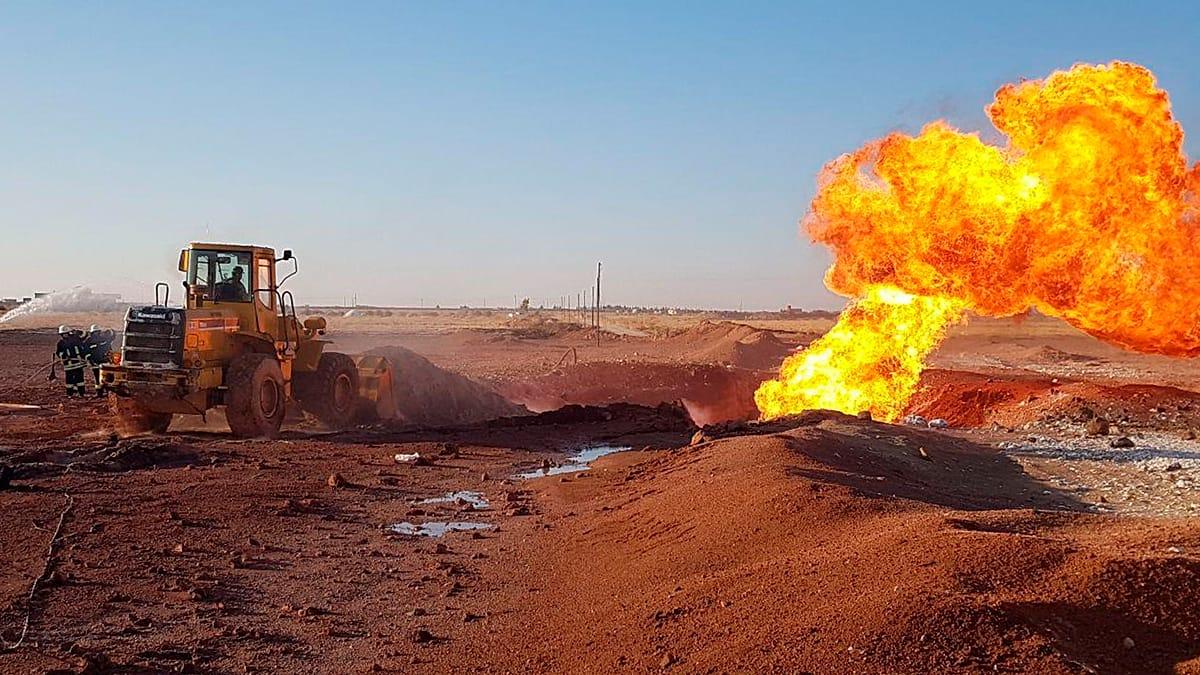
It describes a shift in temporality, saying “the distinction between wartime and peacetime loses its relevance,” and it portrays societies living in an “unstable in-between” where “the lull is never more than a provisional pause.”
In that account, war becomes “a structural condition, a permanent backdrop that organizes the political, economic, and social balances of the region,” and it argues that repeated exposure yields cumulative effects like “psychic fatigue.”
The same piece describes displacement as recurring and cyclical, stating that “Families flee several times, rebuild, then flee again,” while also saying the economy “withers” rather than collapsing abruptly.
It then connects this fatigue to the regional confrontation with Iran, stating that “the confrontation with Iran is no longer merely tension, but a war installed, fought over time,” and it says the United States and Israel launched “a second military campaign after the 2025 sequence.”
The account also describes the strategic logic of repeated strikes, saying “direct strikes against strategic infrastructures and centers of power indicate a clear will: to produce a rapid effect,” while adding that Iranian retaliation capacity “prevents any closure of the conflict.”
More on Syria

Iraq and Syria Dismantle International Drug Network, Seize 200 Kilograms in Homs and Deir ez-Zor
14 sources compared
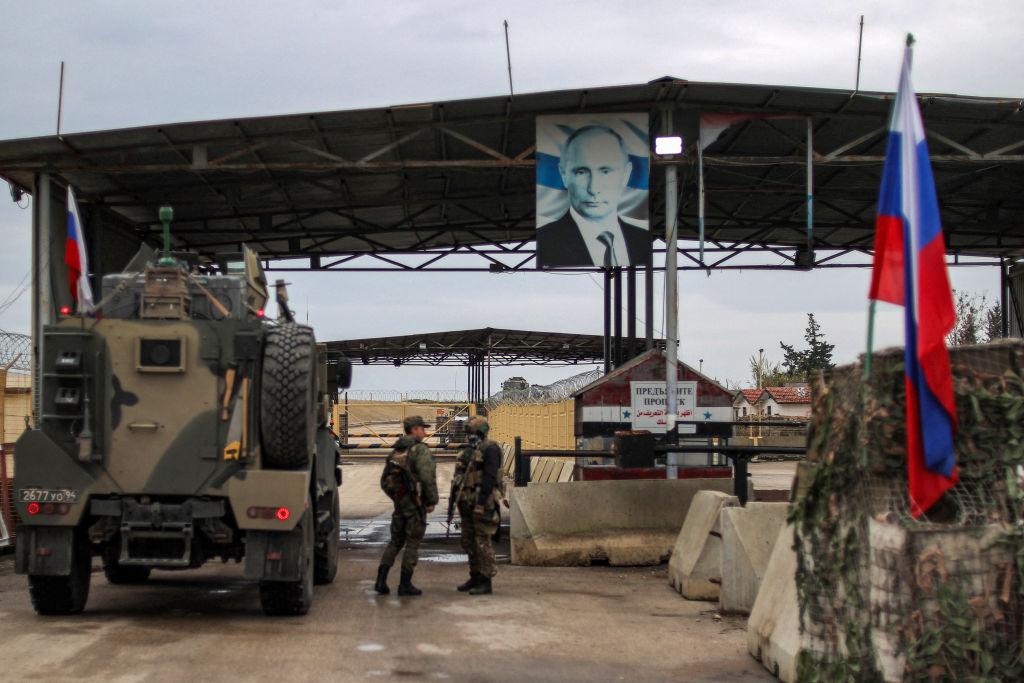
Russia Discusses Possible Restructuring of Tartus and Khmeimim Bases With Damascus
11 sources compared
Marco Rubio Ends Tom Barrack’s US Special Envoy Mandate for Syria
11 sources compared
Ahmed al-Sharaa Visits Deir Ezzor After Euphrates Floods Displace Thousands
18 sources compared