Syrian Security Forces Arrest Mohammad Mansoura, Former Assad Military Intelligence Chief
Key Takeaways
- Amjad Youssef named main suspect in 2013 Tadamon massacre.
- Arrest announced by Syrian Interior Ministry after months-long surveillance operation.
- Public celebrations reported in Yarmouk Camp and across Syria following arrest.
Arrests after Assad fall
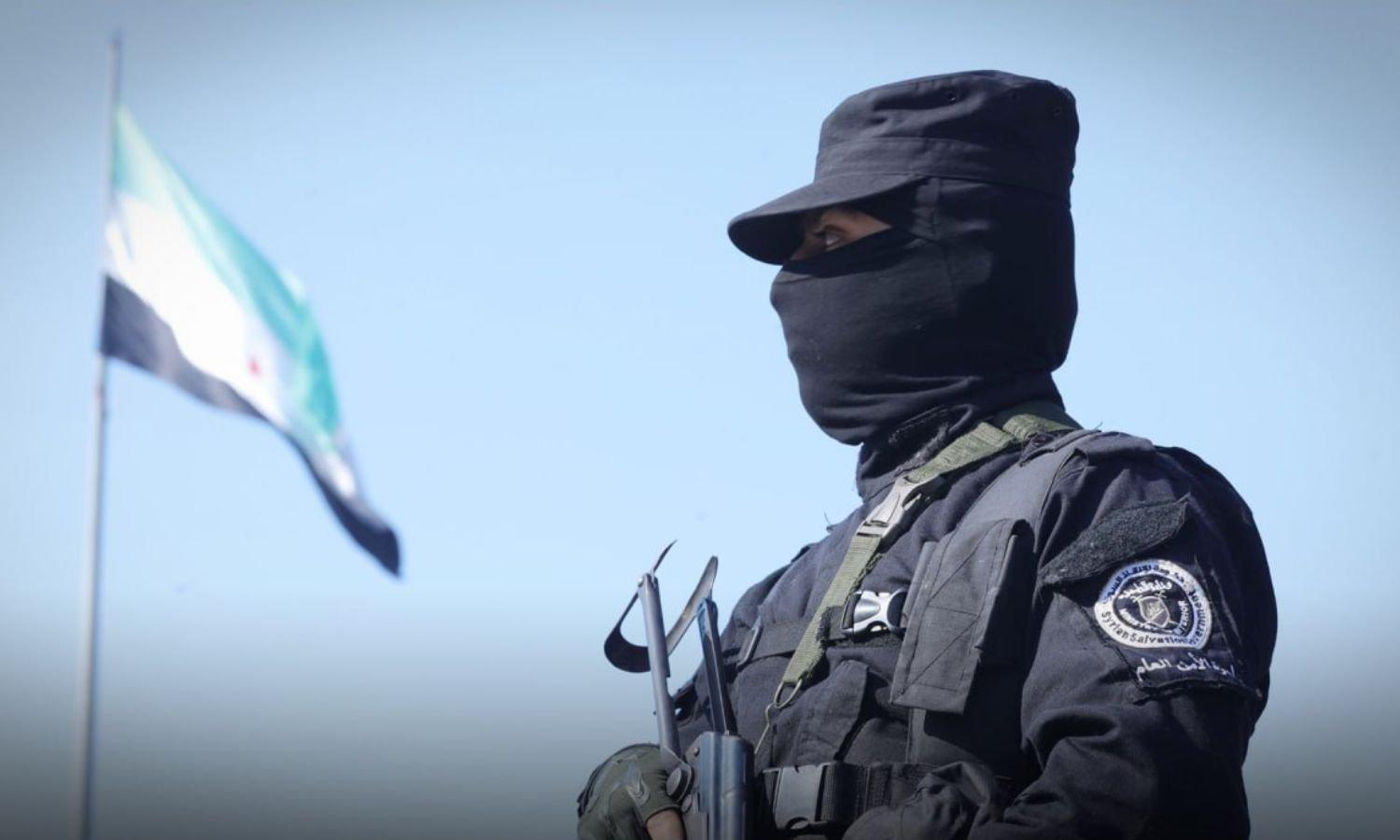
Syrian security forces arrested Mohammad Mansoura, described as one of the regime’s most prominent officials from the toppled Bashar al-Assad government, after he served as head of the Military Intelligence Branch in Hasakah Province and later led the Security Directorate for several years during the revolution.
Al-Araby al-Sharq al-Jadeed reported that a source in the Syrian Interior Ministry said Mansoura was arrested on Monday in the city of Jableh and transported to Damascus, where investigators “immediately began inquiries.”

The Al-Araby al-Sharq al-Jadeed account says Mansoura, 75, left Hasakah after a quarter of a century with the rank of major general, and that the detachment’s notoriety grew from repression carried out against the province’s Arab and Kurdish residents.
It further states that during his time in Hasakah, Mansoura built a network of agents and informants among ethnically mixed communities, and that he primarily managed Arab-Kurdish relations among residents and files of the security forces, including with the Kurdistan Workers’ Party (PKK).
The same source adds that Mansoura was transferred from Hasakah in 2000, headed the Palestine Branch in Damascus, then became deputy head of the Political Security Directorate at the Ministry of Interior before taking command in 2005 and remaining until 2016.
In a separate post-Assad arrest, France 24 reported that Syrian security forces announced on Wednesday evening near Damascus the arrest of a senior ISIS official during an operation carried out with the United States-led international coalition.
France 24 named the ISIS leader in Damascus as Taha al-Zoubi, also known as Abu Omar Tabiya, and said he was arrested in the al-Moadamiya area with men loyal to him, according to remarks by General Ahmad al-Dalati reported by SANA.
The accounts collectively depict a widening arrest campaign spanning former Assad-era security leadership and ISIS figures near Damascus.
Transitional justice debate
The post-Assad arrest of Amjad Youssef, described as a Syrian intelligence officer who killed civilians in the 2013 Tadamon massacres, became a focal point for a broader debate over whether Syria’s transition is moving toward accountability or toward “selective and performative justice.”
In The Guardian’s account, Ahmad al-Homsi, a 33-year-old activist with the Tadamon Coordination Committee, said he ran into the street to find others celebrating, recalling, “We stayed out for almost three or four days celebrating. People from neighbouring areas sent camels, sheep, livestock for us to slaughter and distribute them to people. The tears of joy didn’t stop.”

The Guardian reported that the video of Youssef killing blindfolded civilians as part of a series of massacres that killed at least 300 civilians had become synonymous with the regime’s brutality, and that the arrest marked “a milestone in Syria’s long road to achieving justice for the Assad regime’s atrocities.”
Yet al-Homsi’s joy turned to anger when he saw a confession released by Syria’s interior ministry last Sunday, in which Youssef was put in front of a camera and said he acted alone, and al-Homsi said, “Of course it upset us. Of course I didn’t like what he said. This was a cover-up for others [involved].”
He added, “There are many more criminals. We want to know everyone who held a position or was responsible at the time of the massacres.”
The Guardian quoted Ali Aljasem, a researcher at Utrecht University’s Centre for Conflict Studies, saying, “We’ve moved from transitional justice into selective and performative justice,” and continued, “The idea is, you arrest a couple of people, put them on TV and use them as scapegoats.”
Noosha Kabawat, head of the Syria programme at the International Centre for Transitional Justice, argued that “Transitional justice is not just a punitive process; it is about rebuilding a society and rebuilding trust,” and said it “should not overshadow fairness, and the Syrian people should be treated as partners rather than spectators in the rebuilding process.”
Aljasem warned that “These deals have nothing to do with justice or moving away from the past,” and said they “risk reproducing authoritarian structures from that past,” while also pointing to a first hearing in the trial of Assad’s cousin Atef Najib in Deraa province last Sunday.
Confessions, coercion, and anger
Across the reporting, the arrest of Youssef is repeatedly tied to the release of a confession that victims and activists interpreted as coerced and designed to narrow responsibility.
Al-Quds Al-Arabi described Ahmed al-Humsi as a man who “sleeps soundly,” but said he woke last month to the news of Amjad Yusuf’s arrest and “jumped from his bed and ran into the street to find others celebrating the news.”
It quoted Humsi saying, “We stayed outside for about three or four days celebrating, and people from neighboring areas sent us camels and sheep to slaughter and distribute to the people; tears of joy did not stop,” and it described the arrest as “a symbol of the regime’s brutality” because the video of Yusuf killing civilians while blindfolded became part of a series of massacres that claimed at least 300 civilians.
The same Al-Quds Al-Arabi account said Humsi’s joy soured when he saw a confession published by the Syrian Interior Ministry last Sunday, in which Yusuf appeared on camera saying he acted alone in killing the civilians.
Humsi told the paper, “Of course we were angry and didn’t like what he said; it was a cover for others involved,” and he added, “There are many criminals, and we want to know every person who held a position and was responsible at the time of the massacre.”
The Guardian’s version of the same episode similarly emphasized the confession’s effect on victims, with al-Homsi saying, “Of course it upset us. Of course I didn’t like what he said. This was a cover-up for others [involved],” and insisting, “We want to know everyone who held a position or was responsible at the time of the massacres.”
The Guardian also described the public’s praise for Atef Najib’s appearance in a courtroom cage and his confrontation with a teenager whose torture he supervised at the start of the Syrian revolution, presenting it as a “first step toward transitional justice.”
Yet both outlets framed the confession and the limited scope of arrests as part of a tug-of-war over transitional justice, with Al-Quds Al-Arabi quoting Ali Al-Jassem that “We have moved from transitional justice to selective and performative justice—the idea is to arrest two people, put them on television, and use them as scapegoats.”
Arrests, deals, and intermediaries
Beyond individual arrests, the sources describe a system of reconciliation deals and security arrangements that critics say may protect key figures from full accountability.
The Guardian reported that the government has reached reconciliation agreements with war traders from the Assad era in exchange for assets and information, and it said the government is offering temporary protection for some former security officials in exchange for intelligence and suppressing the rebellion led by Assad loyalists on Syria’s coast.

It quoted Ali Aljasem warning that “These deals have nothing to do with justice or overcoming the past; they threaten reproducing the authoritarian structures of that past.”
The Guardian also described Fadi Saqr as a key middleman between the old and the new guard, saying he helped the government mediate with some regime figures while contributing to the arrest of others.
Aljasem said Saqr is widely accused of involvement in the mass killing of civilians in Tadamon and other Damascus districts, and that Saqr denies responsibility.
The Guardian quoted Aljasem saying, “Even those now protecting Fadi will tell you he’s a criminal, but he’s useful to them,” and it added, “Their reasoning is: if you arrest Fadi, you only arrest one person, but if you keep him, he will lead you to many others.”
Al-Quds Al-Arabi similarly described the clash between transparent accountability and a security-first approach, stating that “some officials in the new Syrian government gave priority to internal security, focusing on arresting some Assad loyalists while making deals with others in the name of stability.”
It also said the government’s reconciliation agreements with war traders from the Assad era are made “in exchange for assets and information,” and that temporary protection is offered to some former security officials “in exchange for intelligence and suppressing the rebellion led by Assad loyalists on the Syrian coast.”
Wanted torturer and ISIS threat
While arrests proceed, the sources also highlight ongoing manhunts for individuals tied to torture and repression, alongside continued security operations against ISIS.
Le magazine GEO described a “manhunt” for Jamil Hassan, the former head of air force intelligence, whom it said is “long regarded as one of the most ruthless operators of Syrian repression,” and it framed the fall of Bashar al-Assad’s regime as “immediately unleashed an unprecedented manhunt, that of Jamil Hassan.”

It quoted Jamil Hassan’s own statement from 2011 to activist Shadi Haroun: “I will continue to kill to keep Bashar al-Assad in power. I will kill half the country if necessary.”
The article also said survivors’ testimonies portray him as convinced that fear was the only possible response to the uprising, and it reported that in front of his colleagues he repeated that protesters “are no longer protesters, but terrorists” who must be “eliminated,” and that he referenced the Tiananmen Square crackdown, saying, “If China hadn't resolved the student chaos, it would have been lost,” in 2016.
Le magazine GEO said the archives amassed by NGOs and investigators speak for themselves, adding “more than 160,000 disappeared, many of them in centers run by the services under his authority,” and it stated that Jamil Hassan is among the world’s most wanted war criminals, “Convicted in France of crimes against humanity,” “targeted by an arrest warrant in Germany,” and “pursued by the FBI for kidnapping and torture of American citizens.”
It also reported that several Western and Syrian sources claim he may be hiding in Lebanon, where former regime members are trying to rebuild a network around him, and it included a quote from Abdulbaset Abdullatif of the National Commission for Transitional Justice: “His hands are stained with the blood of Syrians.”
In parallel, France 24 described a security operation near Damascus that arrested ISIS leader Taha al-Zoubi, also known as Abu Omar Tabiya, and it said the operation targeted one of ISIS’ hideouts in the al-Moadamiya area with “the backing of the coalition.”
France 24 connected the operation to a broader security timeline, saying it came “more than ten days after a deadly attack attributed to ISIS against U.S. soldiers in central Syria,” and it specified that Washington said the December 13 attack killed “two American soldiers and an American interpreter in central Syria.”
More on Syria

Iraq and Syria Dismantle International Drug Network, Seize 200 Kilograms in Homs and Deir ez-Zor
14 sources compared
Russia Discusses Possible Restructuring of Tartus and Khmeimim Bases With Damascus
11 sources compared
Marco Rubio Ends Tom Barrack’s US Special Envoy Mandate for Syria
11 sources compared
Ahmed al-Sharaa Visits Deir Ezzor After Euphrates Floods Displace Thousands
18 sources compared