Hezbollah Lawmaker Hasan Fadlallah Says Israel Cannot Create Buffer Zone in South Lebanon
Key Takeaways
- Fadlallah urges Lebanon to move away from direct talks with Israel and sustain the ceasefire.
- Israeli forces push to establish a buffer zone in south Lebanon via ground operations.
- Civilian toll and destruction rise in towns like Bint Jbeil, Hanine, and Jbaa.
Ceasefire and Buffer Zone
Hezbollah lawmaker Hasan Fadlallah said it was in Lebanese President Joseph Aoun’s interest to withdraw from direct talks with ‘Israel’, while adding that the Resistance Party wanted the current ceasefire to last.
“Hezbollah lawmaker Hasan Fadlallah said that it was in Lebanese President Joseph Aoun’s interest to withdraw from direct talks with ‘Israel’, while adding that the Resistance Party wanted the current ceasefire to last”
In an AFP interview carried by Al-Manar TV Lebanon, Fadlallah told AFP that “It is in the interest of the state, the interest of Lebanon, the president of the republic and the government to move away from the path of direct negotiation and return to a national understanding about the best option for Lebanon.”
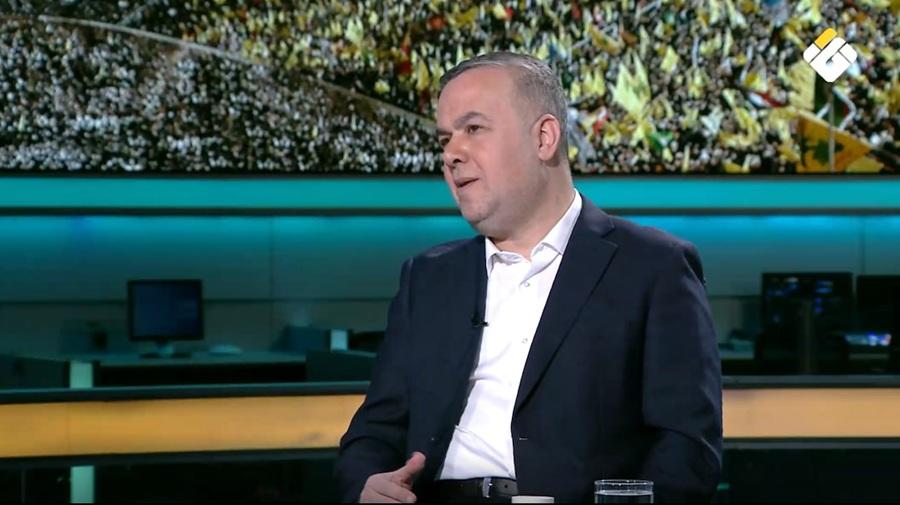
He also said Hezbollah would reject “any attempt to impose political costs on Lebanon through concessions made to this Israeli enemy,” while insisting Hezbollah wanted “the ceasefire to continue”, “accompanied by an Israeli withdrawal.”
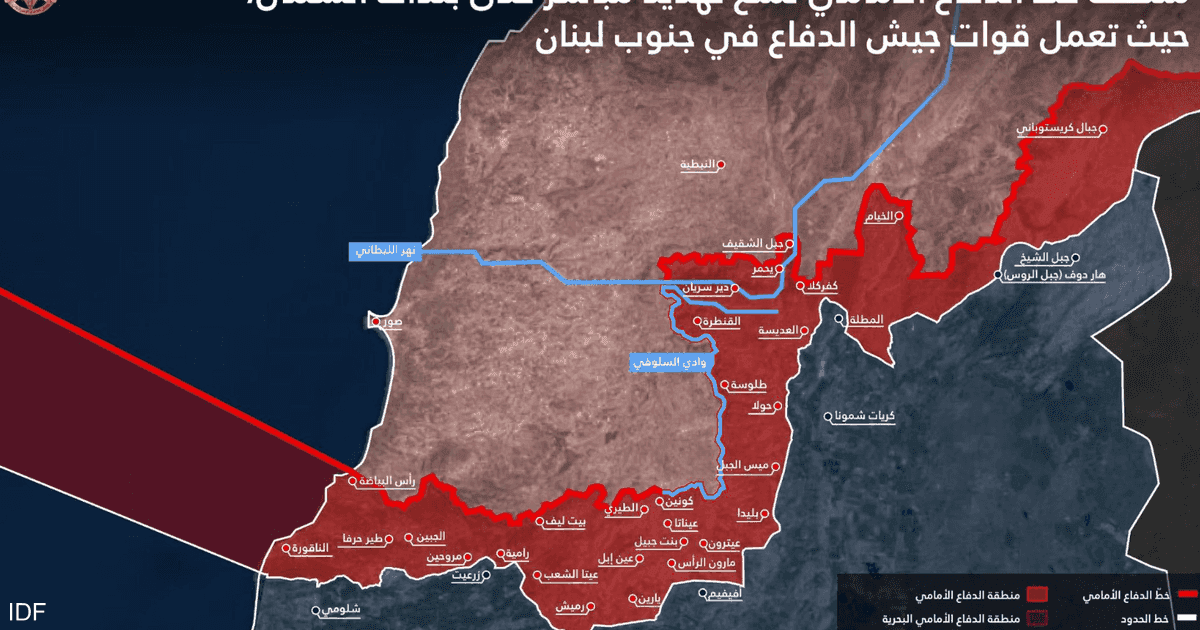
At the same time, Israeli reporting described the ceasefire as accompanied by a new security arrangement inside Lebanon, with the Israel Defense Forces releasing a map of a “new security zone.”
The Jerusalem Post said the IDF’s map includes “a strip of land along the border” and appears to include “a maritime buffer zone,” describing it as “the Forward Defense Line [“yellow line”] and the area in which IDF soldiers are operating, following the ceasefire agreement.”
Sky News Arabia reported that the Israeli army published “for the first time a map showing its new deployment line inside Lebanon,” saying it would expand control over “dozens of Lebanese villages” and that the deployment line “penetrates between 5 and 10 kilometers from the border into Lebanese territory.”
Lines, Forces, and Intent
Israeli military statements described the buffer zone as both a land and maritime concept, with the IDF saying it was operating simultaneously south of the “Forward Defense Line [“yellow line”]” to dismantle Hezbollah infrastructure and prevent threats to northern Israel.
The Jerusalem Post quoted the IDF saying “five divisions are operating simultaneously south of the Forward Defense Line in southern Lebanon in order to dismantle Hezbollah terror infrastructure sites and to prevent direct threats to communities in northern Israel.”

Sky News Arabia similarly reported that the Israeli army said “five brigades, along with the Israeli navy forces, are operating simultaneously south of the front line in southern Lebanon,” again linking the deployment to dismantling Hezbollah’s infrastructure and preventing direct threats to residential areas in northern Israel.
In parallel, Al-Manar TV Lebanon reported that Hasan Fadlallah vowed Hezbollah would break the “Yellow Line” that ‘Israel’ established in southern Lebanon, saying “We will bring down this Yellow Line through the resistance.”
He added that “The attempt by the Israeli army to establish a buffer zone, under the title of a defensive line, a yellow line, a green line, and a red line… all these lines will be broken, and we will not accept any of them,” according to the AFP interview.
The same Al-Manar report included Fadlallah’s insistence that “no one in Lebanon or abroad will be able to disarm the resistance.”
Gas Field and Maritime Debate
The Jerusalem Post connected the IDF’s “maritime buffer zone” to questions about Lebanon’s Qana gas field and the 2022 maritime border agreement, describing how the map’s inclusion of the area “fully absorbs Lebanon’s Qana gas field.”
It cited a comment from Ahmad Baydoun, who described himself as interested in “planes, clouds and conflict,” and said the IDF’s new “maritime boundary fully absorbs Lebanon’s Qana gas field, whose exploration rights were explicitly guaranteed under the 2022 US-brokered maritime border agreement.”
The article then brought in energy politics analysis from Elai Rettig, an assistant professor in Energy Politics at Bar-Ilan University, and a senior researcher at the BESA Center, who argued that “There’s no gas in the Qana prospect.”
The Jerusalem Post added that “In 2023, TotalEnergies announced it did not find commercial gas reserves in that field and abandoned Block 9 entirely,” while stating that “The more interesting issue is Block 8, which is beyond this map, which TOTAL wants to explore.”
It also quoted Dünya Başol, a PhD student at Bar Ilan University’s Middle Eastern Studies, saying “Israel’s new forward security zone in Lebanon isn’t purely military. Look at the maps, it includes the Qana gas field. That’s not incidental…Even wealthy states have to finance their wars, and gas fields help.”
The same Jerusalem Post piece linked the discussion to the 2022 deal and to the idea that “Considering the fact that Israel’s ambassador to Washington recently met the Lebanese ambassador, along with US mediation, there is a lot of talk again about Israel and Lebanon possibly coming to more deals.”
Cost, Manpower, and Strategy
Haaretz reported that maintaining a southern Lebanon buffer zone could be expensive for Israel, saying the Israeli military would require “an additional 40,000 reservists” and that the effort would cost “$6.4 billion annually,” according to an Israeli defense official.
The Haaretz article framed the manpower requirement as part of the operational burden, stating that the Israeli military would need those additional reservists to maintain the buffer zone in southern Lebanon.
It also described the financial scale as “cost of billions of shekels annually,” tying the figure to the broader question of how long such deployments might be sustained.
In the same broader context, the Jerusalem Post described the IDF’s map and “Forward Defense Line [“yellow line”]” as part of a strategy to dismantle Hezbollah infrastructure and prevent threats to northern Israel, while also noting that the maritime buffer zone raised “gas and strategy questions.”
The Jerusalem Post’s discussion included the idea that “Even wealthy states have to finance their wars, and gas fields help,” quoting Dünya Başol, and it connected that to the inclusion of the Qana gas field in the maps.
Together, the Haaretz and Jerusalem Post accounts placed the buffer zone not only as a military concept but also as a resource and cost problem, with Haaretz putting a specific price tag and manpower number on the maintenance challenge.
Timeline and Competing Narratives
Sky News Arabia said Israel and Lebanon agreed “last Thursday” to a ceasefire in the fighting between Israel and the Lebanese group, and it added that the agreement was “brokered by the United States” after “the first direct talks between Israel and Lebanon in decades on April 14.”
“Gift this articleShare to FacebookPrint article Article printing is available to subscribers only Print in a simple, ad-free format Subscribe Comments: SaveZen Reading Zen reading is available to subscribers only Ad-free and in a comfortable reading format Subscribe”
It reported that the Israeli army published its map “a few days after the ceasefire came into effect,” and described the deployment line as running “from east to west” and penetrating “between 5 and 10 kilometers from the border into Lebanese territory.”

The Sky News Arabia account also stated that Israel targeted Lebanese villages in the area and said its aim was “to protect the cities located in northern Israel from Hezbollah attacks,” while noting “There has been no comment yet from Lebanese officials or from the Iran-backed Hezbollah group.”
By contrast, Al-Manar TV Lebanon presented Hezbollah’s position through Hasan Fadlallah, who said Hezbollah would reject direct negotiation and return to “a national understanding about the best option for Lebanon,” and who vowed to break the “Yellow Line” through “the resistance.”
The Jerusalem Post, meanwhile, described the IDF’s map as a “new security zone” and quoted the IDF’s rationale for operations south of the “Forward Defense Line [“yellow line”]” to dismantle Hezbollah infrastructure and prevent threats to communities in northern Israel.
The divergence between these accounts is stark in how they frame the same ceasefire-linked geography: Sky News Arabia emphasizes the Israeli deployment line and the absence of comments, while Al-Manar emphasizes Hezbollah’s rejection of disarmament and its pledge to break the lines.
More on Lebanon
Emmanuel Macron Reaffirms Lebanon Ceasefire And Sovereignty With Prime Minister Nawaf Salam In Paris
13 sources compared

Israeli Soldiers Damage Jesus Statue in Debel, Lebanon, After Photo Verified
29 sources compared

Israeli Forces Destroy Civilian Infrastructure in Southern Lebanon, Detonate Imam Moussa Al-Sadr Sports Complex
17 sources compared

Israeli Soldier Vandalizes Jesus Statue in Debel, Lebanon, Netanyahu Orders Criminal Probe
12 sources compared