Full Analysis Summary
Hezbollah defense rhetoric
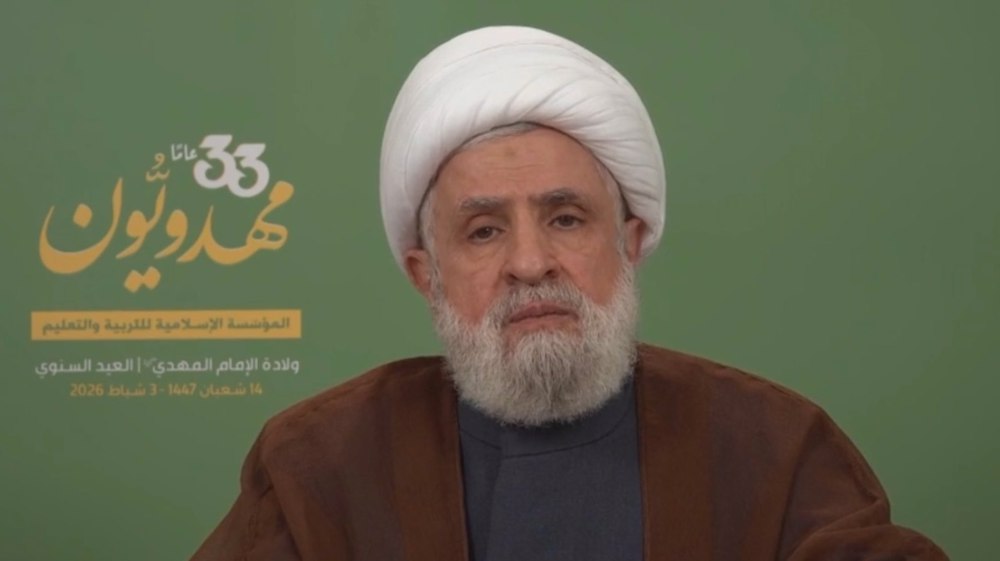
Hezbollah deputy leader Naim Qassem publicly vowed that Lebanon will defend its land and existence against what he called an "existential aggression."
He framed recent pressures for Hezbollah’s disarmament as part of a broader campaign led by the United States and its European allies to consolidate Israeli control in the region.
Qassem made these remarks at an educational party meeting, characterizing Western influence as seeking to entrench and expand the Israeli occupation and even create a "Greater Israel."
He warned that Israeli attacks are aimed at Lebanon as a whole rather than any single group, and framed resistance and sovereignty as collective national responsibilities.
This portrayal stresses Hezbollah’s narrative of defensive legitimacy and national unity in the face of foreign-directed disarmament efforts.
Coverage Differences
Omission and Source Availability
Al-Jazeera Net (West Asian) provides direct, substantive quotes from Naim Qassem describing the disarmament push as part of American and European hegemony and framing the issue as existential; PressTV (West Asian) does not provide substantive coverage in the supplied snippet and instead requests the article text from the user, resulting in an omission of primary reporting in the provided materials. This leads to a coverage gap: Al-Jazeera Net reports Qassem’s statements in detail, while PressTV’s supplied snippet contains only a meta-request rather than a report and thus cannot corroborate or offer an alternative framing.
Defense of Hezbollah's arms
Qassem explicitly blamed American and European influence for encouraging disarmament demands that he and Hezbollah view as undermining Lebanese sovereignty.
He described those demands as part of a project to 'entrench and expand' Israeli occupation.
By linking calls for disarmament to a Western-led geopolitical objective, Qassem framed resistance as a defense not only of Hezbollah's arms but of Lebanon's territorial integrity.
He also emphasized that attacks by Israel affect the whole of Lebanon, using that claim to urge nationwide mobilization and unity against what he called an existential threat.
Coverage Differences
Tone and Narrative Framing
Al-Jazeera Net (West Asian) presents Qassem’s remarks in a forceful, nationalistic tone emphasizing existential threat and foreign culpability, while PressTV (West Asian) offers no substantive report in the materials provided and therefore does not provide a contrasting tone or different narrative framing. The lack of PressTV reporting in the supplied snippet means readers relying on PressTV here would not access Qassem’s quoted rhetoric or his attribution of responsibility to the US and Europe.
Hezbollah public messaging
Al-Jazeera Net reports that Hezbollah’s public posture mixes readiness to discuss ways of repelling Israeli offensives with a call for national unity.
The language appears designed to broaden support beyond Hezbollah’s base and to present the group’s armaments as integral to Lebanon’s defense.
Qassem’s offer to discuss methods for repelling the offensive suggests tactical flexibility while firmly rejecting foreign-driven disarmament.
This framing positions Hezbollah not merely as a militia defending its own interests but as a central actor claiming a role in national defense.
According to the supplied materials, that claim cannot be independently corroborated by PressTV’s content because the PressTV snippet lacks substantive reporting.
Coverage Differences
Narrative Emphasis
Al-Jazeera Net (West Asian) emphasizes both the readiness to discuss defensive measures and the appeal to national sovereignty; PressTV (West Asian) in the provided snippet does not offer reporting to confirm, contradict, or further contextualize those claims, creating a gap. Thus Al-Jazeera’s narrative about Hezbollah as a national defender stands unchallenged in the provided documents, whereas PressTV’s absence leaves open whether it would echo, contest, or elaborate that narrative.
Media coverage gaps
The supplied materials show a clear limitation in available reporting: Al-Jazeera Net supplies direct quotes and a clear narrative, while the PressTV snippet included in the source list is a meta-request for the article text and contains no reporting.
This coverage gap affects how a reader understands the broader media response and leaves unanswered questions about how other West Asian outlets or international media portray Qassem's comments, their context, or reactions from Lebanese political actors and foreign governments.
Because of that lack of corroborating sources in the provided set, key details, for example how Lebanese government officials or Western diplomats responded or whether Israeli authorities issued any immediate reaction, are ambiguous or absent in these materials and must not be assumed.
Coverage Differences
Missed Information / Ambiguity
Al-Jazeera Net (West Asian) reports Qassem’s speech and assertions; PressTV (West Asian) supplied no article content and therefore misses reporting entirely. That omission means the supplied corpus lacks multiple viewpoints and external reactions, increasing ambiguity about international responses and limiting cross-source validation of claims. The difference therefore is not a direct contradiction but a gap in source availability and coverage.
Assessment of supplied coverage
Based only on the supplied articles, the clearest available narrative is Al-Jazeera Net's account of Qassem's remarks portraying disarmament demands as foreign-directed and existential and urging Lebanese unity and preparedness to repel offensives.
The PressTV entry provided contains no substantive report and therefore cannot confirm, nuance, or contest that account.
Because the provided corpus is so limited, readers should note the ambiguity and absence of corroborating perspectives, for example Lebanese state officials, Israeli or US responses, or independent analysts, in the supplied materials and avoid assuming unreported details.
If you want a fuller, multi-source article comparing Western, West Asian, and other outlets, please supply the additional article texts or links so they can be included and properly cited.
Coverage Differences
Summary / Call for Additional Sources
Al-Jazeera Net (West Asian) gives the substantive content used in this summary; PressTV (West Asian) in the supplied snippet is non-substantive. The difference here is that Al-Jazeera’s reporting shapes the narrative, while PressTV’s absence means the summary lacks cross-source triangulation. To resolve this disparity and produce a comprehensive multi-source analysis, more articles or full texts would be required.