USA11 February, 20263 min read
House Republicans Pass SAVE America Act, Imposing Strict Proof of Citizenship Requirement for Voter Registration
This article is an automated aggregation of coverage from news outlets. Our editorials offer in-depth analysis curated by the NewsCord team.
House approved bill requiring documentary proof of citizenship to register and photo ID to vote Measure was backed by President Trump and introduced by Rep. Chip Roy
9 outlets told this the same way.
Vote on SAVE America Act
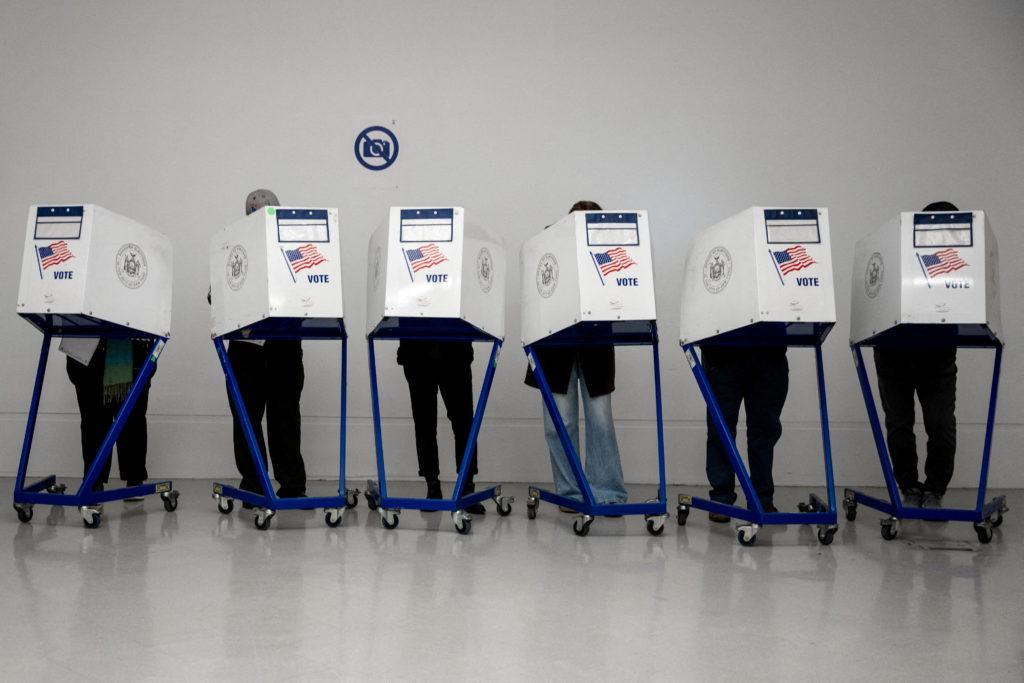
House Republicans on Wednesday narrowly approved the Safeguard American Voter Eligibility (SAVE America) Act, passing the measure 218–213 in a largely party-line vote. The bill would require documentary proof of U.S. citizenship — typically a U.S. passport or birth certificate — at registration and a government photo ID to cast a ballot. It revives a similar House-passed proposal that stalled in the Senate last year.
“House Republicans on Wednesday narrowly approved the Safeguard American Voter Eligibility (SAVE America) Act, a Trump administration priority that would require documentary proof of U.S. citizenship at voter registration—usually a valid U.S. passport or birth certificate—and a photo ID to cast a ballot.”
Proponents say the change is intended to prevent noncitizen voting and enforce existing law. Opponents warn it would make voting harder and could disenfranchise millions.

The vote came amid broader GOP efforts to change voting rules ahead of the midterms. It follows prior high-profile actions by the Trump administration related to ballots and voter rolls.
Voter ID and Registration Changes
The bill requires documentary proof of U.S. citizenship to register for federal elections, government photo ID to vote in person and to request absentee ballots, and creates new criminal penalties for election officials who register people without such documents. House Rules Committee amendments narrowed parts of the ID regime by allowing IDs that do not independently verify citizenship (for example, driver’s licenses), creating an exception for uniformed service voters, and adding procedures for voters who have changed their names. Critics and election officials warned of practical implementation problems, noting that REAL ID does not explicitly show citizenship and is available to noncitizens, and that document requirements could impose unfunded, time-consuming mandates on states.
Reactions to voting bill
Reactions showed clear partisan splits: Republican leaders and bill backers said the measure would prevent noncitizen voting and enforce election law, while Democrats, voting-rights groups and many election officials called it unnecessary and a form of voter suppression. Multiple outlets and experts cited data showing noncitizen voting in federal elections is rare, and some legal experts warned that criminal penalties for officials could encourage overly strict enforcement. Media accounts noted some Republican members repeated claims that noncitizen voting decided recent elections, which other outlets labeled unfounded.
“Republicans argue the bill is needed to prevent noncitizen voting and enforce existing law; Democrats counter it would disenfranchise millions and make voting harder.”
Senate passage outlook
Despite passage in the House, analysts and lawmakers cautioned that the legislation's prospects in the Senate are uncertain. The bill would likely face filibuster hurdles and needs 60 votes for passage.
Senate leaders and at least one Republican senator publicly questioned whether the votes exist to change Senate rules or advance the package. Some Senate Republicans have shown support for related measures and the bill's backers are pursuing Senate paths, but sources emphasize the measure is a long shot to become law without broader bipartisan backing.

Voter documentation estimates
Experts and watchdogs pointed to mixed state experience and differing estimates of how many eligible voters could be affected. State audits have found very few noncitizen voters in past contests, with PBS citing Georgia finding 20 registrants and Michigan finding 16 ballots cast by noncitizens in 2024. Research groups differ on how many people lack ready access to citizenship documents.
“Experts note voter fraud is extremely rare and most noncitizens do not slip through registration; fewer than one in 10 Americans lack citizenship paperwork.”
The Brennan Center estimates roughly 9% (about 21.3 million) lack ready proof of citizenship. The University of Maryland's estimate is 3.8 million adults lacking any citizenship documents.
Other media estimates suggest more than 20 million people may lack proof and that nearly half of Americans do not hold a U.S. passport. Those differing figures reflect variations in definitions (lack of 'ready access' versus 'no documents') and help explain why sources vary in how starkly they warn of disenfranchisement risk.