USA01 May, 202610 min read
House Votes to Reopen Homeland Security, Ending 76-Day Partial Shutdown
This article is an automated aggregation of coverage from news outlets. Our editorials offer in-depth analysis curated by the NewsCord team.
House votes to reopen most of the Department of Homeland Security, ending a 76-day shutdown. The shutdown was the agency’s longest in U.S. history.

DHS Shutdown Ends
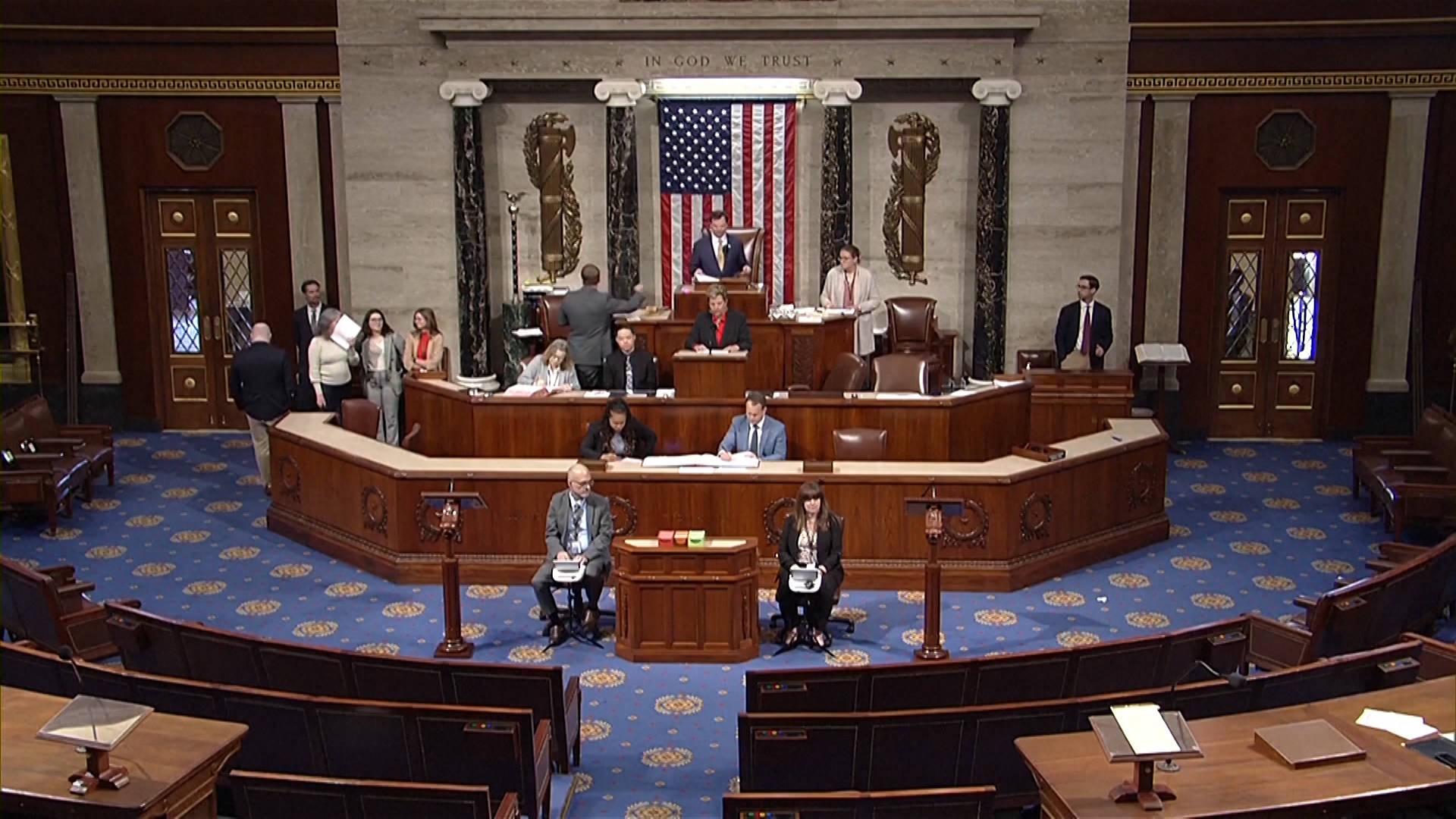
In the United States, the House of Representatives voted to reopen most of the Department of Homeland Security, ending a record 76-day partial shutdown and the agency’s longest in U.S. history, according to Democracy Now! and NPR. Democracy Now! said the approved budget bill signed into law by Trump excludes funding for Immigration and Customs Enforcement,ICE, but it reopens key parts of DHS, including the Transportation Security Administration. NPR similarly reported that the House passed a bill funding DHS, excluding dollars for Immigration and Customs Enforcement and Customs and Border Protection, and that the measure was approved through a voice vote on the 76th day of the shutdown.
“Republicans unveil a plan of $70 billion to fund ICE and end the DHS shutdown without negotiating with Democrats.”
The NPR briefing also tied the shutdown’s end to earlier political leverage, saying that after federal agents killed two U.S. citizens in January, Democrats pulled their support for a massive bipartisan spending bill that included DHS in order to push for reforms in the way agents do their jobs. In the same NPR account, the Senate had already passed a plan five weeks ago to fund DHS except for some immigration enforcement divisions, and House Speaker Mike Johnson initially called that bill a joke before later reaching a deal with more conservative members of his conference.
The ELTIEMPO.COM report added that Republicans unveiled a plan to fund ICE with $70 billion and end the DHS shutdown without negotiating with Democrats, describing Democrats’ refusal to back funding without new limits on operations, including requirements for court orders and restrictions on the use of masks or balaclavas by agents. The political fight over how DHS and immigration enforcement are funded is now set against the backdrop of broader national security deadlines and protest planning described in the same U.S. coverage.
War Powers Deadline
Alongside the DHS funding fight, U.S. coverage also emphasized a separate deadline tied to military action in Iran.
The NPR briefing said, “The Trump administration faces a deadline today to seek Congressional approval for its military action in Iran,” and it framed the issue through the War Powers Resolution of 1973, stating that Congress must declare war or authorize the use of force within 60 days.
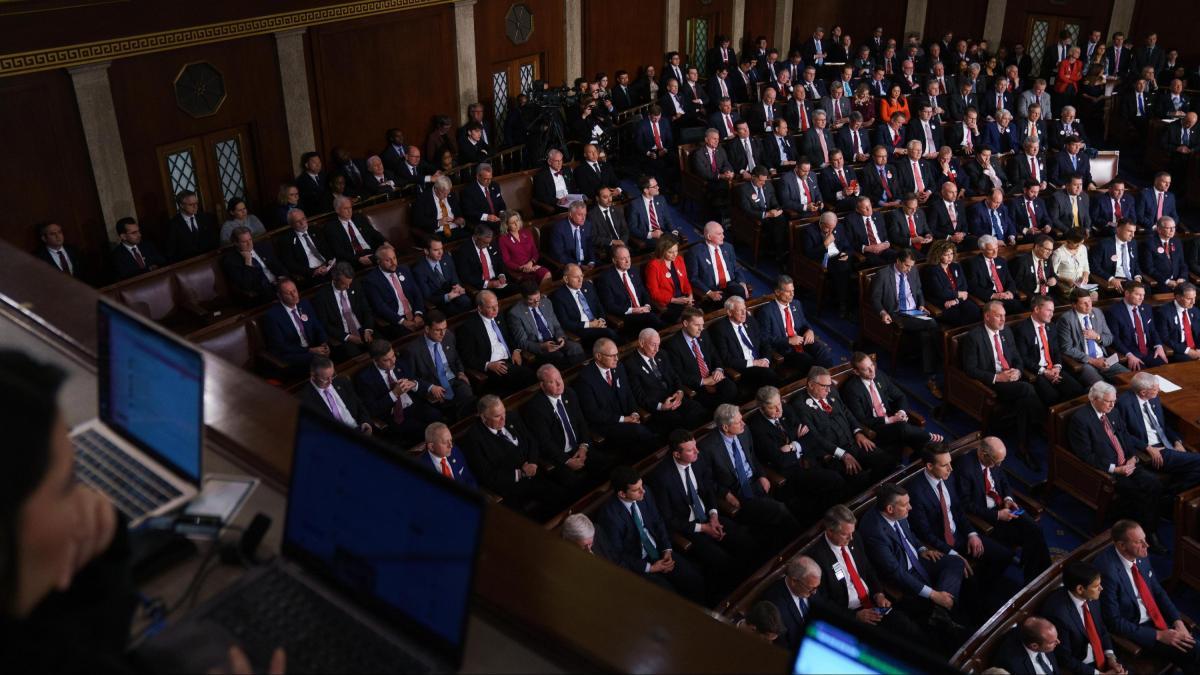
NPR added that if the president requests an extension, Congress has 90 days to act, and it reported that Defense Secretary Pete Hegseth asserted that the current ceasefire doesn’t count toward the 60 days.
The same NPR account described the administration’s approach as continued pressure through “the dueling blockades of the Strait of Hormuz,” and it said Iranians had proposed reopening the Strait and negotiating nuclear restrictions later.
NPR reported that President Trump convened his national security team to review the proposal but remained adamant that a nuclear deal must be included, with Alexander Gray describing the blockade as giving the U.S. “maximum leverage.”
Gray also said the blockade is about which side blinks or gives in first, and he argued that “I think the Iranians are going to blink because they're losing 400 plus million dollars a day to the U.S. Navy's blockade,” as quoted in the NPR briefing.
The Al Jazeera-style regional briefing in Arabic (البلد نيوز) echoed the War Powers framing, saying the administration faces a deadline and that “Defense Secretary Pete Hegseth confirmed that the current ceasefire is not counted toward the sixty days.”
It also stated that the administration plans to continue confronting Iran through a reciprocal blockade of the Strait of Hormuz.
Together, the DHS shutdown resolution and the Iran deadline show how multiple federal timelines are colliding in the same political moment described by the U.S. outlets.
Minneapolis Protests
In Minneapolis, Minnesota, the U.S. political and enforcement dispute described in the reporting also spilled into street-level confrontation and threats of federal intervention.
The Los Angeles Times reported that President Donald Trump threatened to use the Insurrection Act to end protests in Minneapolis, and it said the threat came a day after a man was shot by an immigration agent who was attacked with a shovel and a broom handle.
The same account said the fear and anger across the city intensified after an ICE agent shot and killed Renee Good, a 37-year-old woman, and it described the protests as involving tear gas and another shooting.
The Los Angeles Times quoted Trump’s social media post: “If corrupt politicians in Minnesota do not obey the law and prevent professional agitators and insurrectionists from attacking ICE patriots, who are only trying to do their job, I will invoke the Insurrection Act, as many presidents have done before me, and quickly end the farce taking place in that once-great state,” and it said Trump threatened to deploy troops to quell protests against federal agents sent to carry out immigration raids.
The article also reported that the Minnesota Attorney General, Keith Ellison, responded by saying he would challenge any deployment in court, and it said Ellison had already filed suit to try to stop DHS’s expansion of operations, which the article said has carried out more than 2,000 arrests in the state since early December.
Democratic Governor Tim Walz said on X, “I am issuing a direct call to the president: lower the temperature. Stop this campaign of retaliation. This is not what we are,” according to the Los Angeles Times.
Minneapolis Mayor Jacob Frey described the city’s situation as both safety and order, saying, “This is an impossible situation our city is in right now, and at the same time we are trying to find a way forward to keep people safe, protect our neighbors, maintain order.”
The Los Angeles Times also described the ACLU of Minnesota lawsuit on behalf of three people who said they had been questioned or detained, with the suit seeking to end what the ACLU described as a practice of racial profiling and arrests without warrants.
In the same reporting, the article said St. Paul Public Schools would begin offering an online learning option and would be closed next week through Thursday to prepare for adjustments, while Minneapolis Public Schools offered temporary remote learning and the University of Minnesota would begin a new term next week with different options depending on the class.
The Minneapolis episode thus tied enforcement actions to national political threats, legal challenges, and school disruption in a single escalating cycle.
May Day Economic Blackout
Across the country, U.S. outlets described a coordinated protest effort for International Workers’ Day built around an economic blackout and “no school, no work, no shopping” messaging. The Guardian reported that thousands were set to join an economic blackout on Friday as part of 3,500 “May Day Strong” events across the country, with organizers calling for “no school, no work, no shopping” and walkouts, marches, block parties and other gatherings planned into the evening. The Guardian said May Day has long been an annual day of protest for the labor movement, and it described the coalition demanding no ICE, no war, and taxing the rich, including labor unions, immigrants rights groups, political organizations such as the Democratic Socialists of America, and the organizers behind the No Kings protests.
The Guardian also quoted Leah Greenberg of Indivisible describing the May Day economic blackout as a “structure test” for the movement, saying, “We are asking people to take a step into further exerting their power in all aspects of their lives – as workers, as students, as members of local organizing hubs,” and adding, “It’s important as it builds muscles towards greater non-cooperation.” The Guardian reported that teachers’ unions and students were active, including a continuation of months of organizing against ICE, and it said at least 15 school districts in North Carolina had given teachers the day off to join a statewide May Day “Kids Over Corporations” rally for public education funding. In Chicago, Illinois, the Chicago Teachers Union fought and won to have May Day made a “day of civic action,” and Stacy Davis Gates, president of the Chicago Teachers Union and Illinois Federation of Teachers, said, “As educators, we feel a very real accountability to the young people in the families that we serve,” and “We want to connect people not just to the affordability crisis but the crisis of our institutions being marginalized in this moment and the impact on our young people.”

The Guardian also included a student organizer quote from Purdue University in West Lafayette, Indiana, where Sanshray Kukutla said, “We’re taking collective action to send a message to the billionaire class: it’s our labor, our spending, and our participation that keeps the whole system running, and if we don’t work, they don’t have profits.” NPR’s Up First briefing similarly said May Day demonstrations were expected to draw crowds nationwide, with organizers calling for a boycott of work, school and shopping to protest Trump administration policies and what activists label as a billionaire takeover of the government. NPR also said the “May Day Strong” events aim to commemorate International Labor Day and that the protests follow nationwide anti-Trump movements under the “No Kings” banner, which organizers say have mobilized millions.
Democracy Now! likewise framed the day as a protest, and the ELTIEMPO.COM excerpt described Republicans’ legislative maneuvering, but the Guardian and NPR accounts focused on the labor and immigrant-rights coalition’s planned disruption. Taken together, the reporting depicts May Day as both a labor tradition and a tactical escalation tied to ICE, war, and broader political demands.
Surgeon General Nomination
The U.S. political agenda described in the briefings also included a personnel move tied to public health guidance: President Trump nominated Dr. Nicole Saphier to be the new Surgeon General.
NPR said Saphier works at one of the nation’s top cancer centers as a radiologist specializing in breast cancer, and it reported that she is expected to be a more acceptable pick to Republican lawmakers, who stalled the confirmation process for the president's last nominee.

NPR further described the role of the surgeon general, saying, “The surgeon general is tasked with promoting science-based measures that keep people healthy,” and it quoted NPR’s Pien Huang describing Saphier as the originator of the “Make America Healthy Again” movement before Health Secretary Robert F. Kennedy Jr. took it on.
NPR also said the slogan was actually the title of a book Saphier published in 2020, and it contrasted her with the previous pick, Casey Means, noting that Casey Means faced pushback from some Republicans over her views on vaccines.
NPR quoted that Casey Means “She's not against all vaccines and doesn't think they cause autism,” while also saying she supports medical freedom and individuals’ right to choose whether and when they want to get vaccines.
The Arabic briefing (البلد نيوز) similarly stated that Trump nominated Dr. Nicole Saphier to be the new Surgeon General and described her as working at one of the country’s leading cancer centers as a radiologist specializing in breast cancer, adding that she is expected to be a more palatable pick for Republican lawmakers who had blocked the president’s last nominee.
In the same NPR briefing, the May Day protest planning and the DHS shutdown resolution were presented alongside the nomination, placing the public health appointment within a broader set of political deadlines and mobilizations.
The nomination’s significance in the reporting is tied to the confirmation politics and to the stated mission of the office as described by NPR, rather than to any new policy details beyond the role and prior controversy.
As the country prepares for May Day demonstrations and as federal agencies and immigration enforcement remain central to the political conflict, the Surgeon General nomination adds another institutional front to the same national contest over governance and messaging.