Full Analysis Summary
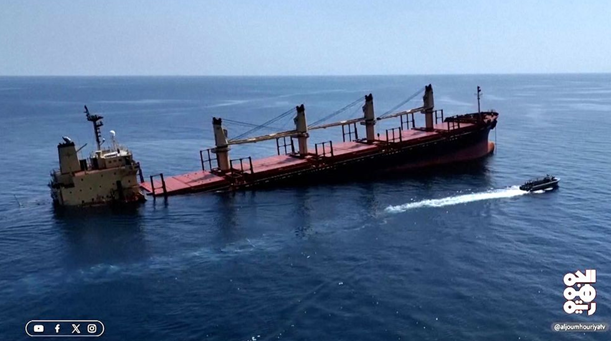
Rubymar sinking in Red Sea
The Belize-flagged cargo ship Rubymar sank in the southern Red Sea after days of taking on water and leaking oil following an attack while transiting the Bab el-Mandeb Strait.
U.S. Central Command released imagery showing the ship on its side and said it went under at 2:15 a.m. local time.
The vessel had been struck on Feb. 18, and the crew abandoned ship and evacuated to safety.
Reports describe the vessel as UK- or British-owned, and the UK Maritime Trade Operations centre acknowledged the loss.
Coverage Differences
Disagreement / Detail discrepancy
Sources diverge on certain factual details: Al Jazeera (West Asian) and CBS News (Western Mainstream) both report the vessel as Belize-flagged and UK/British-owned and that it was struck on Feb. 18, but they report different immediate emphases—Al Jazeera highlights the CENTCOM imagery and a precise sinking time, while CBS emphasizes the prior drifting, abandonment period and salvage attempts. Fox News (Western Mainstream) likewise reports the Rubymar was hit Feb. 18 and later sank but focuses more on the wider campaign context rather than the sinking timeline. All three sources are reporting related facts, but each selects different operational details to foreground.
Red Sea environmental concerns
The Rubymar sinking has sparked environmental alarms after the vessel, which was carrying fertilizer, began leaking oil and raising concerns about damage to Red Sea coral reefs and hazards to other ships in busy shipping lanes.
U.S. Central Command said the cargo was ammonium phosphate sulfate, and outlets warn that the combination of fertilizer and the oil slick could pose serious ecological threats in the southern Red Sea.
Coverage Differences
Contradiction / Numeric discrepancy
There is a notable numeric discrepancy over the ship’s cargo tonnage. Al Jazeera quotes both "more than 41,000 tonnes" from some reports and CENTCOM's figure of "about 21,000 metric tons of ammonium phosphate sulfate." CBS News cites CENTCOM's approximately "21,000 tons" figure. Fox News' account does not provide a tonnage number in the snippet but focuses on targets and campaign effects—so the sources differ in the presence and scale of cargo figures.
Tone / Emphasis
Al Jazeera emphasizes ecological damage to coral reefs and frames the fertilizer and oil as acute environmental threats; CBS likewise flags environmental and navigational hazards but pairs that with operational details (abandonment, salvage). Fox prioritizes strategic and security impacts (Suez traffic plunge, attacks on vessels) and does not emphasize ecological effects in the provided text.
Red Sea shipping attacks
The attack on the Rubymar comes amid a campaign of strikes on commercial shipping tied to the Israel–Hamas war.
Outlets report the Houthis began or intensified strikes around Oct. 7 and have continued operations since November to pressure parties over Gaza.
The group invokes solidarity with Palestinians and has drawn accusations of Iranian backing.
U.S. and British forces have responded with strikes described by some accounts as proportionate.
CENTCOM says it has carried out self-defense strikes to destroy missiles and neutralize drones in the southern Red Sea.
Coverage Differences
Narrative / Attribution
Sources present the Houthis' motives and external backers differently in emphasis. Fox News (Western Mainstream) explicitly states the Houthis are "backed by Iran" and frames the campaign as security and supply-chain disruption. Al Jazeera (West Asian) stresses the Houthis' stated purpose of pressuring parties over the Gaza war and records the group's own rhetoric (including blaming UK PM Rishi Sunak). CBS News (Western Mainstream) notes the link to the Israel–Hamas war and labels the Houthis "Iranian-backed" but is more measured about immediate claims and consequences.
Tone / Military framing
Fox foregrounds U.S.- and U.K.-led military countermeasures and describes CENTCOM actions in direct defensive terms; Al Jazeera focuses more on the Houthi claims and political demands; CBS combines both operational reporting (salvage, sinking) and the broader campaign context without quoting Houthi claims on this sinking.
Coverage of Rubymar sinking
Aftermath reporting stresses operational impacts and unresolved questions.
CBS notes the ship had been abandoned for 12 days, that stormy weather worsened its condition, and that the Rubymar is the first vessel to be fully destroyed in the Houthis' campaign.
Al Jazeera highlights the Houthi claim of responsibility and their political messaging.
Fox situates the sinking within a larger set of Houthi attacks that have affected commercial traffic and prompted U.S. and UK strikes.
Some details remain ambiguous or contested across reports, for example the cargo tonnage and whether the Houthis immediately acknowledged the sinking.
Coverage Differences
Missed information / Ambiguity
Certain operational details are present in some accounts but absent or differently stated in others. CBS provides abandonment duration, stormy weather worsening the ship, and the claim that it is the first fully destroyed vessel; Al Jazeera reports Houthi claims and political statements about blaming Rishi Sunak; Fox frames the event among broader attacks and military responses but does not include the salvage/tow or abandonment timeline in the provided snippet. This produces ambiguity about which details are definitive versus selectively reported.