
How Hegseth Came to See Moral Purpose in War as Weakness
Key Takeaways
- Bellicose, vengeful rhetoric framed the military’s war in Iran.
- Pentagon memo says the rhetoric originated from experiences in Iraq.
- He cast moral purpose in war as weakness, favoring punitive approaches.
Iraq motivation
Long before President Trump chose him to lead the U.S. military, Pete Hegseth described the moral calling that had compelled him to volunteer to serve in Iraq.
“War in theMiddle East Pentagon Memo Defense Secretary Pete Hegseth’s bellicose and vengeful rhetoric describing the military’s war in Iran grew out of his experience in Iraq”
He was working on Wall Street in the summer of 2005 and had read an article about an insurgent who blew himself up, killing 18 Iraqi children.
"To me, that was the face of evil," Mr. Hegseth told The Princeton Alumni Weekly, adding, "That sent to me a signal that I need to do my part not to let that ideology win in Iraq."
He deployed to the war-torn city of Samarra a short time later.
Rhetoric on Iran war
Defense Secretary Pete Hegseth attended the dignified transfer of six troops killed in the Middle East last week.
For the mission in Iran, Mr. Hegseth signed off on the name "Epic Fury," which connotes retribution and rage.
Today, Mr. Hegseth describes the mission and moral purpose animating the war in Iran, now in its second week, in starkly different terms.
The goal, he said recently, is to unleash "death and destruction from the sky all day long."
Instead of seeking justice, U.S. forces are pursuing vengeance against an implacable foe.
"Their war on Americans has become our retribution," he vowed.
Philosophy of force
For decades, presidents and their secretaries of defense have framed American military interventions in altruistic terms.
“War in theMiddle East Pentagon Memo Defense Secretary Pete Hegseth’s bellicose and vengeful rhetoric describing the military’s war in Iran grew out of his experience in Iraq”
Mr. Hegseth has largely dispensed with that talk.
His bellicose, at times vengeful, rhetoric reflects his belief that the United States’ lofty goals in Iraq and Afghanistan caused the military to lose focus on its main task, killing the enemy, and led to costly defeats in both wars.
In his view, the U.S. military’s strength is not rooted in its high ideals, humanity or moral purpose, but rather its ability to punish adversaries.
Anything that distracts from that singular mission, he has said, is weakness.
Retrieval limitation
The New York Times page displays a retrieval error: "We are having trouble retrieving the article content."
The publisher message asks readers to enable JavaScript, log in, or subscribe to access the full piece.
Because the full article could not be retrieved, this summary is based only on the excerpts provided above and may omit additional details the full article contains.
More on Iran
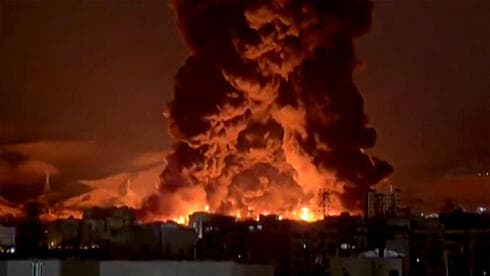
US obliterates military targets on Iran’s Kharg Island, Trump warns
13 sources compared

US Deploys About 2,500 Marines to Middle East After Iran Attacks Gulf Shipping
33 sources compared
FBI Warns of Iranian Drone Plot Based on Unverified Tip; California Says No Credible Threat
10 sources compared

White House Demands ABC Retract Report Claiming Iran Sought To Launch Drone Attacks On California
11 sources compared