
How Israel-US war on Iran puts $50bn in Indian remittances at risk
Key Takeaways
- Strait of Hormuz effectively closed, stopping 20–30% of global crude and LNG transit.
- U.S.-Israeli war on Iran has triggered a global energy crisis and spiking crude prices.
- An estimated $50 billion in Indian remittances is at risk from the regional conflict.
Strait closure, attacks
As the United States-Israeli war on Iran completes two weeks, it has triggered a global energy crisis and threatened to pull the rest of the Middle East into the conflict.
“As the United States-Israeli war on Iran completes two weeks, it has triggered a global energy crisis, even as Iran’s retaliation threatens to pull the rest of the Middle East into the conflict”
The Strait of Hormuz, through which some 20 to 30 percent of global crude and liquefied natural gas (LNG) pass, has effectively been closed because of the conflict, sending crude prices soaring and disrupting oil and gas supplies.
Most shipping insurers have cancelled war risk coverage for tankers in the strait, and a Thai ship heading to India was attacked, drawing criticism from India.
Iran has invoked the right to self-defence to justify the retaliatory attacks and its Islamic Revolutionary Guard Corps (IRGC) said it would not allow "one litre of oil" to pass the strait, warning the world to expect oil to reach $200 per barrel.
Energy market effects
The conflict has driven oil prices sharply higher and strained global energy supplies, with crude reaching nearly $120 a barrel on Sunday before settling at about $100 this week, roughly $40 more than before the war began.
The International Energy Agency's move on Wednesday to release a record 400 million barrels of crude oil has failed to stabilise oil prices.
Indian officials and analysts warn that the disruption will significantly affect India’s energy security because more than 80 percent of India’s gas and up to 60 percent of its oil pass through the Strait of Hormuz.
Harsh V Pant, vice president of the Observer Research Foundation think tank in New Delhi, said rising costs could translate into broader economic and inflationary pressures and hurt India’s growth prospects.
Remittances, job risks
India faces a second major risk from the war because about 9.1 million Indian citizens work in Gulf Cooperation Council (GCC) countries and send some $50bn in annual remittances home.
“As the United States-Israeli war on Iran completes two weeks, it has triggered a global energy crisis, even as Iran’s retaliation threatens to pull the rest of the Middle East into the conflict”
Several Indian workers and professionals in the Gulf told Al Jazeera they fear losing jobs as oil and gas firms have shut operations amid the Iranian attacks, and several Asian workers, including Indians, have been killed in the attacks.
Talmiz Ahmad, a former Indian ambassador to Saudi Arabia, said every Indian who works in the Gulf supports at least four to five people back home and that 40 to 50 million Indians directly benefit from Gulf employment.
If the war is prolonged, analysts including Pant say it could result in the loss of remittances and hurt India's wider economic robustness.
Diplomacy and politics
India is confronting diplomatic and logistical challenges: thousands of Western expats have already left or been evacuated from Gulf countries, and Ahmad warned there is no way India could evacuate nine or 10 million people in a war.
India’s Ministry of Foreign Affairs has set up a special control room and embassies and consulates have round-the-clock helplines, while missions have enabled returns via commercial and non-scheduled flights.
Politically, New Delhi has not issued a statement on the killing of Iran’s Supreme Leader Ayatollah Ali Khamenei, though its foreign secretary visited the Iranian embassy to sign a condolence book, and India has condemned the Iranian attacks on Gulf nations.
The government has faced criticism from the opposition over silence and over Modi’s recent visit to Israel days before the US-Israel attack on Iran, and commentators linked that visit to support for Israeli Prime Minister Benjamin Netanyahu; Srinath Raghavan wrote that "Netanyahu, the most corrupt Israeli leader in recent memory, knows that his political survival depends on two things: the continuation of war in the Middle East and the stamp of legitimacy from foreign leaders. In this instance, Trump gave the former, while Modi obliged with the latter."
Harsh V Pant defended India’s stance, saying India's equities with Arab states and Israel have grown and that India is reacting to ground realities.
More on Iran
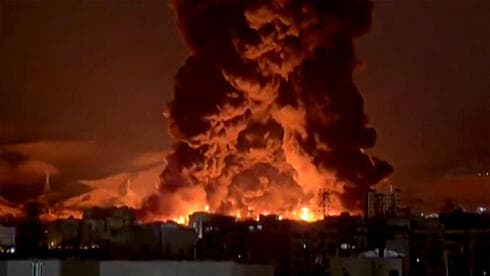
US obliterates military targets on Iran’s Kharg Island, Trump warns
13 sources compared
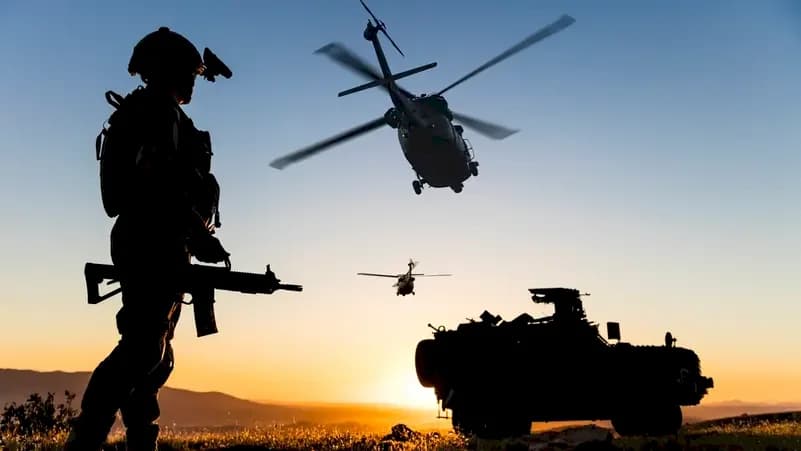
US Deploys About 2,500 Marines to Middle East After Iran Attacks Gulf Shipping
33 sources compared
FBI Warns of Iranian Drone Plot Based on Unverified Tip; California Says No Credible Threat
10 sources compared

White House Demands ABC Retract Report Claiming Iran Sought To Launch Drone Attacks On California
11 sources compared