
How the Iran war could impact hyperscalers' massive AI buildout in the Middle East
Key Takeaways
- Tech companies poured billions into Middle East AI infrastructure over the past few years
- Investors were attracted by cheap energy, available land, and local government support
- Iran war spillover threatens Middle East data center and digital infrastructure buildout
Regional AI investment boom
Tech companies have poured billions into AI infrastructure projects in the Middle East, attracted by cheap energy, available land and local government support.
“Tech companies have been funnelling billions of dollars into AI infrastructure projects in the Middle East over the past few years, drawn in by cheap and readily available energy and land, alongside local government support”
Governments in the region have pursued a concerted push to attract international investment and to divest away from China to appease the U.S. administration.
Oracle, Nvidia and Cisco are involved in OpenAI's AI campus in the UAE — dubbed Stargate — which, in collaboration with Emirati firm G42, will span 10 square miles and include a 5-gigawatt capacity.
Saudi company Humain is pouring billions into AI infrastructure buildouts and Microsoft said it would invest $15 billion into the UAE by 2029.
Attacks on data centers
The Iran war spilling over into neighbouring countries has already affected digital infrastructure and raised questions about the future of the buildout.
Iran's wave of retaliatory attacks hit AWS facilities in the UAE and Bahrain, causing banking, payments, enterprise and consumer services to experience outages.
Experts told CNBC that these strikes signal data centers may now be considered legitimate targets in modern armed conflicts, a shift that will change how companies think about data center security going forward.
Risk responses and security
Industry figures said the conflict could alter where future capacity is built and how existing sites are secured.
“Tech companies have been funnelling billions of dollars into AI infrastructure projects in the Middle East over the past few years, drawn in by cheap and readily available energy and land, alongside local government support”
Patrick J. Murphy, executive director of the geopolitical unit at Hilco Global, said companies may shift new projects to Northern Europe, India or Southeast Asia if Gulf geopolitical risk continues to rise.
Aalok Mehta of the Center for Strategic and International Studies said AI firms will likely make contingency plans either by shifting to less vulnerable regions or by hardening data centers with missile defense and counter-drone technology.
Tess deBlanc-Knowles of the Atlantic Council said companies could hedge investments by slowing new capital deployments or pausing planned partnerships, and that prolonged hostilities could prompt evaluations of alternative regional hubs to reduce exposure.
Outlook and company responses
Executives and analysts noted the high costs and operational reasons that make immediate exits unlikely, but said companies may still slow expansion.
Tancrede Fulop, senior equity analyst at Morningstar, said data centers typically need to be located close to customers to ensure low latency and reliable service, and that relocating or closing facilities could lead to service-level agreement breaches and reputational risk.
Gary Wojtaszek, chairman and interim chief executive officer at Pure Data Centre Group, said the company may “slow down” in the region because of the recent attacks but expects development interest to return once hostilities settle.
CNBC reported that Google and Microsoft declined to comment on how the war was impacting projects in the region, and that AWS, G42, Humain and OpenAI did not respond to requests for comment.
More on Iran
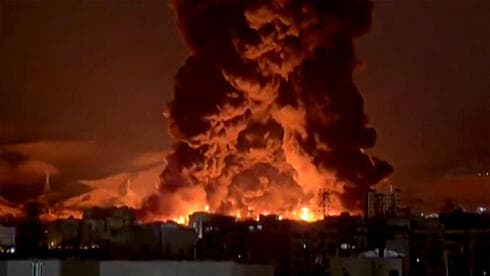
US obliterates military targets on Iran’s Kharg Island, Trump warns
13 sources compared

US Deploys About 2,500 Marines to Middle East After Iran Attacks Gulf Shipping
33 sources compared
FBI Warns of Iranian Drone Plot Based on Unverified Tip; California Says No Credible Threat
10 sources compared

White House Demands ABC Retract Report Claiming Iran Sought To Launch Drone Attacks On California
11 sources compared