Syria25 November, 20252 min read
HTS Shoots Peaceful Alawite Protesters in Latakia
This article is an automated aggregation of coverage from news outlets. Our editorials offer in-depth analysis curated by the NewsCord team.
Thousands of Alawites protested across Syria's coastal cities, including Latakia Gunfire was used to disperse Alawite protesters in Latakia, resulting in shootings

7 outlets told this the same way.
Outlets did split on Asad Al-Shaibani Meets Saddam Haftar in Benghazi Over Syrian Consulate And Missing Syrians →
Latakia Alawite protests
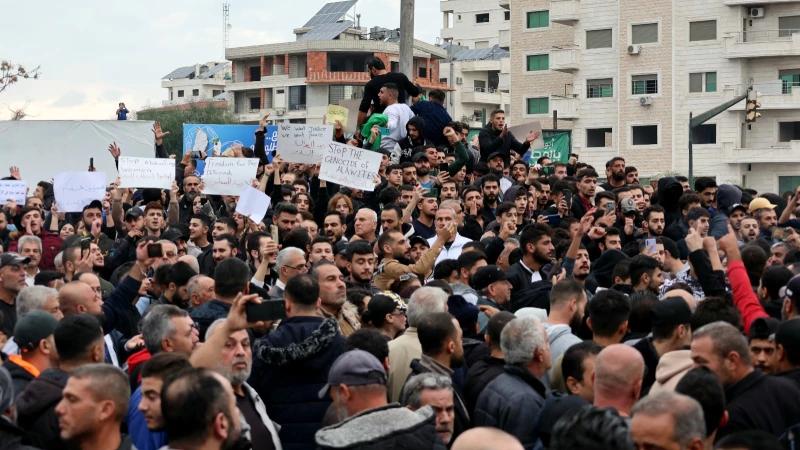
On Tuesday in Latakia, large Alawite-led demonstrations demanding justice and political change were met with gunfire and a heavy security response. Reports describe security forces firing to break up clashes and, in some accounts, live rounds used to disperse crowds; video verified by Reuters showed at least one injured protester with a head wound. Protesters had gathered to press for the release of detainees, protection from recent attacks on Alawite areas and, in some cases, calls for federalism for the coast.
“Security forces fired live rounds to disperse large protests in Latakia on Tuesday — one of the biggest demonstrations since Bashar al-Assad’s ouster — with the UK-based Syrian Observatory for Human Rights reporting beatings, arrests, vehicles running over protesters, tear gas and ‘extreme violence.’”
Coastal protests and triggers
Protesters in Latakia, described across outlets as predominantly Alawite, held banners and chanted for detainee releases, justice for those killed in recent violence, the removal of armed factions from coastal districts, and some called for federalism.
Local social-media appeals by the Supreme Islamic Alawite Council are repeatedly cited as the mobilizing trigger for rallies in Latakia, Tartus, and Jableh.

Reports of violent unrest
Accounts differ on the intensity and consequences of the violence. Reuters-verified video cited by The New Arab showed a man lying motionless with a head wound. AL-Monitor reported a few minor injuries.
“About an hour into the rally, gunshots were heard in Agriculture Square and video verified by Reuters showed a man lying motionless with a head wound.”
Later reports and monitors described beatings, arrests, and vehicles running over protesters. Observers recorded vandalism of Alawite homes and insults in Latakia. Local authorities have imposed curfews in some areas.
Media framing of unrest
Media outlets differ in how they frame responsibility and context. Some situate the unrest within broader sectarian tensions after the ouster of Bashar al-Assad and the rise of a Sunni-led administration.
Other outlets emphasize criminality, the involvement of armed tribal groups, or condemn the role of 'Tribal Uprising/Tribal Forces'. One outlet explicitly frames the events in a post-Assad order in which HTS allegedly overthrew the regime, a claim presented as part of that outlet's narrative rather than corroborated by others.

Unrest, security and federalism
Observers warn the Latakia unrest may deepen wider instability. Analysts and local administrations cited in reports say the pattern of violence across Homs, the coast, and Suwayda risks fracturing national unity. Calls from Kurdish and Druze groups for federal arrangements are cited as contributing to this risk.
“The Rojava administration warned that escalating violence in Homs, the coast, Suwayda and elsewhere threatens Syria’s future.”
Some outlets present federalism demands as a direct response to perceived marginalization. Other outlets emphasize immediate security concerns such as curfews, detainees, and the presence of irregular armed groups.