Syria08 December, 20252 min read
Hundreds of Thousands of Syrians Flood City Squares Across Syria, Celebrate One-Year Anniversary of Assad Regime's Fall
This article is an automated aggregation of coverage from news outlets. Our editorials offer in-depth analysis curated by the NewsCord team.
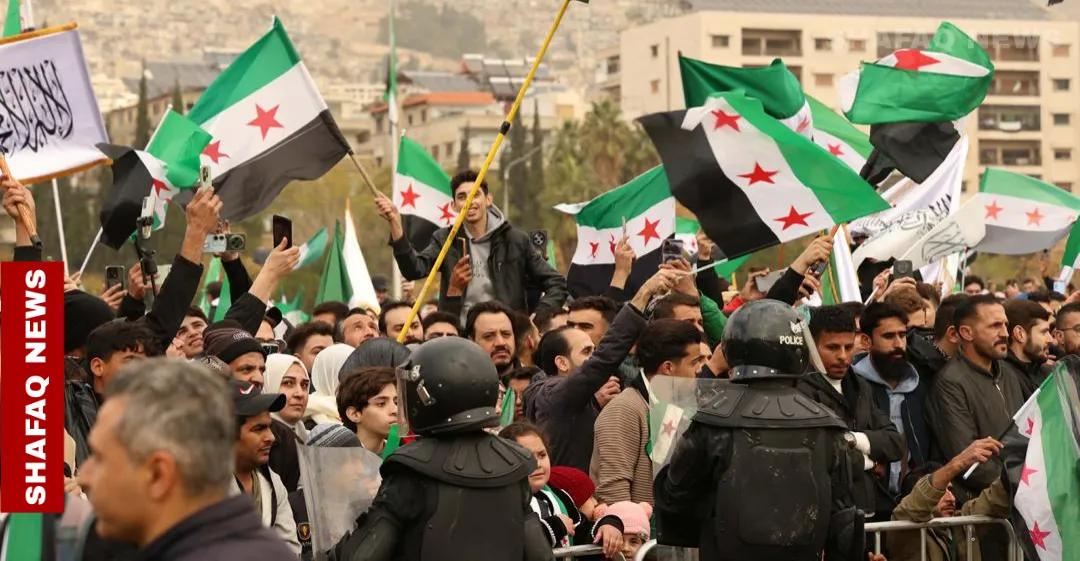
Hundreds of thousands of Syrians filled city squares nationwide, waving flags and setting off fireworks. Ahmed al‑Sharaa leads a transitional government after Bashar al‑Assad fled to Russia during Damascus's capture.
32 outlets told this the same way.
Outlets did split on France Suspends Police Stun Grenades at High School Protests After 15-Year-Old Loses Hand →
Syria anniversary public celebrations
Hundreds of thousands of Syrians poured into public squares across the country to mark the one-year anniversary of President Bashar al-Assad's fall, with official celebrations, military parades and jubilant crowds in cities including Damascus, Homs, Aleppo and Idlib. Reports described packed scenes in Damascus's Umayyad Square and other main squares, with fireworks, flags, music and dancing sometimes compared to a sporting celebration, and aerial images showing civilians carrying roses and effigies. Authorities staged military exhibitions and paratrooper flyovers while leaders and participants framed the day as a national renewal after more than a decade of war.
“Syria marked the one-year anniversary of the fall of the al-Assad regime with nationwide celebrations, military parades and large street crowds in cities including Damascus and Homs.”
Sharaa's role and background
Ahmed al-Sharaa, the new president who led last December’s offensive that ousted Assad, was highly visible at anniversary events, appearing in military fatigues and delivering speeches calling for unity and reconstruction. Coverage emphasised his central role, with some outlets describing Sharaa as a pragmatic diplomat who has moved to restore Syria’s international standing and to win sanctions relief. Other outlets stressed his past and ties to militant groups, noting his leadership of a coalition that included Hayat Tahrir al-Sham and reporting that he is a former al-Qaeda commander.
Syrian war aftermath
Despite public celebration, coverage repeatedly underscored the war's staggering human cost and continuing humanitarian needs. Reporting across outlets cited hundreds of thousands killed, millions displaced, and millions more needing aid, even as authorities say some refugees and displaced people have returned. Numbers vary by source, but the consensus is that recovery and reconstruction will be costly and slow, and that many Syrians, especially young people, still face housing shortages, high costs, and limited jobs.
“The humanitarian toll remains enormous: hundreds of thousands killed, millions displaced, and an estimated 16.5 million people likely to need aid in 2025.”
Security and social tensions
Security and social tensions remain acute. The Kurdish-led administration in the northeast banned large anniversary gatherings citing security concerns. Some Druze communities are pressing for autonomy or were reported targeted in recent violence.
Observers warned of sectarian revenge attacks and militia rivalries. Several outlets reported renewed communal killings and restrictions on public events in Kurdish areas. The symbolic celebrations coexist with ongoing insecurity in many parts of the country.

Reactions to Syria anniversary
Regional and international reactions to the anniversary were mixed. Several neighboring states and regional ministries publicly congratulated Syria and described the day as 'Liberation Day'.
“Marking what it called the first anniversary of the collapse of Bashar al‑Assad’s regime, Turkey’s Foreign Ministry dubbed the day ‘Liberation Day’ and congratulated the Syrian people.”
European commentators and some analysts warned about the fragility of the transition and the slow pace of returns. Coverage also diverged on refugee returns and diaspora responses: some reports noted modest returns from Europe and Germany, while others emphasized ongoing fear among diaspora members, underscoring divergent perspectives on reintegration and responsibility for reconstruction.
