Full Analysis Summary
Hungary-EU Espionage Allegations
El País (Western Mainstream) reports allegations that Hungary, under Prime Minister Viktor Orbán’s national-populist government, engaged in espionage against the European Union.
Hungarian agents reportedly spied on EU bodies in Brussels, including the European Anti-Fraud Office (OLAF) that was investigating corruption linked to Orbán.
The article places the scandal within years of EU criticism and funding freezes related to rule-of-law backsliding and rights concerns in Hungary.
It notes that the affair has escalated inside Brussels.
By contrast, EL PAÍS English (Western Alternative) provides no substantive article text on this topic in the provided snippet.
Instead, it displays a device-reading notice, which offers no additional reporting or perspective on the espionage claims.
Coverage Differences
narrative
El País (Western Mainstream) frames the story as a concrete espionage scandal involving “Hungarian agents” operating in Brussels and specifies that OLAF, which was investigating corruption linked to Orbán, was among the targets. EL PAÍS English (Western Alternative) offers no narrative in the provided snippet, presenting only a device‑reading notice, which results in a lack of coverage or detail from that edition.
missed information
El País (Western Mainstream) details the Brussels context, the EU’s prior funding freezes, and the targeting of OLAF. EL PAÍS English (Western Alternative) contains no relevant content in the provided snippet, so it misses all specifics on the alleged spying, EU reactions, and institutional targets.
Hungary's Intelligence Controversy
According to El País, the alleged activity straddles legal and illegal boundaries.
It notes that while gathering information through conversation is legal, paying for intelligence or manipulating documents breaches the Geneva Convention.
The report places this in a broader political backdrop, describing Hungary as increasingly authoritarian and aligned with the Kremlin.
It suggests Budapest sought to compensate for limited clout in EU institutions by running operations to obtain Brussels information.
The escalating scandal sits atop long-running EU rule-of-law disputes and related funding measures targeting Hungary.
Coverage Differences
tone
El País (Western Mainstream) adopts a critical tone, explicitly referencing authoritarian drift, Kremlin alignment, and legal standards under the Geneva Convention. EL PAÍS English (Western Alternative) provides no evaluative tone or legal framing in the provided snippet, as it contains only a device‑reading notice and no story text.
narrative
El País (Western Mainstream) links alleged spying to Hungary’s reduced influence in EU decision‑making, presenting a motive narrative about compensating for institutional limitations. EL PAÍS English (Western Alternative) offers no narrative in the provided snippet and thus omits any motive discussion.
EU Espionage and Corruption Concerns
Targets reportedly included EU bodies in Brussels and, notably, OLAF, which was investigating corruption linked to Orbán, according to El País.
The article connects the espionage allegations to ongoing EU concerns over democratic backsliding and rights in Hungary—issues that have led to criticism and financial penalties.
It underscores that the scandal has intensified, feeding institutional anxiety within Brussels over integrity, fairness, and the security of sensitive information.
Coverage Differences
missed information
El País (Western Mainstream) uniquely identifies OLAF as a body allegedly targeted, adding specificity about the institutions involved and their prior investigations related to Orbán. EL PAÍS English (Western Alternative) does not mention any targets or investigative context in the provided snippet.
tone
El País (Western Mainstream) stresses escalation and institutional stakes—linking espionage allegations to rule‑of‑law and integrity concerns—whereas EL PAÍS English (Western Alternative) offers no tone or emphasis in the provided snippet.
European Commission Integrity Concerns
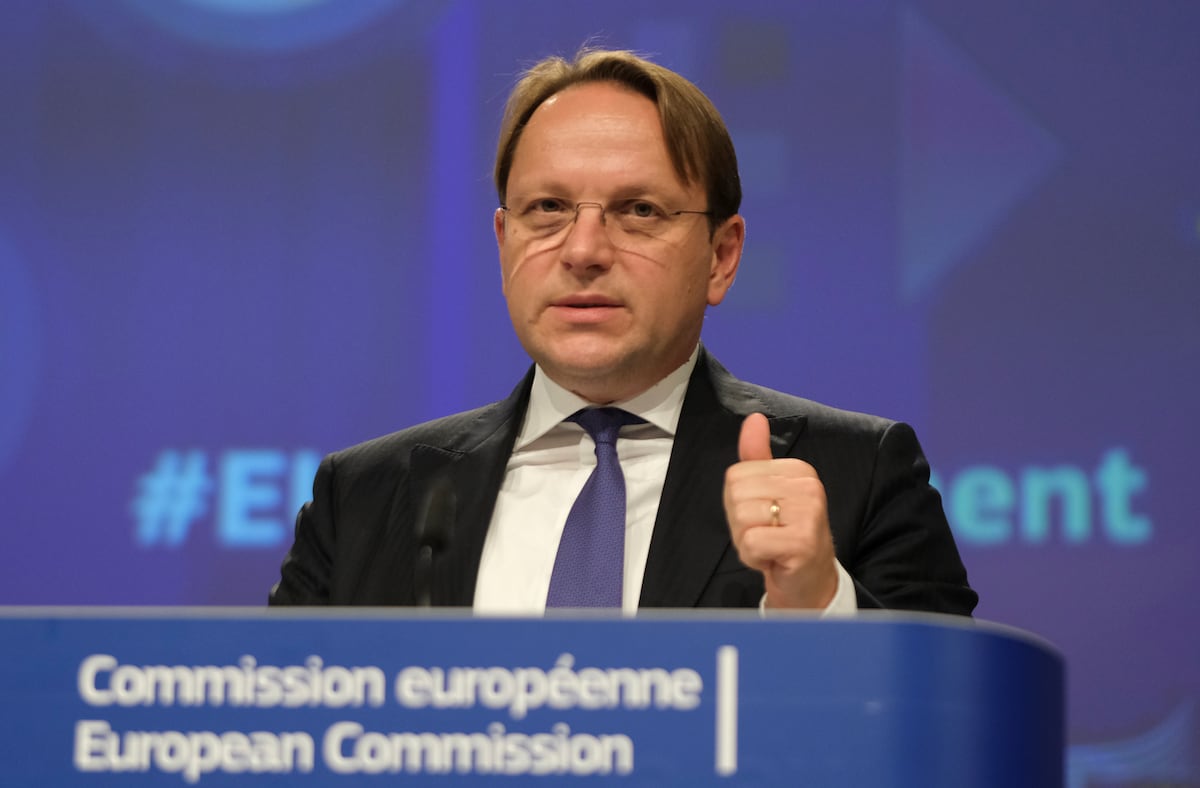
Accountability pressures have mounted as more than 60 academics from over 30 countries have urged the European Commission to demand the resignation of Commissioner Olivér Várhelyi.
These academics also call for legal action to safeguard the Commission’s integrity and public trust, according to El País.
The legal context remains pivotal, with El País emphasizing that certain information-gathering is legal.
However, paying for intelligence or manipulating documents would violate Geneva Convention principles.
Notably, the available sources do not clarify who within Hungary’s apparatus ordered or coordinated the alleged spying.
The article attributes the activity to “Hungarian agents” and connects it to Orbán-era political dynamics.
Authorship and chain-of-command questions remain open in the provided material.
Coverage Differences
missed information
El País (Western Mainstream) is specific about the call for Várhelyi’s resignation and the demand for legal action to protect institutional integrity. EL PAÍS English (Western Alternative) offers no details on accountability demands or legal remedies in the provided snippet.
clarity/ambiguity
El País (Western Mainstream) attributes the actions to “Hungarian agents” and ties the affair to Orbán’s political environment but does not, in the provided snippet, assert who orchestrated the operation or that Commissioner Várhelyi personally ran a spy network. EL PAÍS English (Western Alternative) provides no content to clarify or contradict this.