
I Wrote a Movie Review. Cops Took It From A Protester’s Home to Make the Case That He’s a Terrorist.
Key Takeaways
- Police seized a movie review written by Sophie Lewis from a protester's home.
- Police used the seized review as evidence to argue the protester was a terrorist.
- Sophie Lewis is an author and independent scholar based in Philadelphia.
Prairieland protest charges
On July 4, a group gathered for a demonstration against ICE’s Prairieland Detention Facility in Alvarado, Texas; it was a noise demo during which a police officer was shot, and some 18 people were arrested and charged.
“Sophie Lewis is an author and independent scholar based in Philadelphia”
The government’s indictment against the Prairieland protesters marks the first time terrorism-related charges were brought against people for allegedly being part of an "antifa cell."
The article frames the prosecution as part of President Donald Trump’s effort to conflate antifa with terrorism, noting Trump has called antifa a "major terrorist organization" — a legal designation that does not exist for domestic groups — and arguing that this ignores that antifa is an orientation, not a group.
Essay seized as evidence
Sophie Lewis says prosecutors introduced her 2019 film-review essay as "evidence of ideologically driven intent" in the trial after a Mother Jones reporter alerted her; the review, about the horror films Hereditary and Midsommar, was published in Commune magazine and printed in zine form.
Authorities seized the zine from the Dallas home of Daniel Sanchez Estrada last summer and listed it in a receipt for seized property as a "booklet" alongside cellphones, computers, weapons and other items.
Lewis calls the tactic "guilt by literature," explains that her essay’s title is "The Satanic Death-Cult Is Real," and says the piece refers both to a fictional demon-worshipping ceremony in Hereditary and to what she describes as the "madness-inducing logic of the private nuclear household."
Lawfare, authoritarianism, press threat
Estrada is not accused of shooting; he stands accused of attempting to conceal documents "by transporting a box containing numerous Antifa materials" and of conspiracy to conceal those zines, and he faces up to 20 years in prison.
“Sophie Lewis is an author and independent scholar based in Philadelphia”
Although he is not charged with terrorism, Lewis says prosecutors are using association to tar him with the antifa label.
The article situates the case in a broader critique of "lawfare" that criminalizes speech and chills dissent, citing Natasha Lennard’s point that federal authorities collect circumstantial evidence of individual crimes alleged to have taken place "in the context of" legal protest activity and that lengthy prosecutions hamper protest movements.
Lewis characterizes the pattern as part of a "full-on authoritarian takeover" under President Donald Trump, alleging court orders are being ignored, MAGA loyalists have been put in charge of the military and federal law enforcement agencies, the Department of Government Efficiency has stripped Congress of its power of the purse, and news outlets that challenge Trump have been banished or put under investigation; she expresses solidarity with the Prairieland defendants and The Intercept emphasizes the threat to press freedom and asks readers for support to expand reporting capacity.
More on Protests
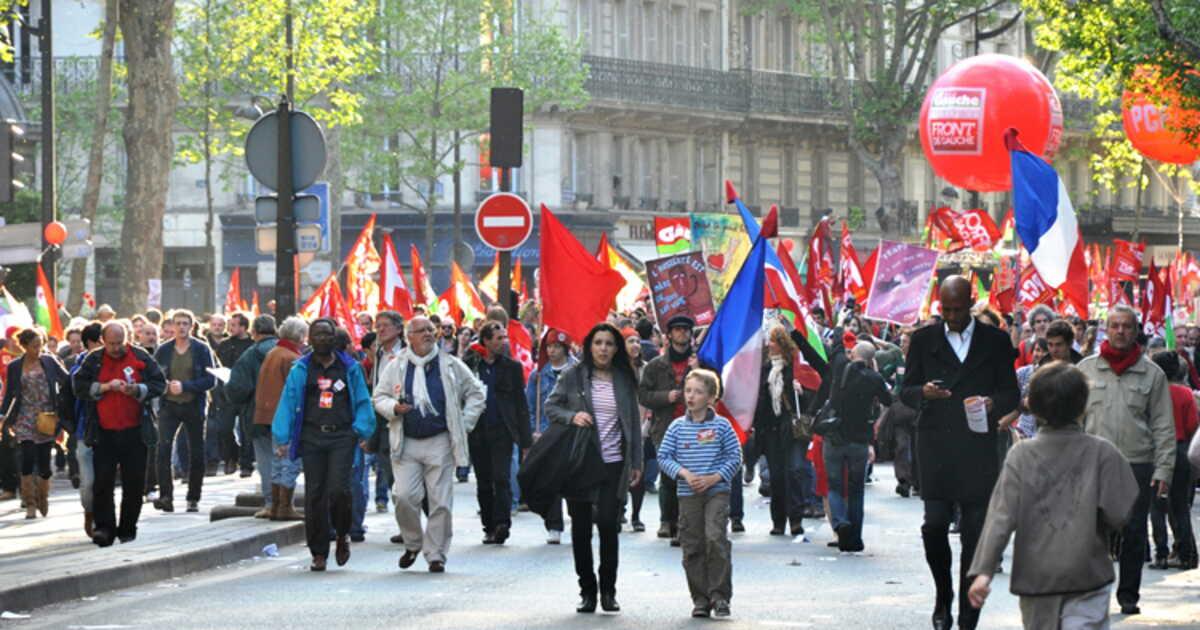
Thousands Join May Day Economic Blackout Against President Donald Trump’s Policies Across U.S.
25 sources compared
Auckland Local Board Rejects Japanese “Comfort Women” Statue Proposal at Barry’s Point Reserve
10 sources compared

Protester Throws Red Liquid at Iran Exiled Crown Prince Reza Pahlavi in Berlin
25 sources compared

Wisconsin Police Fire Tear Gas And Rubber Bullets As Activists Storm Ridglan Farms
34 sources compared