Iran25 April, 20267 min read
Protester Throws Red Liquid at Iran Exiled Crown Prince Reza Pahlavi in Berlin
This article is an automated aggregation of coverage from news outlets. Our editorials offer in-depth analysis curated by the NewsCord team.
Reza Pahlavi was splashed with red liquid in Berlin as he left a press conference. Police detained the suspect; identity not released due to privacy laws.

Tomato Sauce Attack in Berlin
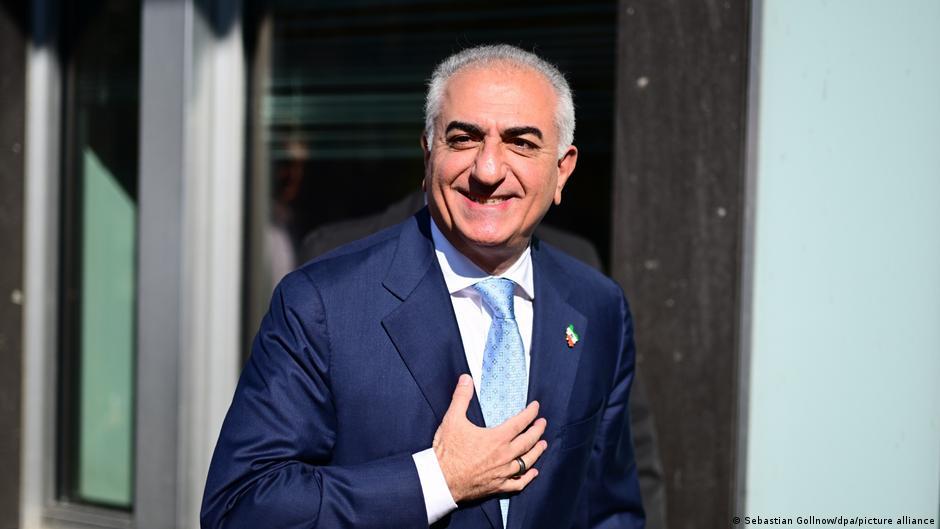
Reza Pahlavi, the exiled son of Iran’s former Shah, arrived in Berlin and used a press conference to argue that European governments should not appease Iran’s leadership, warning, “If you think you can make peace with this regime, you are sorely mistaken,” and adding, “There will never be stability, even if a watered-down version of this system survives.” During the same appearance, he said the “regime has never been as fragile as it is now” and called it “a wounded beast,” while also claiming that “19 political prisoners were executed by Iranian authorities in the past two weeks.” As he left the federal press conference building, a protester threw red liquid—described across outlets as tomato juice or tomato sauce—at him, splashing the back of his head, neck, and blazer.
German police detained a man at the scene, with multiple reports saying the suspect’s identity was not released due to privacy rules, and that police were investigating the motive. Pahlavi appeared unhurt and waved to supporters before getting into a car that drove away, while his team said the substance was tomato sauce.

The Times of Israel described the incident as happening as he was “leaving Germany’s federal news conference building,” and said he was “splattered” while being greeted by supporters and “bitter opponents.” Euronews similarly said the alleged perpetrator was detained immediately and that police said the liquid appeared to be tomato juice, while Pahlavi, 65, “was splattered with red liquid” and “appeared unhurt.”
Why Pahlavi Was in Germany
Pahlavi’s Berlin trip was framed by multiple outlets as part of an effort to gather European support for a campaign for political change in Iran, with DW describing him as “in Germany to gather support for his campaign for political change in Iran.” DW said he was expected to meet Armin Laschet, a lawmaker from Chancellor Friedrich Merz’s conservative Christian Democratic Union (CDU), and that there were “no plans for him to meet a member of the government.” When asked why Berlin would not meet him, Foreign Minister Johann Wadephul said Pahlavi was coming “as a private individual” and was “also engaging in political discussions,” while adding that it was “not the federal government's role to hold such talks.”
The Times of Israel similarly said his visit to Berlin came as efforts to end the conflict appeared to have stalled, and noted that he was “snubbed by the German government,” while also stating that “European countries, including Germany, have ruled out joining the war.” Folha de S.Paulo reported that the incident occurred amid his trip to Germany aimed at securing European support for “a regime change in Iran,” and said German police mobilized about 800 officers for the demonstrations around his visit.

Euronews said Pahlavi “was not invited to meet with any government representatives during his visit to Berlin,” and described his argument that the ceasefire assumes the Iranian government’s behavior will change, quoting him: “you’re going to deal with people who all of a sudden have become pragmatists.” Across reports, Pahlavi’s political positioning was consistent: he presented himself as a potential leader for a democratic transition if the Islamic Republic fell, while also drawing controversy within Iran’s opposition over his monarchist background and his relationship to Israel.
Ceasefire Criticism and Prisoner Claims
At the center of Pahlavi’s Berlin messaging was his rejection of the logic behind the US-Iran ceasefire and his insistence that European governments should apply more pressure on Tehran. DW reported that he told reporters, “If your governments continue to focus only on somehow maintaining the status quo, you're neither helping us liberate ourselves, nor are you truly addressing the concerns that you will have down the line,” and he argued that “It should be the prerogative of democratic governments not to be dictated [to] by a bunch of thugs and terrorists.” Multiple outlets quoted him directly on the ceasefire premise, including The Times of Israel, which said he told journalists, “The whole narrative of ceasefire and negotiation is still based on thinking that … you’re going to deal with people who all of a sudden have become pragmatists,” and added, “I don’t see that happening.”
“Will the free world do something or watch the slaughter in silence?”
NDTV and India Today both echoed his skepticism, with India Today quoting him: “I’m not saying that diplomacy should not be given a chance, but I think diplomacy has been given enough chance.” DW also said he claimed “19 political prisoners were executed by Iranian authorities in the past two weeks,” and Folha de S.Paulo and Euronews repeated the same figure while adding that he said “another 20 people sentenced to death” or that he claimed “another 20 people have been sentenced to death.”
In the same press conference, DW said he accused Berlin of allowing itself to be blackmailed by the regime in Tehran, while also calling for democratic governments to “speak with the people who are the voice of the voiceless.” Euronews reported that he called on Europeans to do more to support Iranian people fighting for democracy and repeated his question, “Will the free world do something or watch the slaughter in silence?”
Who Supported Him, Who Didn’t
Support and opposition to Pahlavi’s visit were visible in Berlin, with DW describing “Hundreds of Pahlavi supporters” gathering to demonstrate for regime change in Iran and also noting “counter protests,” culminating in him being hit by a tomato thrown after he left the press conference. The Times of Israel described the scene as he was greeted by “some supporters but also bitter opponents,” and said “One activist was detained after splashing Pahlavi with what appeared to be tomato juice, according to police.” Euronews said hundreds of his supporters demonstrated near Germany’s parliament building, citing dpa, and described that Pahlavi “was not invited to meet with any government representatives during his visit to Berlin.”
In contrast, DW emphasized that Pahlavi’s political outreach included meetings with lawmakers outside the federal government, and it quoted CDU politician Armin Laschet defending his decision to hold talks with Pahlavi, saying he was “convinced” Pahlavi “can be a person who leads a transition.” Laschet told ARD that he was “the only well-known face of the opposition” and that “for many Iranians, he is simply the alternative to the mullah regime for now,” while also saying Pahlavi “sees himself as a transitional figure, not as a permanent ruler, nor as a new Shah.”
DW also quoted Laschet on what would happen if the regime fell, saying, “If the 'regime were to truly fall,' Laschet said, 'many could rally behind him.'” The same DW account said Pahlavi claimed “millions of people had shouted his name on the streets” and that “They trust me,” while also saying he was “putting himself forward as someone who could lead a democratic transition.”
Ceasefire Extension and Escalation Context
While Pahlavi urged European governments to “stop appeasing the regime” and called for steps ranging from expelling Iranian ambassadors to helping Iranian citizens access the blockaded internet, German officials were reported to be taking a different tack in response to the ceasefire.
The Times of Israel said Pahlavi’s visit came as efforts to end the conflict appeared to have stalled, and it described the strategic context as Iran and the United States maintaining blockades of the vital Strait of Hormuz, “the conduit for around a fifth of the world’s oil.”
It also stated that Israel and the US launched the war on Iran on February 28 and that “A ceasefire began on April 8,” framing Pahlavi’s remarks as occurring during a period when negotiations were not progressing.
Euronews reported that more than an hour after the incident, German Chancellor Friedrich Merz released a statement saying the government “welcomes the extension of the ceasefire,” and that “This presents an important opportunity to resume diplomatic negotiations in Islamabad with the aim of making peace and averting further escalation of the war.”
Euronews quoted Merz’s statement that “Tehran should seize this opportunity,” placing Berlin’s official posture in direct contrast to Pahlavi’s call for European pressure and his claim that “No deal will solve this. No negotiations will solve this.”
DW similarly described Pahlavi’s argument that continuing to negotiate would “only keep the current power system in place,” and it said he urged European governments not to appease Iran’s leadership.
With Pahlavi’s visit occurring amid blockades and a ceasefire extension, the incident became another flashpoint in a conflict narrative that multiple outlets anchored to specific dates and strategic chokepoints.