Iran’s Foreign Minister Abbas Araghchi Arrives in Islamabad as Trump Cancels US Envoys
Key Takeaways
- Araghchi arrived in Islamabad for consultations with Pakistanis ahead of potential US-Iran talks.
- Trump cancelled the planned trip of Witkoff and Kushner to Pakistan for Iran talks.
- Iran described talks as very fruitful in Pakistan, with no immediate breakthrough reported.
Islamabad talks collapse
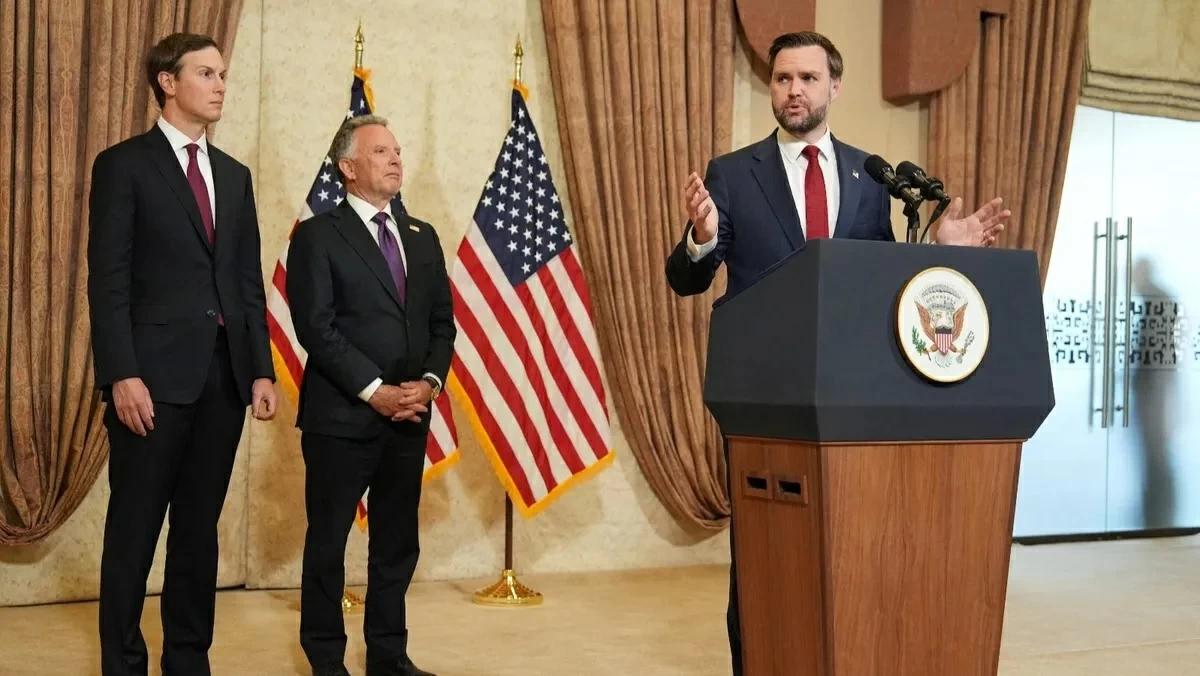
Iran’s foreign minister Abbas Araghchi arrived in Islamabad, Pakistan, on Friday to discuss proposals for restarting peace talks with the United States, but the planned US-Iran talks did not materialize as the US canceled the trip of its envoys.
“United States President Donald Trump has cancelled a planned visit to Pakistan by his envoys Steve Witkoff and Jared Kushner, who had been expected to explore indirect talks, which remain deadlocked over issues that include the blockade of the Strait of Hormuz”
France 24 reported that Araghchi arrived in the Pakistani capital “to discuss proposals for restarting peace talks with the United States,” while the White House said special envoys Steve Witkoff and Jared Kushner would leave for Pakistan on Saturday morning.

The same France 24 account said Pakistani sources indicated Araghchi was “not slated to meet US negotiators in Islamabad,” while White House press secretary Karoline Leavitt said the envoys would travel.
Lee News Central reported that President Donald Trump canceled a trip by the two US envoys to Pakistan “a new setback to peace prospects after Iran’s foreign minister spoke only to Pakistani officials and departed Islamabad.”
The New York Times described residents of Islamabad living in “a state of quasi lockdown for nearly a week” as they awaited “high-level talks” that “didn’t happen.”
CBS News said Araghchi left Oman for Pakistan and was set to attend “key consultative meetings” with Pakistani officials in Islamabad before traveling to Moscow.
NBC News and BBC both tied the cancellation to Trump’s decision to call off the envoys’ travel after Araghchi left Islamabad, with BBC noting Trump canceled the planned trip by “envoys Steve Witkoff and Jared Kushner.”
What each side demanded
Across multiple reports, the stalled diplomacy centered on whether the United States would lift its blockade of Iranian ports and whether Iran would accept terms tied to ending the war and addressing nuclear concerns.
Lee News Central said Iran and the United States were at an impasse as Iran “largely closed the Strait of Hormuz” while “the U.S. blocks Iran’s oil exports,” describing a conflict that began Feb. 28 with “U.S.-Israeli airstrikes on Iran.”

Al Jazeera reported that Trump canceled the envoys’ visit because the talks were deadlocked over issues “that include the blockade of the Strait of Hormuz,” and it quoted Trump writing, “If they want to talk, all they have to do is call!!!”
In Tehran, Al Jazeera said Iranian President Masoud Pezeshkian reiterated that his government will not enter negotiations while the United States maintains a blockade on Iranian ports, adding that Washington “should first remove operational obstacles, including the blockade,” before any new talks can begin.
CNN similarly said Pezeshkian told Pakistani Prime Minister Shehbaz Sharif that progress would remain difficult unless “hostile actions and operational pressures” from Washington are halted and that Washington must first remove “operational obstacles, including the blockade” of ships traveling to and from Iranian ports.
The Guardian described Iran’s position that it would not restart talks until the US lifted its blockade of Iranian ports, while the US demanded “verifiable assurances that Tehran would end its nuclear programme and lift its own crippling blockade of the strait.”
NBC News added that Iran dismissed Trump’s unilateral extension of the ceasefire as “meaningless,” saying the continued US naval blockade of Iranian ports is a violation of the deal and that the Iranian delegation will not return until the blockade is lifted.
Voices after the cancellation
Trump’s cancellation triggered sharply worded reactions and competing narratives about whether diplomacy was improving.
“What to know about the Iran war today: - U”
Lee News Central said Trump told reporters in Florida that he decided to call off the planned visit because the talks in Islamabad involved “too much travel and expense,” and it quoted him saying Iran improved an offer “but not enough.”
In a social media post, Trump wrote there was “tremendous infighting and confusion” within Iran’s leadership and added, “Nobody knows who is in charge, including them.”
Al Jazeera also quoted Trump’s Truth Social message: “If they want to talk, all they have to do is call!”
On the Iranian side, CNN reported that Masoud Pezeshkian said Tehran will not negotiate while facing pressure and threats, and it quoted him saying progress would remain difficult unless “hostile actions and operational pressures” from Washington are halted.
CBS News reported that Pezeshkian told Sharif that the US “should first remove operational obstacles, including the blockade,” to allow a new round of negotiations, and it described Sharif’s response as a “warm and constructive discussion.”
Reuters, as carried by Internazionale, included a statement from Araghchi’s official Telegram account saying he “explained our country’s principled positions regarding the latest developments related to the ceasefire and the complete end of the imposed war against Iran.”
The Guardian added that the Iranian foreign ministry spokesperson Esmail Baghaei said the main subject in negotiations was “ending the war in a way that secures the country’s interests,” and he added, “We accept the ceasefire only if it is the first step to bringing the war to an end on all fronts.”
How outlets framed the same moment
While the core facts—Araghchi’s visit to Islamabad, the cancellation of Witkoff and Kushner’s trip, and the continued focus on blockade and ceasefire—were consistent, the outlets emphasized different angles and timelines.
France 24 framed the story as Araghchi arriving in Islamabad “ahead of planned US ceasefire talks,” pairing it with White House statements that envoys would leave for Pakistan on Saturday morning and with Leavitt’s upbeat tone about “some progress from the Iranian side.”

BBC presented a “recap” that highlighted the sequence: Araghchi left Pakistan after describing talks as “very fruitful,” then Trump canceled the envoys’ trip, and it quoted Trump’s Truth Social line, “We have all the cards, they have none! If they want to talk, all they have to do is call!!!”
Al Jazeera emphasized the diplomatic stall and the broader regional stakes, saying prospects for a breakthrough in the US-Israeli war on Iran and “securing a lasting ceasefire remain stalled,” and it connected the cancellation to the deadlock over the blockade of the Strait of Hormuz.
The New York Times focused on the domestic impact in Islamabad, describing a “shared grievance” from business owners and quoting Abdul Haq asking, “What did I close my business for?” and saying he lost “the equivalent of $1,800 in revenue.”
Reuters via Internazionale centered on the setback to peace prospects and the Lebanon parallel, noting Netanyahu ordered troops to “forcefully” attack Hezbollah targets in Lebanon while the three-week ceasefire was tested.
CBS News and CNN both treated the cancellation as part of a continuing diplomatic process, with CBS describing Araghchi’s “key consultative meetings” and CNN quoting Sharif’s assurance that Islamabad “would continue its sincere and honest endeavors to promote regional peace and security.”
NBC News framed the cancellation as Trump suggesting talks could continue “by telephone,” while also detailing Iran’s rejection of the ceasefire extension as “meaningless.”
Energy, mines, and next steps
The cancellation unfolded alongside intensifying pressure in the Strait of Hormuz and continued military activity in Lebanon, with multiple outlets describing operational consequences for shipping and the risk of escalation.
“Iran’s President Masoud Pezeshkian has said Tehran will not enter into “forced negotiations” with the United States while facing pressure and threats, according to Iran’s state broadcaster, Islamic Republic of Iran Broadcasting (IRIB)”
Lee News Central said the conflict pushed up energy prices to “multiyear highs,” and it described the Strait of Hormuz as carrying “one-fifth of global oil and liquefied natural gas shipments,” while reporting that “international flights resumed Saturday from Tehran’s Imam Khomeini International Airport.”

It also reported shipping data showing “five ships transited the Strait of Hormuz in 24 hours, compared to about 130 a day before the war,” and it cited Vortexa data that recorded “35 total transits through the U.S. blockade from April 13 to 22.”
CBS News added that President Trump said the US Navy was clearing Iranian mines from the Strait of Hormuz, and it said experts warned sweeping for underwater explosives could take “months despite a tenuous ceasefire between the U.S. and Iran.”
CNN and CBS News also described the blockade and US naval actions, with CNN saying “as of Saturday, 37 ships have been redirected by the US Navy” and that the blockade began after a ceasefire took hold in early April.
In parallel, CBS News reported new Israeli strikes in Lebanon after Netanyahu ordered the military to “forcefully” attack Hezbollah targets, and it detailed casualties in towns including Yohmor al-Shaqeef and Safad al-Battikh.
Looking ahead, Al Jazeera said Araghchi was expected to return to Islamabad and that Pakistani officials described the indirect ceasefire contacts as “still alive but fragile,” while CNN said Araghchi was expected to return to Pakistan after his visit to Oman.
The Guardian added that Araghchi’s tour included Pakistan, Russia, and Oman, and it described a possible new arrangement involving Iran’s “400kg stockpile of highly enriched uranium,” alongside Iran’s insistence that the main subject was “ending the war in a way that secures the country’s interests.”
More on Iran

Netanyahu Orders IDF To Vigorously Strike Hezbollah Targets In Lebanon
17 sources compared
Iranian Foreign Minister Abbas Araghchi Meets Oman’s Sultan Haitham bin Tariq in Muscat
14 sources compared

Iran FM Abbas Araghchi Meets Pakistan PM Shehbaz Sharif as Trump Cancels Envoys
127 sources compared
IRGC Calls The Shots In Iran As Mojtaba Khamenei Stays Out Of Public View
10 sources compared