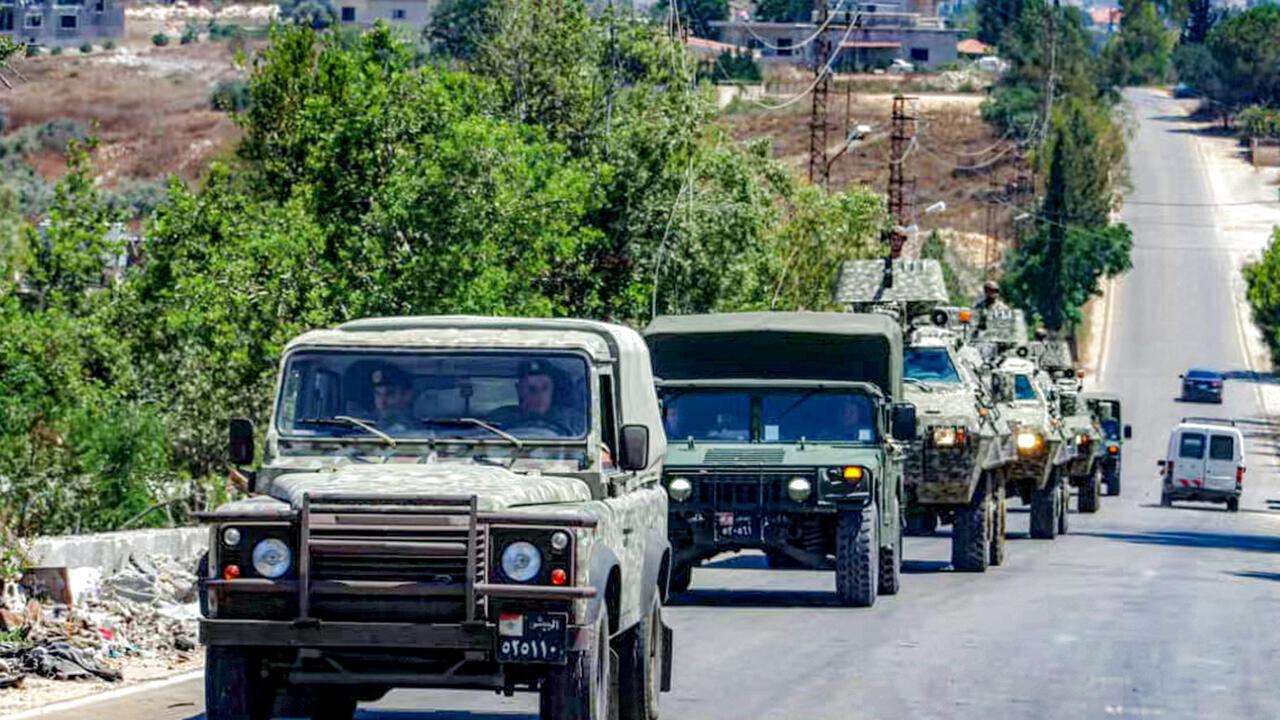
Full story
Netanyahu orders strikes
Prime Minister Benjamin Netanyahu ordered the IDF to “vigorously strike” Hezbollah targets in Lebanon, his office announced, according to Haaretz.
The Jerusalem Post also reported that Netanyahu ordered IDF to “vigorously” attack Hezbollah, framing it as part of live developments across Israel, Iran, and the Middle East.

The directive was described as coming “two days after a ceasefire was extended by three weeks” in both the BBC and yaliBnan.
The BBC said the fresh Israeli attacks followed the order after “at least six people were killed in strikes on southern Lebanon on Saturday.”
In the same BBC account, Israeli strikes were tied to specific locations including Yohmor al-Shaqeef in the Nabatieh district and Safad al-Battikh in the Bint Jbeil district.
The BBC further said the IDF later reported it had “eliminated” three Hezbollah members driving “a vehicle loaded with weapons,” and another individual riding a motorcycle.
The Kabul Tribune added that the directive was followed by fresh Israeli strikes after “at least six people were killed in attacks on southern Lebanon on Saturday,” and it described additional cross-border exchanges that “further strained the fragile truce.”
Ceasefire strain and attacks
Multiple outlets tied the renewed violence to the ceasefire’s fragility and to specific incidents in southern Lebanon.
The BBC said the agreement “has seen a reduction in fire rather than a complete halt” and that it was “extended on Thursday after talks between the countries' envoys in Washington.”

The Kabul Tribune similarly said the ceasefire agreement “was extended on Thursday following talks between envoys from both sides in Washington,” and it described the truce as “fragile.”
The BBC reported that Israeli strikes on Saturday hit a truck and a motorbike in Yohmor al-Shaqeef in the Nabatieh district, killing four people, citing Lebanon’s health ministry “according to Agence-France-Presse.”
It added that “Another two people were killed and 17 injured” in an attack on Safad al-Battikh in the Bint Jbeil district, also citing the health ministry “according to Agence-France-Presse.”
The BBC said the IDF reported it had “eliminated” three Hezbollah members on Saturday who were driving “a vehicle loaded with weapons,” and it also said “two more armed members of the group were killed in the Litani area.”
The BBC then described a later IDF claim that “a ‘suspicious aerial target was identified’ in the area of Malkia,” calling it “an additional violation of the ceasefire.”
In parallel, the Kabul Tribune said Hezbollah responded by targeting “an Israeli military vehicle in southern Lebanon,” retaliating for the earlier strike in Yohmor al-Shaqeef, AFP reported.
The Jerusalem Post’s live updates also referenced Hezbollah violating a ceasefire with Israel by launching projectiles at North, while the BBC said the ceasefire was under strain due to continued cross-border exchanges.
Official claims and retaliatory framing
The dispute over responsibility and intent was reflected in how different actors described the same sequence of events.
“Israel has continued its attacks on southern Lebanon, hours after ceasefire between the two countries was extended for a further three weeks”
The BBC said Hezbollah “said it targeted an Israeli army vehicle in south Lebanon in retaliation for the attack on Yohmor al-Shaqeef,” AFP reported, while the Israeli military said it “struck Hezbollah terrorist infrastructure used for military purposes across southern Lebanon.”
The BBC also quoted the Israeli military’s stated posture that it would “continue to operate decisively against threats directed at Israeli civilians and IDF soldiers, in accordance with directives from the political echelon.”
In the same BBC report, Lebanon’s state-run National News Agency (NNA) reported “a pair of strikes in quick succession” in a town in Bint Jbeil district, “another on a town in Tyre district,” and “strikes on two more towns in Nabatieh district.”
The Kabul Tribune added that Netanyahu’s directive was followed by strikes across Bint Jbeil, Tyre and Nabatieh districts, citing Lebanon’s NNA.
Separately, Kurdistan24 reported Netanyahu accused Hezbollah of effectively “dismantling” the ceasefire and said “It must be understood that Hezbollah’s violations are, in practice, dismantling the ceasefire,” during a weekly cabinet meeting.
Kurdistan24 also said the Israeli military ordered evacuations in parts of southern Lebanon, with Israeli army spokesman Avichay Adraee posting on X that the military was “compelled to take decisive action” in response to the violations.
Al Jazeera’s report on continued attacks after the ceasefire extension included Hezbollah’s dismissal of the extension as “meaningless,” quoting Hezbollah lawmaker Ali Fayyad saying “It is essential to point out that the ceasefire is meaningless in light of Israel’s insistence on hostile acts, including assassinations, shelling, and gunfire.”
In that same Al Jazeera account, Netanyahu said Israel was “maintaining full freedom of action against any threat” and accused Hezbollah of “trying to sabotage” the ceasefire deal.
Journalists and competing narratives
Beyond battlefield claims, the sources also diverged in how they described attacks involving media workers and how they characterized the broader campaign.
The BBC said an international press advocacy group called attacks on journalists in Lebanon “unacceptable,” after a journalist was among those killed in Israeli attacks on Wednesday, and it reported that the Media Freedom Coalition (MFC) urged all parties to allow members of the media to work freely and safely.

The BBC included a statement from the co-chairs saying: “The UK and Finland strongly condemn all violence directed against journalists and media workers.”
The BBC said an Israeli strike killed Amal Khalil, who worked for a Lebanese newspaper, and injured freelance photographer Zeinab Faraj, while also stating that “The IDF said it did not target journalists.”
The Kabul Tribune similarly reported that the Media Freedom Coalition condemned recent attacks on journalists in Lebanon as “unacceptable,” and it said a Lebanese journalist, Amal Khalil, was killed in an Israeli strike earlier in the week, while freelance photographer Zeinab Faraj was injured.
The Kabul Tribune added that Lebanese officials said the journalists were deliberately targeted while taking shelter after an initial strike hit the vehicle in front of them, killing two men, and it said “the IDF denied targeting media personnel.”
In contrast, the Guardian’s piece about earlier strikes in Lebanon did not focus on journalists in the same way, instead describing a bombing campaign and naming it “Operation Eternal Darkness,” while the Lebanese called it “Black Wednesday.”
The Guardian said “Dozens of Israeli warplanes dropped bombs and missiles on 100 targets across a country roughly the size of Connecticut,” and it described the Lebanese health ministry’s toll as “357 dead and more than 1,200 injured.”
The Guardian also said the Israeli military eventually claimed to have killed “more than 250 Hezbollah “operatives and commanders” without offering evidence,” and it described the Israeli military as occupying “more than 50 towns in southern Lebanon” and razing entire villages.
Evacuations and consequences
The immediate operational consequences described by the sources included evacuations and continued military activity despite the ceasefire extension.
Kurdistan24 said the Israeli military ordered evacuations in parts of southern Lebanon and instructed residents of seven villages south of the Litani River to evacuate, citing continued ceasefire breaches by Hezbollah.
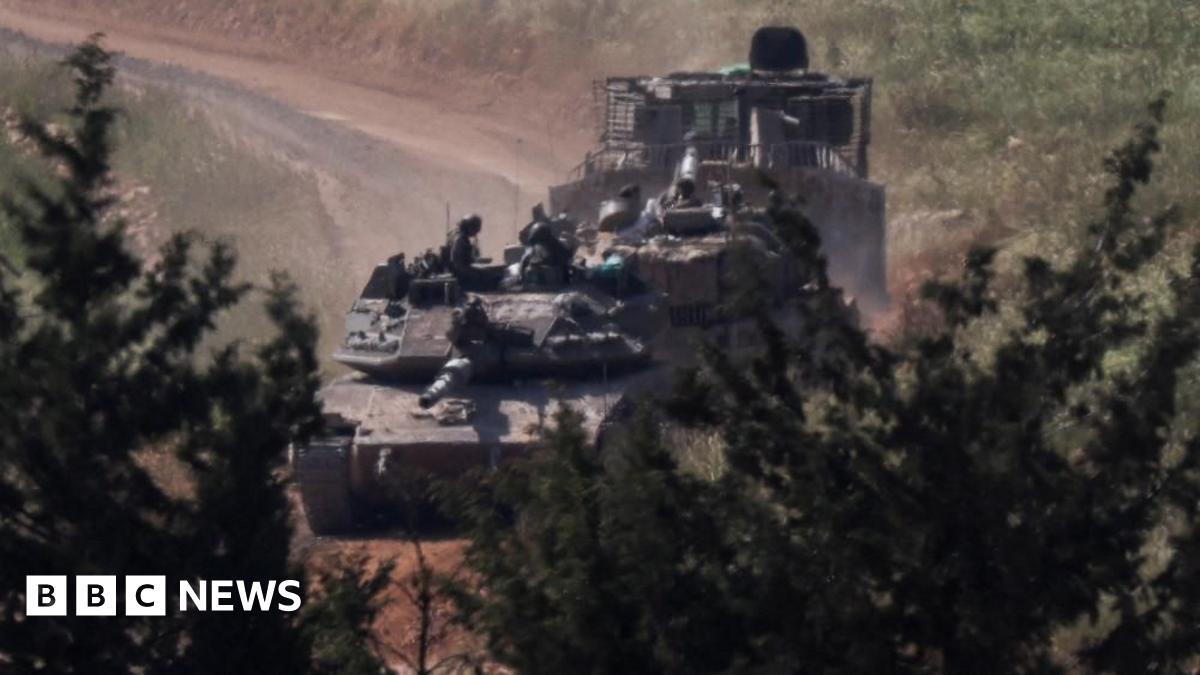
It reported that Netanyahu accused Hezbollah of “dismantling” the ceasefire and that the Israeli army spokesman Avichay Adraee said the military was “compelled to take decisive action.”
Al Jazeera reported that Israel continued its attacks on southern Lebanon “hours after ceasefire between the two countries was extended for a further three weeks,” and it said Israeli forces also remained stationed in southern Lebanon after establishing a so-called “yellow line.”
In the same Al Jazeera account, the Lebanese Health Ministry said the casualty toll since the current round of fighting broke out on March 2 had risen to 2,491 people killed and 7,719 wounded.
Al Jazeera also described ongoing military activity including “air strikes, drone strikes, home demolitions and continued occupation of territory here in southern Lebanon,” as Heidi Pett reported from Tyre.
The report also quoted Hezbollah’s lawmaker Ali Fayyad saying the ceasefire was “meaningless” and that every Israeli attack gave Hezbollah the “right to retaliate,” while it quoted Netanyahu saying Israel was “maintaining full freedom of action against any threat.”
The Jerusalem Post’s live updates added that US envoys’ Pakistan visit was canceled and that US intercepts Iranian shadow fleet vessel in Arabian Sea, placing the Lebanon developments within a wider regional escalation narrative.
Looking further ahead, the BBC said the Israeli military would “continue to operate decisively against threats directed at Israeli civilians and IDF soldiers,” and it described Israel as continuing to occupy a much of southern Lebanon and carrying out large-scale demolitions there.