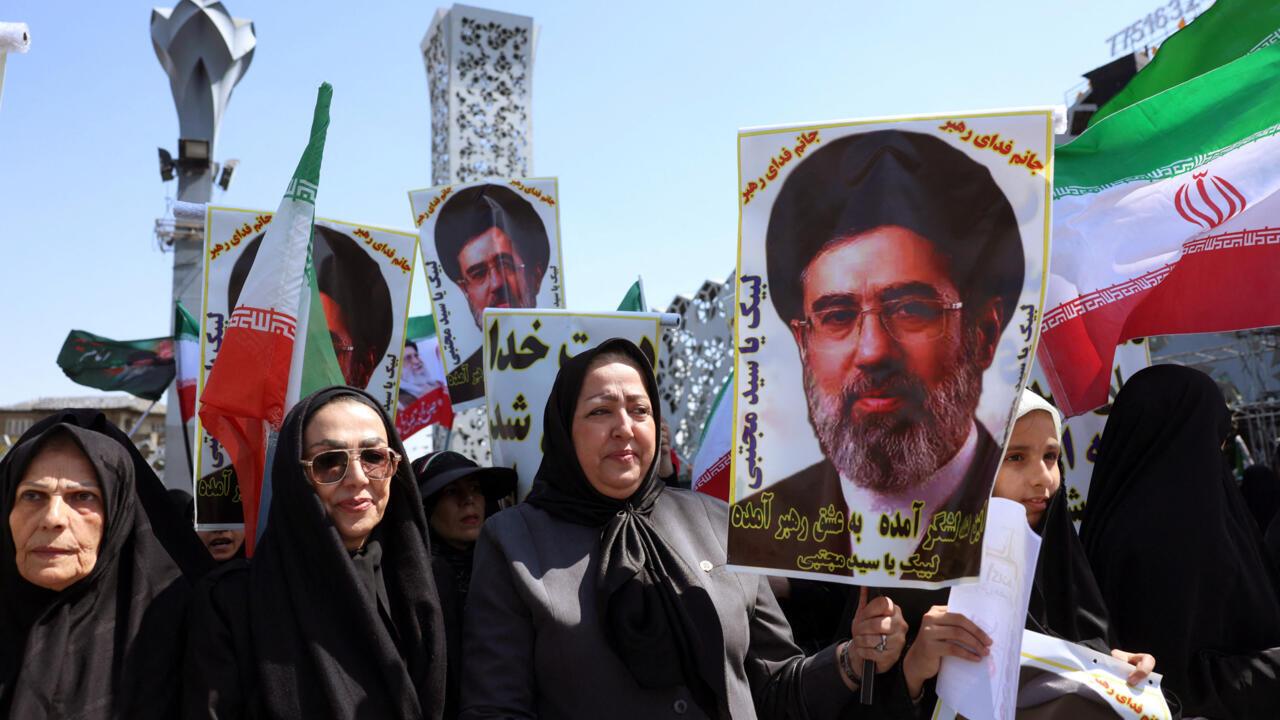
IRGC Calls The Shots In Iran As Mojtaba Khamenei Stays Out Of Public View
Key Takeaways
- IRGC commanders top Iran's decision-making, sidelining Mojtaba Khamenei.
- Mojtaba Khamenei has not released public messages since taking power.
- Analysts cite centralized IRGC power shaping Iran's policy.
Who runs Iran
Iran’s leadership question has sharpened around Mojtaba Khamenei, who “has not been seen in public since succeeding his father as supreme leader,” after Ali Khamenei was killed on “28 February.”
“Several Iranian officials have stressed that their country is united, rejecting United States President Donald Trump’s claims of a rift in the leadership in Tehran”
Multiple outlets describe a system where formal roles exist alongside an operational reality shaped by security power.

Yalibnan frames the formal answer as clear—“Mojtaba Khamenei has assumed the role of supreme leader”—but says “in practice, the picture is far murkier” because “Mojtaba Khamenei has not been seen in public since taking power.”
The Australian Broadcasting Corporation reports that “a key question has emerged: who is really running Iran?” and adds that “analysts have told the ABC it is the powerful Islamic Revolutionary Guard Corps (IRGC)… that is increasingly calling the shots inside the country.”
In that same ABC account, a Tehran resident described an environment where the regime’s security apparatus reaches into daily life, saying, “None of us dare go out with our phones anymore … they go through all your chats looking for anything they can use against you.”
The dispute over who leads also plays out in how diplomacy is conducted: Yalibnan says Foreign Minister Abbas Araghchi “continues to represent Tehran in talks with the US,” but that his role “looks operational rather than directive.”
Health, absence, and control
The question of control is intertwined with Mojtaba Khamenei’s physical condition and his limited public presence.
The Times of India says Iran’s Supreme Leader Mojtaba Khamenei is “awaiting a prosthetic leg after strike, suffered severe facial burns,” and reports that “Khamenei has undergone surgery on his hand, suffered severe facial burns and is awaiting a prosthetic leg.”
The New York Post similarly reports that Khamenei “hasn’t released an audio or video message since assuming power because his face was badly burned in Israeli airstrikes on Feb, 28,” and adds that four Iranian officials told the New York Times that one of his legs has been “operated on three times, and he is awaiting a prosthetic.”
In the same New York Post account, the outlet quotes the Times report that “His face and lips have been burned severely, making it difficult for him to speak [and] he will need plastic surgery,” and it describes how “Messages to him are handwritten, sealed in envelopes and relayed via a human chain from one trusted courier to the next.”
The governance implications of that absence are described by the Australian Broadcasting Corporation, which says Mojtaba has not been seen publicly since taking power and that “his only messages have been issued in writing,” with his first public statement “read out by a newsreader while his image was displayed on screen.”
Yalibnan adds that “Mojtaba Khamenei has not been seen in public since taking power,” and argues that “That absence matters,” because “authority is not just institutional – it is also performative.”
Trump’s rift claim, Iran’s reply
As the internal leadership question grows, Donald Trump’s public claims about division have been met with coordinated Iranian messaging emphasizing unity.
“Dubai, United Arab Emirates (CNN) — The newly appointed Supreme Leader of Iran, Mojtaba Khamenei, warned of the realization of what he described as a 'malicious plot,' referring to the enemy's media operations, as he put it”
WION reports that Trump claimed “infighting” between “the “hardliners” and “moderates”,” and says Trump also asserted that the US has “total control” over the Strait of Hormuz until Iran makes a deal.
In response, WION says Mojtaba Khamenei posted on X that “Due to the strange unity created among compatriots, a fracture has occurred in the enemy,” and added that “cohesion has become even greater and more steel-like.”
WION also quotes the Iranian leader’s warning that “The enemy's media operations, by targeting the minds and psyches of the people, intend to undermine national unity and security; may our negligence not allow this sinister intent to come to fruition.”
CNN Arabic frames the same warning as a “malicious plot,” saying Mojtaba Khamenei warned of “the realization of what he described as a 'malicious plot,' referring to the enemy's media operations.”
Al Jazeera reports that Iranian officials rejected Trump’s assertion of a rift, saying Iran is “one soul,” and it quotes a statement posted on X that “In Iran, there are no radicals or moderates,” and “We are all ‘Iranian’ and ‘revolutionary’.”
IRGC dominance and diplomacy
Multiple reports converge on the idea that the IRGC has become the central decision-making force, especially in war and negotiations.
The Australian Broadcasting Corporation says “operational authority has shifted into the hands of the IRGC,” and quotes Dr Krieg describing Mojtaba as “a 'symbolic sovereign' than the man directing war, negotiations and internal security.”
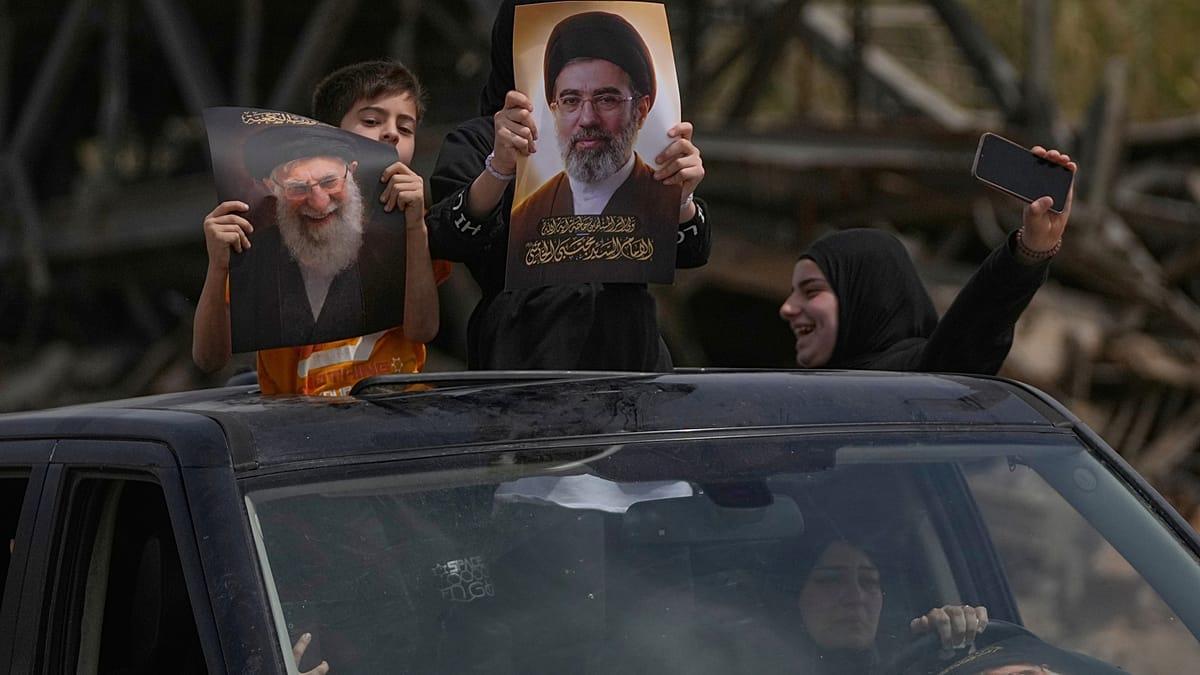
It also reports that “Fractures between IRGC and the political arm of the government emerged publicly last week,” with Foreign Minister Abbas Araghchi declaring the Strait of Hormuz “completely open” and then the IRGC announcing the strait was closed again.
The Times of India adds that the IRGC “played a decisive role in halting planned talks with the United States in Islamabad, overriding Iran’s civilian leadership, including President Masoud Pezeshkian and foreign minister Abbas Araghchi.”
The New York Post describes how “It was the Guards who came up with the strategy for Iran’s attacks on Israel and the Persian Gulf states,” and says they “agreed to a temporary cease-fire with the United States and approved back-channel diplomacy and direct negotiations with the United States.”
The Jerusalem Post goes further, citing “Some Israeli and American officials” and saying “the Islamic Revolutionary Guard Corps (IRGC) and its commander, Ahmad Vahidi, were essentially in control of Iran.”
Competing narratives and stakes
The reporting diverges on what the leadership structure means for negotiations and for the broader conflict, with outlets emphasizing different mechanisms and different levels of certainty.
“WASHINGTON — Iran Supreme Leader Mojtaba Khamenei hasn’t released an audio or video message since assuming power because his face was badly burned in Israeli airstrikes on Feb, 28, according to a report — as President Trump says peace talks are inhibited by a lack of clear leadership in Tehran”
Yalibnan describes a “murkier” practical picture, saying the delegation is headed by Parliament Speaker Mohammad-Bagher Ghalibaf and that his position is “precarious – active but not clearly authorised.”

The Australian Broadcasting Corporation portrays a regime that has “evolved — in a direction many observers now see as more hardline,” and it ties that to increased security measures, including “increased security checkpoints, arrests and even executions.”
The Times of India and New York Post both focus on Khamenei’s injuries and restricted access, but they frame the stakes differently: the Times of India says “Mojtaba is not yet in full command or control,” while the New York Post says decision-making is delegated to “Tehran’s generals rather than civilian political leaders.”
Al Jazeera, by contrast, emphasizes the official line that there is no internal rift, quoting the statement that “Iran is not a land of rifts, but a stronghold of unity,” and it adds that Tehran says talks are not happening because of “the US blockade on its country’s ports.”
The stakes are also immediate in the Strait of Hormuz dispute: WION quotes Trump saying “No ship can enter or leave without the approval of the United States Navy,” while Al Jazeera says Trump suggested the US would “shoot and kill” Iranian laying mines in the Strait of Hormuz.
More on Iran

Trump Cancels Witkoff and Kushner Trip to Pakistan After Abbas Araghchi Leaves Islamabad
69 sources compared
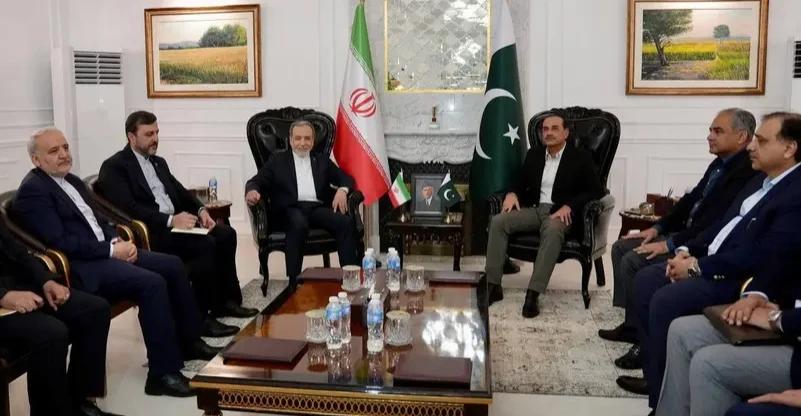
Iran FM Abbas Araghchi Meets Pakistan PM Shehbaz Sharif as Trump Cancels US Envoys
13 sources compared
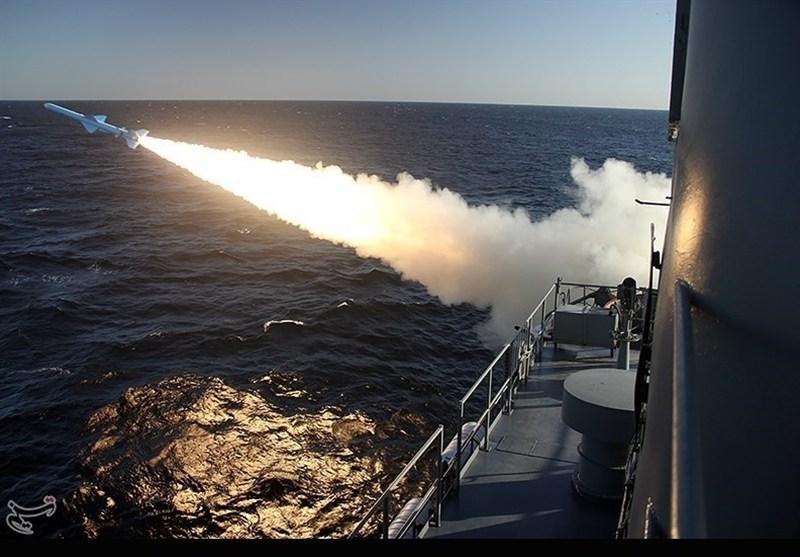
Iran Closes Strait of Hormuz, Says U.S. Naval Blockade Is Illegal Piracy
25 sources compared
Trump Cancels U.S. Officials’ Pakistan Trip for Iran Peace Talks
80 sources compared