
Trump Cancels Witkoff and Kushner Trip to Pakistan After Abbas Araghchi Leaves Islamabad
Key Takeaways
- Trump canceled Kushner and Witkoff's trip to Islamabad for Iran talks.
- Abbas Araghchi, Iran's foreign minister, left Islamabad after meetings with PM Sharif.
- Araghchi described the Islamabad visit as fruitful and outlined a framework to end the war.
Trip Cancelled, Talks Stall
President Donald Trump cancelled a planned trip by U.S. envoys to Pakistan for talks with Iranian officials after Iranian Foreign Minister Abbas Araghchi left Islamabad, according to multiple reports.
Al Jazeera said Trump told Fox News that he had ordered Steve Witkoff and Jared Kushner to ditch plans to visit Islamabad for “possible talks,” despite his earlier claims that Iran was “making an offer” aimed at resolving the two-month conflict.

Trump framed the cancellation as a refusal to send envoys on what he called an “18-hour flight,” saying, “I said, ‘Nope, you’re not making an 18-hour flight to go there. We have all the cards. They can call us anytime they want, but you’re not going to be making any more 18-hour flights to sit around talking about nothing,”” in Al Jazeera’s account.
BBC similarly reported that Trump cancelled a planned trip “shortly after Tehran's delegation had left Islamabad,” and quoted Trump saying the envoys would be wasting “too much time,” adding that if Iran wanted to talk “all they have to do is call.”
Forbes described Trump’s decision as a Truth Social claim that “we have all the cards, they have none,” and said he also complained of “tremendous infighting and confusion within their ‘leadership.’ Nobody knows who is in charge, including them.”
The cancellation came as Araghchi’s three-leg tour moved on: Al Jazeera reported that Araghchi had already departed Islamabad for Oman, and later said Iran’s state-run IRNA reported he was “scheduled to visit Pakistan again after completing his trip to Oman and before travelling to Russia.”
Araghchi’s Stops and Tehran’s Position
While Trump’s cancellation removed the prospect of direct U.S.-Iran engagement in Islamabad, Iranian officials continued to describe their own diplomatic track through Pakistan.
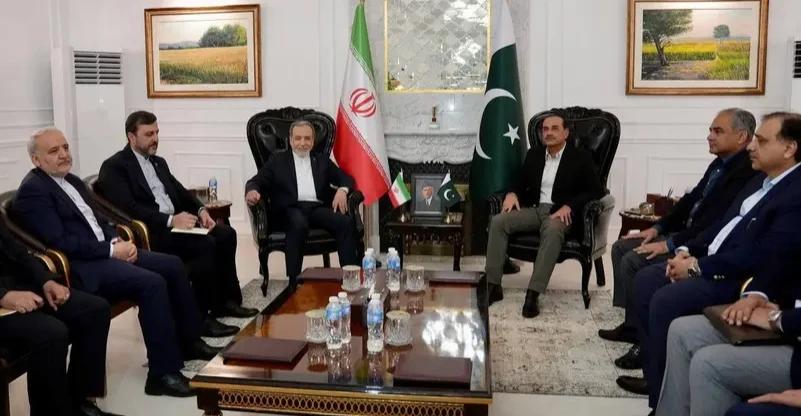
Al Jazeera reported that Araghchi left Islamabad after meeting Pakistani Prime Minister Shehbaz Sharif, Army chief Field Marshal Asim Munir and Foreign Minister Ishaq Dar, and said Araghchi posted on X that he had shared “Iran’s position concerning workable framework to permanently end the war on Iran” with Pakistani officials.

Al Jazeera added that IRNA later reported Araghchi was “scheduled to visit Pakistan again after completing his trip to Oman and before travelling to Russia,” and said part of his delegation had returned to Tehran “to consult and obtain the necessary instructions on issues related to ending the war” and would rejoin him in Islamabad on Sunday night.
BBC reported that Araghchi held talks with mediator Pakistan, and after those talks said he had shared Iran’s position on ending the war but was “yet to see whether the US was ‘truly serious about diplomacy’.”
The Washington Post likewise described Araghchi’s meetings in Islamabad as presenting Tehran’s “official stance” on ending the war, including the phrase “Shared Iran’s position concerning workable framework to permanently end the war on Iran,” and said the talks were aimed at discussing “a framework for future talks.”
Forbes added that Iran’s foreign ministry spokesperson Esmaeil Baqaei said in a post on X that Iranian officials would not meet directly with U.S. envoys and would instead communicate through Pakistani mediators.
Blockade, Ceasefire, and Escalation Risks
The cancellation unfolded against a wider standoff in the Strait of Hormuz, where both sides have continued to signal hardline positions while a ceasefire remains in place.
Al Jazeera said the pressure to strike a deal has mounted amid an ongoing standoff in the Strait of Hormuz, and reported that Iran’s Islamic Revolutionary Guard Corps said Saturday that they had no intention of ending their effective blocking of the waterway.
BBC described the same standoff as Iran restricting passage through the key shipping route after the U.S. and Israel commenced strikes in February, and said the U.S. increased its naval presence to block Iranian oil exports.
The BBC also reported that diplomatic efforts had stalled despite Trump’s extension of a ceasefire due to expire on 22 April, and said the standoff also involves Tehran’s nuclear ambitions.
Forbes connected the diplomatic freeze to U.S. pressure, saying Trump announced a naval blockade on Iranian ports nearly two weeks ago and quoting Defense Secretary Pete Hegseth: “as long as it takes.”
The Washington Post added that the ceasefire is fragile and informal, with no written agreement, no verification mechanism, and periodic flare-ups threatening to unravel it.
Competing Narratives on Negotiations
Different outlets emphasized different reasons for the breakdown, even while describing the same cancellation and the same diplomatic backdrop.
Al Jazeera foregrounded Trump’s insistence that his envoys would not make the trip, quoting him on Fox News about refusing an “18-hour flight” and framing the decision as part of a broader posture that the U.S. did not see “any yielding on the Iranians part.”

BBC, by contrast, stressed the timing—Trump cancelled “shortly after Tehran's delegation had left Islamabad”—and highlighted the claim that Trump said he would be wasting “too much time” and that Iran could “call.”
Forbes framed the cancellation as a blunt assertion of leverage, quoting Trump’s Truth Social line “we have all the cards, they have none,” and it also included a warning from Iran’s Khatam al-Anbiya military command about a response to the “blockade, banditry, and piracy in the region.”
The Washington Post described the cancellation as “the latest setback to negotiations,” and it added that Trump said “Immediately, when I canceled it, within 10 minutes, we got a new paper that was much better.”
Politico similarly described the cancellation as abrupt and said Trump told reporters he cancelled after Iran presented him with “a paper that should’ve been better,” followed by “a new paper that was much better.”
What Happens Next
The sources portray the next steps as uncertain, with intermediaries still carrying messages while military and economic pressure continues.
Al Jazeera said IRNA reported Araghchi’s delegation returned to Tehran “to consult and obtain the necessary instructions on issues related to ending the war” and would rejoin him in Islamabad on Sunday night, while also reporting he was “scheduled to visit Pakistan again after completing his trip to Oman and before travelling to Russia.”

BBC reported that Pakistan had mediated contact between the two sides in recent weeks, including talks between senior U.S. and Iranian officials on 11 April that ended without agreement, and it said Araghchi was expected to return to Islamabad after visiting Oman.
The Washington Post described Pakistani leaders as trying their best for direct U.S.-Iran engagement and said it was unclear whether the United States was considering proposals including Russia guarantees and joint Iranian-Omani control over the Strait of Hormuz.
Politico added that JD Vance was expected to join in Islamabad if discussions showed signs of progress, and it described the ceasefire as informal with no written agreement and no verification mechanism.
Forbes reported that Defense Secretary Pete Hegseth said the blockade would continue for “as long as it takes,” and it quoted him linking U.S. demands to Iran’s nuclear program and economic pressure.
More on Iran
IRGC Calls The Shots In Iran As Mojtaba Khamenei Stays Out Of Public View
10 sources compared
Iran FM Abbas Araghchi Meets Pakistan PM Shehbaz Sharif as Trump Cancels US Envoys
13 sources compared
Iran Closes Strait of Hormuz, Says U.S. Naval Blockade Is Illegal Piracy
25 sources compared
Trump Cancels U.S. Officials’ Pakistan Trip for Iran Peace Talks
80 sources compared