ICC Coalition Urges European Union To Protect Court From Trump Sanctions
Key Takeaways
- EU urged to activate blocking statute to shield ICC from U.S. sanctions.
- Trump sanctions target ICC judges and prosecutors.
- ICC Coalition published report advocating blocking statute to safeguard ICC and European interests.
Sanctions hit ICC judges
A coalition of civil society groups is urging the European Union to protect the International Criminal Court (ICC) from United States sanctions, arguing that Washington’s measures are aimed at the court’s work and the people who support it.
“Nicolas Guillou, ICC judge under U”
In a report published this Thursday, the ICC Coalition (CICC) says the EU must activate the blocking clause to shield EU companies and citizens from extraterritorial penalties imposed by third countries.
The CICC proposes applying the mechanism to avoid the effects of the punishment imposed by the White House on eight ICC judges and three ICC prosecutors.
The coalition describes Washington’s stance as “an attack on the entire system of international justice,” and calls for “a united response.”
Zoé Paris, author of the report and policy advocacy coordinator for the CICC, says that U.S. sanctions are an attempt to undermine international justice and that they also have “a deterrent effect” and “disrespect international law.”
In a telephone interview, she adds that “the United States has chosen to criminalize jurists and civil society organizations that work to confront impunity for the gravest crimes.”
Paris argues that the EU must take the initiative because “the EU must take the initiative to find solutions that protect this court from the extraterritorial effects of the sanctions.”
She links the impact to the global reliance on information technology and the U.S. banking sectors, saying that access to essential services is being hindered “from their bank accounts and the ability to book a hotel or a plane, to paying with a credit card.”
Escalation and legal fight
The sanctions campaign described by European and international reporting has unfolded in successive rounds and is tied to ICC investigations into possible crimes by Israel in Palestine and by U.S. troops in Afghanistan.
El País says President Donald Trump regards the investigations these bodies are conducting as interference, and it notes that the sanctions on these 11 jurists have been issued in successive rounds since February of this year.
It also reports that Trump is considering taking a further step “to penalize the ICC as a whole,” if the Rome Statute is not amended, which would empower the court to prosecute heads of state for genocide, war crimes and crimes against humanity, and investigate the crime of aggression by a state through military force.
In parallel, El Salto reports that the first reprisals arrived in February 2025 with a Trump executive order threatening sanctions against ICC officials who work on investigations that threaten U.S. national security and its allies, including Israel.
El Salto says the executive order includes sanctions ranging from “el bloqueo de propiedades y bienes” to “la prohibición de entrada en Estados Unidos para ellos y su familia,” and it lists additional sanctions announced on specific dates.
It states that on 13 February the U.S. announced sanctions against the chief prosecutor Karim Khan, and on 5 June Trump sanctioned four judges: Solomy Balungi Bossa of Uganda, Luz del Carmen Ibáñez Carranza of Peru, Reine Adelaide Sophie Alapini Gansou of Benín, and Beti Hohler of Eslovenia.
El Salto further says that two of those judges were responsible for investigating war crimes committed by U.S. soldiers in Afghanistan, while the other two investigated crimes committed by Israel after “el 7 de octubre de 2023.”
The same report says that with new sanctions, “ya son 11 los jueces y fiscales sancionados por EEUU,” and it names the two additional judges as Gocha Lordkipanidze of Georgia and Erdenebalsuren Damdin of Mongolia.
Judges describe daily impact
Multiple reports portray the sanctions as reaching beyond travel bans into everyday financial and digital life for ICC judges.
“The European Union must activate the blocking clause to protect the International Criminal Court (ICC) from United States sanctions, the ICC Coalition (CICC) published in a report this Thursday”
El País describes Nicolás Guillou, a French judge at the ICC, saying that “the U.S. government can press a button and disconnect us from any possibility of making payments in the euro area,” and it recounts how his digital services were affected, including that “most digital services, such as Amazon, PayPal or Airbnb, are no longer available.”
It also says he booked a hotel in France through Expedia and “Within 12 hours he received an email informing him that it had been canceled because he appeared on the sanctions list.”
In Le Nouvel Obs, Emmanuel Macron is reported to have written to Donald Trump requesting lifting of “unjustly imposed” sanctions against Thierry Breton and judge Nicolas Guillou, and the letter is quoted saying: “I ask you to reconsider these decisions by your administration and to lift the unjustly imposed sanctions on Nicolas Guillou and Thierry Breton.”
The same report says Guillou was sanctioned in August 2025 along with other ICC judges due to his involvement in the arrest warrant case targeting Benjamin Netanyahu and Yoav Galant, and it adds that “his Visa card — an American service — was also withdrawn by his bank in France.”
Le Figaro quotes Guillou describing the psychological and practical effects, including “One feels alone and completely helpless”: the ordeal of a French judge at the ICC under American sanctions, and it says the measures include “the freezing of any assets he may hold in the United States” and “the prohibition on any natural person or legal entity from providing him with services.”
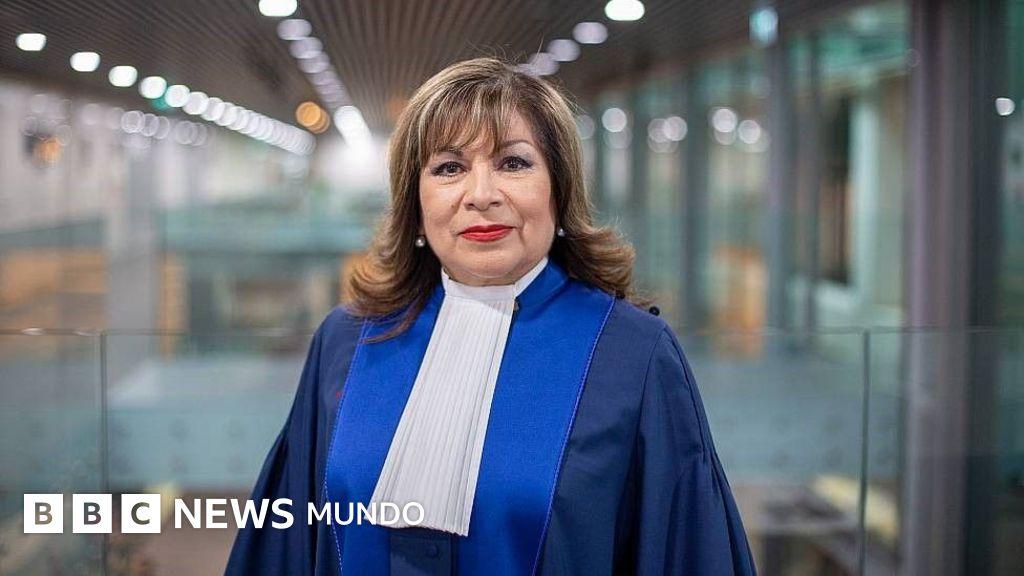
BBC Mundo reports a similar experience from Peruvian judge Luz del Carmen Ibáñez Carranza, who says: “They took away my credit cards and I cannot send money to my country.”
BBC Mundo also includes a statement from the UN rapporteur on the independence of judges and lawyers, Margaret Satterthwaite, saying: “Imagine going to sleep one day as an international judge of great prestige who presides over some of the world’s most important cases, and waking up the next morning with your bank account blocked, your assets in the U.S. seized, your email account closed, and even the cancellation of items you bought online.”
EU response and competing frames
European outlets differ in how they frame the EU’s response and the broader implications of the U.S. sanctions.
Le Monde describes the sanctions imposed by Washington in 2025 against 11 judges as a “major social issue,” and it quotes Judge Nicolas Guillou saying “I realized the issue of these sanctions went beyond the scope of the ICC and had the potential to become a considerable threat to the rule of law worldwide and in Europe.”

It also reports that appeals to the European Commission to trigger its blocking statute have “continued to multiply” since the executive order signed by Donald Trump on February 6, 2025.
Le Monde adds that “the global financial system has become so dependent on the US,” quoting Zoé Paris that “we find ourselves in situations where a decision by the US executive has repercussions on European banks and businesses.”
By contrast, El País emphasizes the institutional and legal stakes inside the ICC itself, stating that Washington’s measures are “in its crosshairs” and that Trump is considering penalizing the ICC as a whole if the Rome Statute is not amended.
El País also reports that the Dutch Foreign Minister David van Weel confirmed the possibility of sanctioning the ICC as such, saying: “If the case arises, we will see how we can address those sanctions.”
RTVE.es frames the issue as a failure of European political action, quoting Baltasar Garzón saying “It is grave that the EU remains silent” and describing the sanctions as “unilateral action” by a government like that of Donald Trump.
The BBC’s framing centers on the personal and legal consequences for judges, including the UN condemnation that ICC sanctions are “an attack on the rule of law” and the UN rapporteur’s description of blocked accounts and seized assets.
What comes next
The reporting also lays out what different actors say will happen next, and what is at stake if the sanctions continue or expand.
“Israel La ONU condena las sanciones de Trump a otros dos jueces de la CPI por investigar a Israel Otros dos jueces del Tribunal Penal Internacional deben afrontar las represalias del Gobierno de Donald Trump por la investigación que realiza la institución contra los crímenes de guerra y genocidio por parte de Israel”
The CICC report, as described by El País, calls for states to engage with service providers so they continue guaranteeing those who work or collaborate with the ICC, and it argues that “it’s not a matter of time, but of political will.”

El País says Paris warns that Washington “has criminalized jurists and civil society organizations that work to confront impunity for grave crimes,” and it stresses that the accountability represented by international justice is directed at the victims of mass atrocities.
In El Salto, the UN Office of Human Rights condemns the sanctions on two additional ICC judges, saying that “este tipo de ataques contra jueces, fiscales y expertos de la ONU va contra el Estado de derecho y la administración de Justicia.”
The same report quotes the International Federation for Human Rights (FiDH) describing the sanctions as a “flagrante intento de intimidar” a la Corte and “obstruir la rendición de cuentas por crímenes atroces en Palestina y más allá.”
It also says the UN General Assembly president Annalena Baerbock called the sanctions “ataques contra los principios mismos del derecho internacional,” and it quotes her saying they are not “incidentes aislados” but a strategy to “debilitar el Estado de derechos y erosionar la confianza en las instituciones internacionales.”
El País adds that the ICC itself described Washington’s measures as “a flagrant attack on its independence,” and it notes Guillou’s warning that “something more than institutional sanctions will be needed to stop it.”
Meanwhile, Le Nouvel Obs presents Macron’s letter as an attempt to secure a change, with Guillou warning that he “won’t hold out if nothing happens,” ahead of a meeting with officials from the European Commission.
More on USA

U.S. Senate Rejects Fifth Democratic Bid To Curb Trump’s Iran War Powers
14 sources compared

U.S. Seizes And Boards Iranian Oil Tanker M/T Majestic X In Indian Ocean
14 sources compared

Trump Reposts Michael Savage Video Calling India a Hellhole, Sparks India Backlash
12 sources compared
Trump Orders U.S. Navy To Shoot And Kill Iranian Mine-Laying Boats In Strait Of Hormuz
27 sources compared