
U.S. Seizes And Boards Iranian Oil Tanker M/T Majestic X In Indian Ocean
Key Takeaways
- U.S. forces boarded and seized Majestic X in the Indian Ocean.
- Pentagon described Majestic X as a sanctioned, stateless vessel carrying Iranian oil.
- Operation followed another Iranian oil tanker seizure, expanding U.S. naval actions beyond the Middle East.
Majestic X in the Indian Ocean
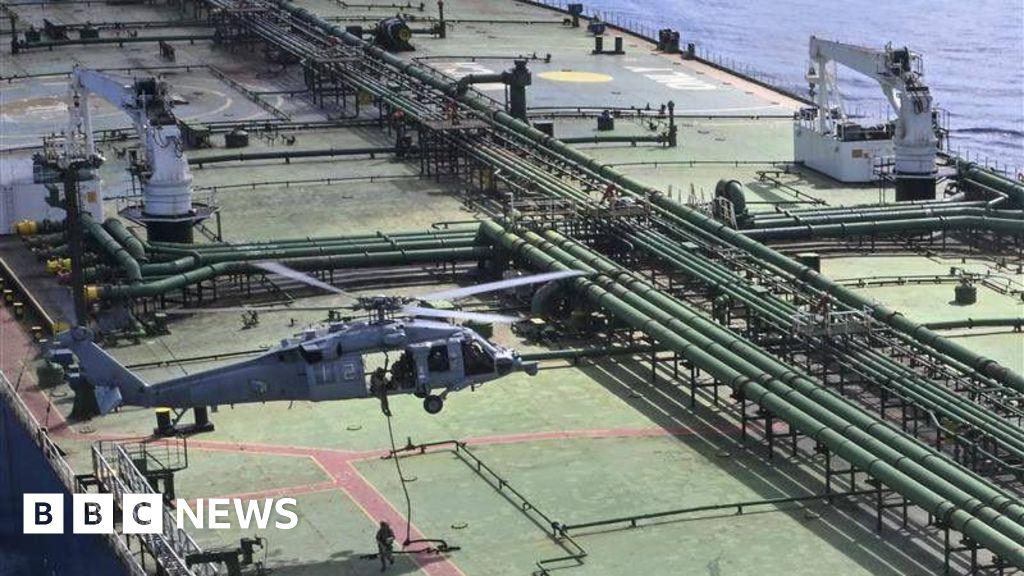
The United States seized and boarded the oil tanker M/T Majestic X in the Indian Ocean as part of a maritime interdiction and “right-of-visit boarding” operation, according to the U.S. Department of War and multiple outlets.
“US military intercepts Iranian oil tanker in Indian Ocean -- report [](https://subscribe”
The Caspian Post said the U.S. released footage of forces on the deck of the vessel, describing it as “Majestic X,” which it said was seized in the Indian Ocean.
The Hill reported that the U.S. military said Thursday it had seized three tankers carrying oil from Iran, including one in the Indian Ocean overnight, and that American forces boarded Majestic X, which the Pentagon described as a “sanctioned, stateless vessel.”
BBC described the same interdiction as the U.S. carrying out a “maritime interdiction” on the M/T Majestic X, “the interception or inspection of a vessel by a navy on ships suspected to be hostile or in violation of the law.”
The Washington Post similarly described U.S. forces intercepting and boarding a tanker ship in the Indian Ocean overnight, citing the Defense Department’s accusation that it was transporting oil from Iran.
CNBC added that the U.S. intercepted a sanctioned tanker in the Indian Ocean carrying oil from Iran, and said the U.S. had recently blocked the Iranian tankers M/V Hero II, M/V Hedy and M/V Dorena.
World Oil (Bloomberg) said the overnight maneuver involved Majestic X and described the ship as also known as the Phonix, “a Very Large Crude Carrier able to transport 2 million barrels of oil.”
Blockade, mines, and ceasefire
The Majestic X boarding took place amid a broader U.S. blockade on maritime traffic entering and leaving Iranian ports, with the BBC saying the blockade was imposed on 13 April.
BBC reported that the latest interception came as President Donald Trump ordered the US Navy to “shoot and kill” any boat laying mines in the critical shipping channel the Strait of Hormuz.
The Hill said Trump ordered the Navy to “shoot and kill any boat” laying mines in the Strait of Hormuz, and described the tanker seizure as the third seized by the U.S. this week amid Washington’s blockade on Iran’s trade by sea.
BBC also said Trump claimed to have rejected an offer from Iran to reopen the strait three days ago, adding that “it will open when we make a deal.”
The Hill described a tit-for-tat escalation that included Iran firing on ships and seizing two of them, and said the exchange was straining an already fragile ceasefire that Trump extended Tuesday to facilitate peace talks.
CNBC described the ceasefire as fragile and said the conflict had “evolved into a confrontation between naval blockades,” with Trump claiming the U.S. has “total control” over the sea lane.
BBC further reported that Trump said the blockade was “100% effective” and that Iran is “getting no business,” while also saying he had extended a two-week ceasefire at the request of mediator Pakistan.
BBC quoted Pentagon Chief Spokesman Sean Parnell rejecting reports that mine removal could take six months, saying, “One assessment does not mean the assessment is plausible, and a six-month closure of the Strait of Hormuz is an impossibility and completely unacceptable to the Secretary.”
Other tankers and rerouting
Beyond Majestic X, the U.S. interceptions described across outlets included multiple Iranian-linked tankers and rerouting actions in Asian waters.
“Screengrab The United States has seized another oil tanker associated with Iran in the Indian Ocean”
The Hill said the Pentagon also released footage showing troops stepping from helicopters onto the Majestic X, and it described the tanker as the third seized by the U.S. this week, while also referencing the escort of the Iranian oil tanker Dorena by a Navy destroyer after the U.S. said it tried to violate the blockade.
The Times of India said the U.S. intercepted at least three Iranian-flagged oil tankers in Asian waters and redirected them away from positions near India, Malaysia and Sri Lanka, and it named the supertankers Dorena, Deep Sea and Sevin among those intercepted.
The Times of India added that Dorena, carrying about 2 million barrels of crude, was last seen off India’s southern coast and was under escort by a US Navy destroyer in the Indian Ocean, citing Reuters.
Al Sharq (الشرق) reported that the U.S. intercepted at least three Iranian-flag oil tankers in Asian waters on Wednesday and was working to reroute them away from positions near India, Malaysia, and Sri Lanka, and it named DEEP SEA, SEVEN, and DORENA, with DORENA described as fully loaded with two million barrels of crude oil.
CNBC said the U.S. recently blocked the Iranian tankers M/V Hero II, M/V Hedy and M/V Dorena, and said Iran claimed it seized two cargo ships attempting to exit the Strait of Hormuz “without authorization.”
World Oil (Bloomberg) said the boarding of Majestic X followed interdictions against the VLCCs Hedy and Hero II and said both were anchored at Chabahar, an Iranian port on the Gulf of Oman, after being intercepted earlier this week.
BBC also said the U.S. had intercepted multiple ships after imposing the blockade on 13 April, and it described the latest interception as part of the U.S. continuing to stop ships suspected of “providing material support to Iran - anywhere they operate.”
Hardline posture and political fallout
The U.S. actions were accompanied by explicit threats and political developments described by outlets, including President Donald Trump’s mine-laying statements and personnel changes.
The Hill reported that Trump said earlier Thursday he had ordered the Navy to “shoot and kill any boat” laying mines in the Strait of Hormuz, and it described the broader blockade as Washington’s effort to disrupt Iran’s trade by sea.

The Hill also said that amid the turmoil, Navy Secretary John Phelan was dismissed Wednesday, with the Pentagon only saying that he was “departing the administration, effective immediately,” and it named Navy Undersecretary Hung Cao as acting Navy secretary.
BBC reported that Trump ordered the US Navy to “shot and kill” boats laying mines in the Strait of Hormuz and quoted him saying, “There is to be no hesitation,” while also saying US mine “sweepers” are clearing the strait “right now.”
In the same BBC account, Trump told the BBC’s North America editor Sarah Smith in a phone interview that Iran is “dying to make a deal,” adding his stance “seems to be working very well.”
Washington Times (Western Alternative) said Trump expanded his threats on Thursday and declared that the U.S. Navy will “shoot and kill” any boat that lays mines in the Strait of Hormuz, and it quoted Trump writing on Truth Social: “There is to be no hesitation.”
It also said Trump ruled out using a nuclear weapon, quoting him: “Why would I use a nuclear weapon when we’ve totally and in a very conventional way decimated them without it?” and “I wouldn’t use it,” and “A nuclear weapon should never be allowed to be used by anybody.”
The Washington Times further stated that Trump said “We have no pressure,” in the Oval Office and that “I want to make the best deal.”
Indo-Pacific reach and stakes
Several outlets framed the Majestic X boarding as part of a wider expansion of U.S. naval enforcement far from the Persian Gulf, raising the stakes for any attempt at ending the confrontation.
“The US boarding of an oil tanker in the Indian Ocean on Tuesday shows Washington making good on a pledge to track Iran-linked vessels anywhere in the world, an extension of its blockade of Iranian ports that increases the pressure on Tehran”
CNN said the boarding of an oil tanker in the Indian Ocean on Tuesday showed Washington making good on a pledge to track Iran-linked vessels “anywhere in the world,” describing it as an extension of its blockade of Iranian ports and warning that the expansion of the conflict “thousands of miles from the Persian Gulf” could widen the gap to be overcome at peace talks.

CNN cited U.S. Joint Chiefs chairman Gen. Dan Caine, saying he emphasized that Iran-linked vessels would have a hard time avoiding the global reach of the U.S. Navy, and it specifically mentioned the area overseen by US Indo-Pacific Command (INDOPACOM).
CNN said marine tracking data showed the tanker, the M/T Tifani (International Maritime Organization ship number 9273337), was stopped between Sri Lanka and Indonesia more than 2,000 miles from the Persian Gulf within the INDOPACOM area of responsibility, and it described the tanker as heading toward the Strait of Malacca.
CNN also described the use of an expeditionary sea base, saying the Defense Department released video showing troops boarding helicopters on a U.S. Navy warship and landing on the tanker, and it identified the USS Miguel Keith as one of five expeditionary sea base vessels recently in the area.
The BBC described the U.S. continuing to stop ships suspected of “providing material support to Iran - anywhere they operate,” and it said Trump claimed “total control” of the Strait of Hormuz while claiming Iranians are “having a very hard time figuring out who their leader is.”
CNBC said Brent oil rose above $100 per barrel again as tanker traffic through the strait remained at a near standstill, and it said the closure of the Strait of Hormuz had silenced “for now” the bombs, missiles and drones that caused death and destruction across the Middle East earlier in the war.
The Times of India said the closure of the Strait of Hormuz through which about 20% of the world’s oil and gas flows in normal times triggered a wider energy crisis and sharply reduced exports, and it said the U.S. Central Command directed at least 29 vessels to turn back or return to port since the blockade began.
In the same context, CNBC said it was unclear how long the ceasefire can hold before the naval standoff turns into a shooting war again, and it quoted Trump saying he ordered the U.S. Navy to “kill any boat” that is laying mines in the strait.
More on USA

Trump Reposts Michael Savage Video Calling India a Hellhole, Sparks India Backlash
12 sources compared
Trump Orders U.S. Navy To Shoot And Kill Iranian Mine-Laying Boats In Strait Of Hormuz
27 sources compared

Kathy Hochul Bans New York State Employees From Prediction-Market Betting
15 sources compared

DOJ Inspector General Probes Justice Department Compliance With Epstein Files Transparency Act
18 sources compared