Full story
ICC warns in El-Obeid
The International Criminal Court warned the UN Security Council that the gravest international crimes may be about to occur in El-Obeid, the capital of North Kordofan state in Sudan, as Nuzhat Shamim Khan told the council that “The worst is yet to come.”
“Algeria condemned, during an urgent meeting of the United Nations Human Rights Council in Geneva, the ongoing external interventions in Sudan, calling for defense of Sudan's sovereignty, unity, and territorial integrity, and for backing a purely Sudanese political path free from any external influence”
Khan said her office agrees with the UN High Commissioner for Human Rights’ assessment of the seriousness of the situation in El-Obeid, adding “we cannot say we did not know.”

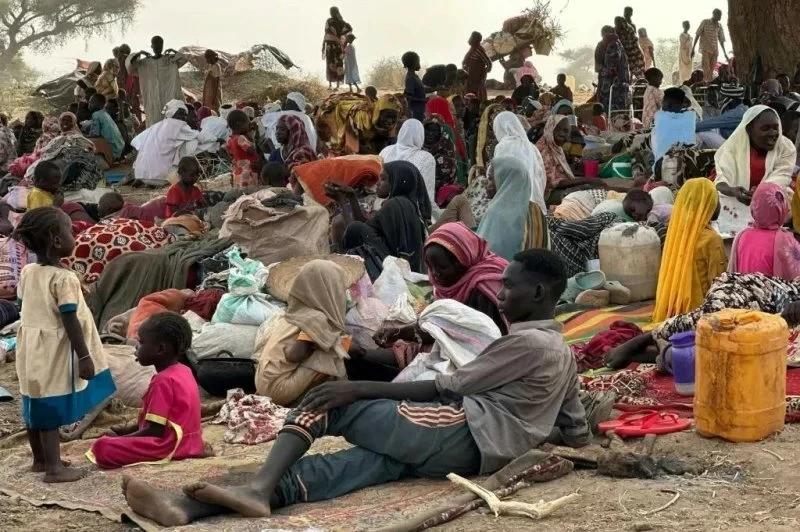
She linked the warning to testimonies she heard during a recent visit to refugee camps in eastern Chad, where Darfuri refugees described killings, rapes, and wide-scale abuses.
The warning came alongside reports that weeks of drone attacks have targeted vital facilities in El-Obeid, including the main power station and fuel stations, causing deaths and injuries.
In a related development, the deputy prosecutor said her office is moving rapidly to hold accountable the main perpetrators of the crimes committed in El-Fasher in 2025, as well as crimes dating back more than two decades.
Security Council disputes
The ICC warning prompted differing views among Security Council members on how accountability should be pursued, with China calling for caution and saying allegations of international crimes were highly sensitive and should be handled strictly in accordance with facts and the law.
The US renewed its opposition to the ICC, with Deputy Representative Jeffrey Bartos arguing that the court had overstepped its mandate by asserting jurisdiction over states that are not party to the Rome Statute.
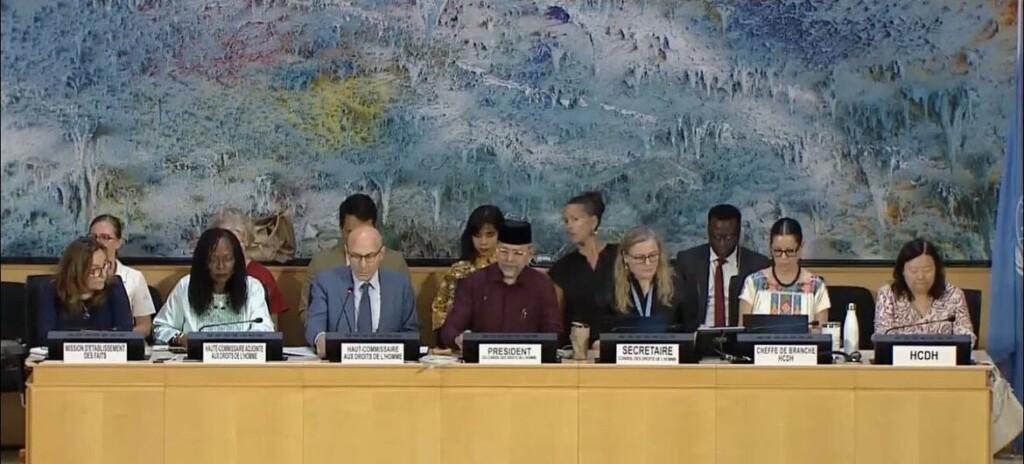
Khan told the council that refugees she met during her recent visit to eastern Chad described widespread killings, rape and attacks on children, and she said, “There is real despair in those camps,”.
She added a warning about the fear among displaced people, saying “the worst is still to come,” while describing prosecutors’ recent progress as “This is a paradigm shift — it is a breakthrough.”
Liberia’s ambassador, Lewis Garseedah Brown II, warned that the re-emergence of patterns seen during previous phases of the Darfur conflict showed that impunity continued to fuel violence, and Denmark’s representative, Lars Bo Kirketerp Lund, urged immediate protection measures and humanitarian access.
Investigations and next steps
The ICC deputy prosecutor said her office’s investigations into crimes committed in El Geneina and El Fasher and their surrounding areas during Sudan’s ongoing war have made progress, presenting the Prosecutor’s 43rd report to the UN Security Council on Wednesday evening.
“The International Criminal Court warned of the danger of repeating the atrocities witnessed in Darfur in the city of El-Obeid, the capital of North Kordofan state, while Sudanese authorities accused the Rapid Support Forces of targeting the El-Dobba transformer power station in the Northern State”
She said the Office conducted important interviews with key witnesses concerning crimes committed in El Geneina and El Fasher, and she said the testimony “corroborated and deepened the Office’s understanding of the nature and patterns of the crimes.”
Khan said the Office’s further significant progress reinforced the conclusion that war crimes and crimes against humanity had been committed in both El Geneina and El Fasher, and she said the evidence showed that war crimes were committed in El Fasher and the surrounding areas, particularly killings and outrages upon personal dignity.
She urged the Sudanese government to surrender the three remaining fugitives wanted by the court, and she called on the Sudanese government to take concrete steps leading to the arrest and surrender of Omar al-Bashir, Ahmed Haroun, and Abdel Raheem Hussein.
Looking ahead, the ICC Appeals Chamber is expected to rule during the first half of 2027 on appeals against both the conviction of Ali Kushayb and his 20-year prison sentence, and a hearing on reparations has been scheduled for 8 September 2026.