Sudan21 May, 20262 min read
ICRC Says Sudan Conflict Drives 8,000 Missing Persons Since April 15, 2023
This article is an automated aggregation of coverage from news outlets. Our editorials offer in-depth analysis curated by the NewsCord team.
About 8,000 people missing in Sudan since the start of the war. ICRC is engaging with all Sudan conflict parties to secure safe humanitarian access.

Sudan war and missing
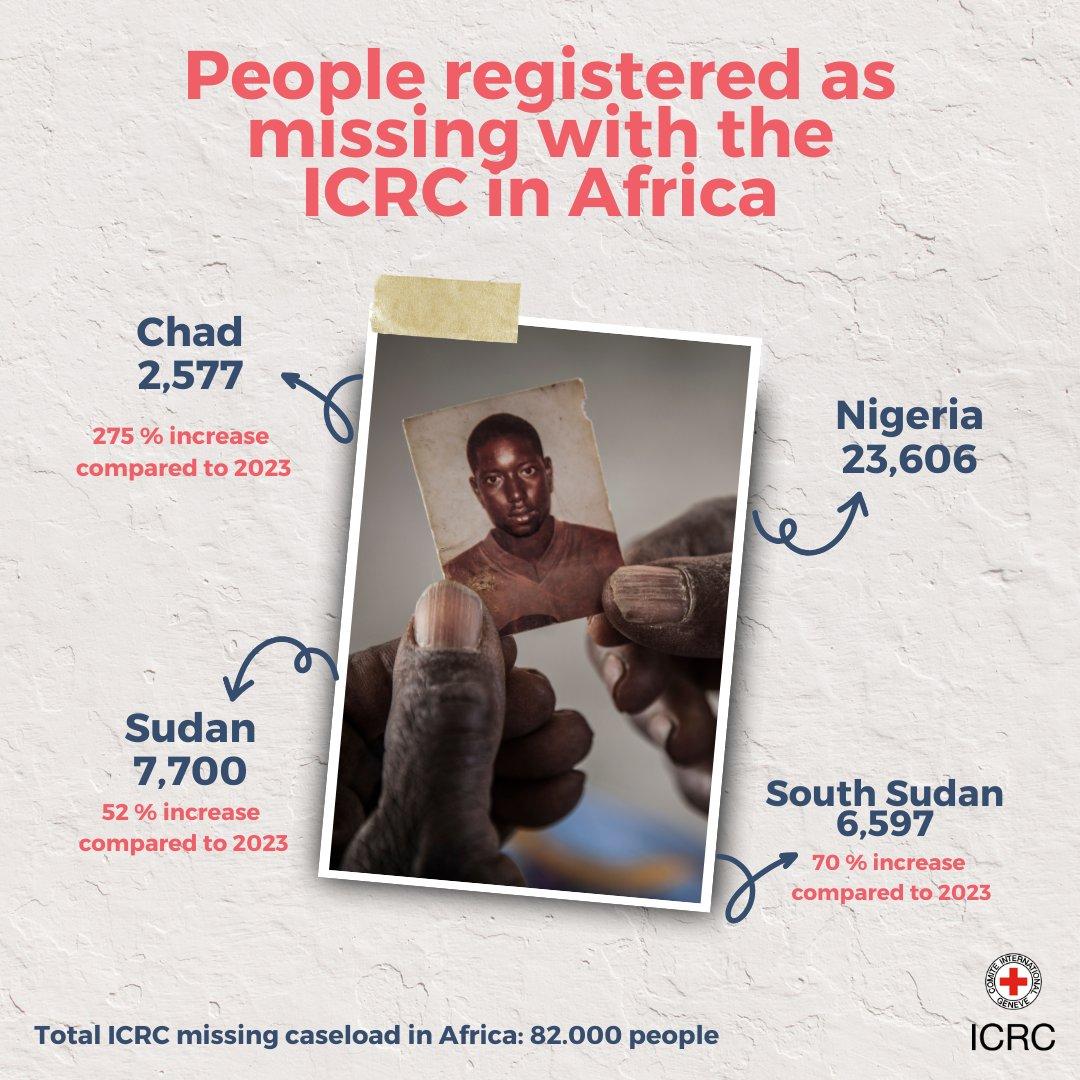
The International Committee of the Red Cross (ICRC) says the Sudan conflict has driven a sharp rise in disappearances, with the organisation recording 8,000 missing persons linked specifically to the current conflict since the outbreak of war on April 15, 2023. In a separate ICRC accounting for Africa, the ICRC says the conflict in Sudan is the main cause of rising disappearance cases on the continent, with more than 7,700 requests for assistance to locate a person missing in relation to the conflict.
The ICRC warns that the figures it publishes represent only part of the problem, with Pierre Krahenbuhl telling Geneva that the number “ne reflétait « que la partie émergée de l’iceberg ».” The ICRC also frames the issue as a protection failure during war, with its director general saying, “deSoudanà l’Ukraine, de laSyrieà laColombie, la tendance est claire : le nombre croissant des personnes disparues rappelle brutalement que les parties au conflit et ceux qui les soutiennent ne protègent pas les gens pendant la guerre ».”
Access and dialogue
As the number of missing-person cases rises, the ICRC says it remains in dialogue with all parties to Sudan’s armed conflicts to secure “safe and unhindered humanitarian access,” according to a statement relayed by Radio Dabanga. ICRC spokesperson for Sudan, Adnan Hazam, argues that under international humanitarian law, humanitarian access is essential for the protection of civilians and that neutral aid organisations must be allowed to operate swiftly and without obstruction.
Dabanga’s report also describes how families remain stranded after fleeing El Fasher, with thousands of displaced families still searching for relatives lost during the fighting in Tawila under harsh living conditions. In that account, Najwa Mohamed says, “Since then, we have received no information about him,” after her 17-year-old son leaves to search for her husband and never returns.
Reunifications and what’s at risk
The ICRC says it and its partners in the International Red Cross and Red Crescent Movement facilitated 755 family reunifications across Africa in 2024 and provided 5,083 families with reliable information about the fate of missing relatives. In Sudan, the same movement’s family-links work is presented as a lifeline for separated households, with the report saying that in the first three months of 2026 alone it facilitates more than 80,000 phone calls within Sudan and with people in South Sudan and Chad.
Dabanga’s narrative highlights the consequences of lost contact for families uprooted from El Fasher, including the case of Halima Abdel Karim, who becomes trapped there for 18 months and whose daughter Souad Adam has “no idea whether her mother is still alive.” The ICRC warns that respect for international humanitarian law is essential and says aid deliveries must be facilitated, quoting its call that “all parties should take concrete steps to spare civilians further suffering.”