
IEA Agrees To Release Record 400 Million Barrels From Emergency Oil Reserves Amid Iran War
Key Takeaways
- IEA agreed to release 400 million barrels from member countries' emergency oil reserves
- Release aims to calm surging oil prices and offset Iran war-driven supply disruptions
- This constitutes the largest coordinated emergency oil release in the IEA's history
Record coordinated release
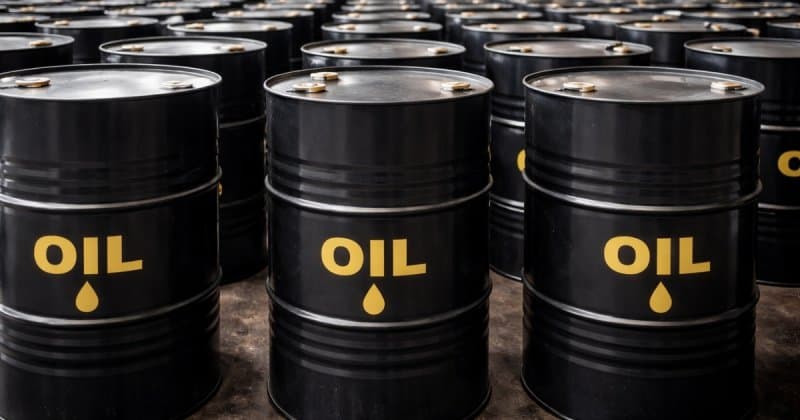
The International Energy Agency (IEA) unanimously agreed to release a record 400 million barrels from members’ emergency oil reserves to calm surging markets amid the Iran war, marking the largest coordinated intervention in the agency’s history and more than double the 2022 release.
“IEA members created their strategic petroleum reserves after the first oil shock in 1973 to better handle disruptions in supplies PARIS (AP) — A group representing many of the world's wealthiest countries agreed Wednesday to release the largest volume of emergency oil reserves in its history, in a bid to counter the effects of theIran waron energy markets and the halt of cargo shipping through the Strait of Hormuz”
The IEA characterised the move as an unprecedented emergency collective action intended to address massive market disruption.
Several outlets noted that the 400 million-barrel decision surpasses the roughly 182–183 million barrels released in response to Russia’s 2022 invasion of Ukraine.
Why intervention occurred
The IEA and multiple news organisations tied the intervention directly to the Iran war and a near-halt of cargo through the Strait of Hormuz, which has become a chokepoint after Iran attacked commercial shipping and energy infrastructure.
Officials and analysts said the stoppage and attacks have dramatically reduced exports from the Gulf and created acute concerns about diesel, jet fuel and LNG supplies, prompting ministers and the IEA to act.

Sources described the closure of transit via Hormuz as central to restoring market stability.
Stocks and transit scale
The scale of global stocks and the magnitude of flows through Hormuz framed the policy choice: IEA members collectively hold more than 1.2 billion barrels of public emergency stocks plus roughly 600 million barrels of industry stocks held under government obligation, giving them a substantial buffer but not an unlimited one.
“Accessibility helpSkip to navigationSkip to main contentSkip to footer > IEA releases record oil reserves to counter Iran war energy shock Subscribe to unlock this article Try unlimited access Only £1 for 4 weeks Then £59 per month”
Analyses cited by outlets emphasised how much oil and products normally transit Hormuz — with one agency estimate noting about 15 million barrels per day of crude plus another five million barrels per day of oil products — underscoring why a major coordinated release was deemed necessary.
Contributions and timing
Governments outlined contributions while stressing timing and mechanics remain unresolved: several countries (including Japan, the UK, Germany, France and South Korea) were reported to be among contributors, and leaders said releases would be coordinated according to national circumstances.
The IEA did not specify the pace, duration or exact location of releases, and multiple outlets emphasised that implementation details — who supplies what and when — were still being finalised at the IEA and at national levels.
Effectiveness and limits
Analysts and traders warned the release is a large but imperfect tool: some called it a short-term stabiliser while others warned it cannot fully replace flows cut by the closure of Hormuz.
“The decision was made during an emergency meeting of the IEA's governing board, which includes representatives from member countries”
Experts described uncertainties around the timing, the crude/products split, and physical drawdown limits — including the US Strategic Petroleum Reserve’s current inventory and maximum drawdown rate — suggesting the intervention may only partially offset daily shortfalls estimated by some firms at double-digit millions of barrels per day.

Several analysts therefore cautioned that market relief could be limited if the Strait remains closed or the conflict endures.
More on USA

FBI Warns Iran Could Launch Drone Attack on California From Offshore Vessel
10 sources compared

Pentagon: Trump's Iran War Cost US $11.3 Billion in First Week
12 sources compared

IEA Fails to Stabilize Market with 400 Million-Barrel Release as Oil Prices Surge 6.4%
19 sources compared

Artist Secret Handsake Installs Titanic-Pose Statue of President Trump With Jeffrey Epstein on National Mall
15 sources compared