
IEA Releases 400 Million Barrels After Iran Closes Strait of Hormuz, Halting Most Oil Flows
Key Takeaways
- IEA member countries unanimously agreed to release 400 million barrels from emergency oil reserves
- Flows through the Strait of Hormuz collapsed, curtailing roughly 20 million barrels per day
- The 400-million-barrel release did not bring down global oil prices
IEA ordered release
The International Energy Agency on March 11 orchestrated an unprecedented coordinated release of emergency oil stocks — 400 million barrels — to counter the effective closure of the Strait of Hormuz after the war with Iran disrupted shipments, a move described by multiple outlets as the largest such release in history.
“The International Energy Agency (IEA), a global energy watchdog, with several of the wealthiest countries as member nations, has announced the largest release of government oil reserves in its history, two weeks after the United States and Israel started their war on Iran with strikes on Tehran”
The Silicon Review reported that “IEA member countries unanimously agreed to release 400 million barrels of oil from emergency reserves the largest in history to offset supply lost from the effective closure of the Strait of Hormuz amid the escalating Iran conflict.”

NewsNation noted the release was “the largest coordinated release in history,” and Al Jazeera set the framing by identifying commitments from major countries: “the IEA has decided to release 400 million barrels from the group's strategic oil reserves, with commitments from Japan, South Korea, France, Germany, the UK, and the US announced thus far.”
Firstpost echoed the scale and rationale, saying the IEA agreed to the release “to stabilise markets.”
Scale of disruption
The release responds to what the IEA and multiple outlets describe as the biggest disruption to global oil flows in modern history: the Strait of Hormuz, which normally carries roughly 20% of world oil, has seen flows collapse to a trickle and the IEA warned global supply could plunge by around 8 million barrels per day in March.
NewsNation summarised the agency’s assessment that “The Strait of Hormuz, responsible for carrying roughly20% of the world’s oil supply, has seen flows collapse from about 20 million barrels per day to what the agency described as ‘a trickle’.”
&w=3840&q=75)
Firstpost gave further detail on regional production losses, saying “global oil supply is expected to plunge by 8 mb/d in March” and that “Crude production in the region has already been reduced by at least 8 mb/d.”
The Mighty 790 KFGO reported the immediate operational effect: “The fighting has effectively shut the Strait of Hormuz, leaving tankers stranded for more than a week and forcing producers to suspend output as storage nears capacity.”
Logistics and timing
Large logistical constraints mean the IEA release will take time to reach markets: member countries hold billions of barrels in stockpiles, but actual deliveries are paced by physical extraction, shipping and refinery compatibility, so the immediate market relief is delayed.
“The International Energy Agency said Wednesday that member countries had unanimously agreed to release 400 million barrels of oil from their reserves in a bid to ease prices that are soaring due to the Iran war”
NBC News noted that “collectively, member countries hold emergency stockpiles of more than 1.2 billion barrels” and that “As of mid-February, Energy Department data shows that the U.S. has a total of more than 415 million barrels of various types of crude oil sitting in the national strategic petroleum reserve.”
Al Jazeera emphasised the practical limits, quoting experts saying “How quickly can the oil be released? Not very,” and reporting the US plan that “the US would release its pledged 172 million barrels over the next 120 days ‘to deliver based on planned discharge rates’, Chris Wright, the energy secretary, said.”
The Silicon Review and other outlets also stressed the unanimous nature of the decision even as the mechanics slow the impact: “IEA member countries unanimously agreed to release 400 million barrels of oil from emergency reserves the largest in history.”
Market limitations
Analysts and agencies warned the release is likely a temporary buffer, not a full solution: experts called it a “Band-Aid” and noted physical and refinery constraints will limit market impact, while historical precedent and central-bank-scale stock levels mean relief is partial.
Al Jazeera relayed analysts who said the IEA release was described as a “Band-Aid” and quoted Maksim Sonin warning that “Unless the underlying problem is solved, no release can fix the market.”

Firstpost likewise cautioned that the measure “would act only as a temporary buffer if shipping disruptions through Hormuz persist.”
NBC News and JPMorgan analysts said policy moves “may have limited impact on oil prices unless safe passage through the Strait of Hormuz is assured,” and NBC added that “emergency releases have peaked around 1.4 million barrels per day.”
Policy response
Governments are pairing the IEA release with other emergency steps — waivers, insurance and naval options — even as forecasters raise price expectations if flows remain constrained.
“The fighting has effectively shut the Strait of Hormuz, leaving tankers stranded for more than a week and forcing producers to suspend output as storage nears capacity”
Al Jazeera reported Washington has issued “a 30-day waiver allowing countries to purchase sanctioned Russian oil that was already loaded and at sea” and said the administration “is also considering temporarily waiving the Jones Act.”

NewsNation noted “The White House has said it may offer naval escorts and political risk insurance for tankers traveling through theStrait of Hormuz,” and reported Washington has “eased sanctionson India’s purchases of Russian oil.”
The Mighty 790 KFGO described how Goldman incorporated policy responses into models and raised medium-term price forecasts, saying the bank now assumes longer disruptions and raised its Brent and WTI forecasts for fourth-quarter 2026.
NBC News underlined the scale of global stockpiles available to coordinate such moves, reminding readers that IEA members “hold emergency stockpiles of more than 1.2 billion barrels.”
More on Iran
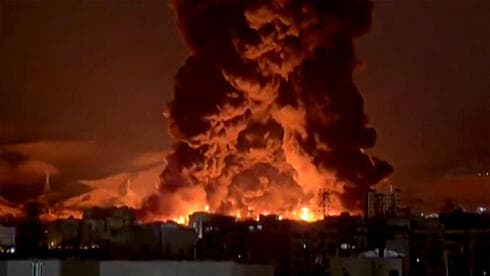
US obliterates military targets on Iran’s Kharg Island, Trump warns
13 sources compared

US Deploys About 2,500 Marines to Middle East After Iran Attacks Gulf Shipping
33 sources compared
FBI Warns of Iranian Drone Plot Based on Unverified Tip; California Says No Credible Threat
10 sources compared

White House Demands ABC Retract Report Claiming Iran Sought To Launch Drone Attacks On California
11 sources compared